

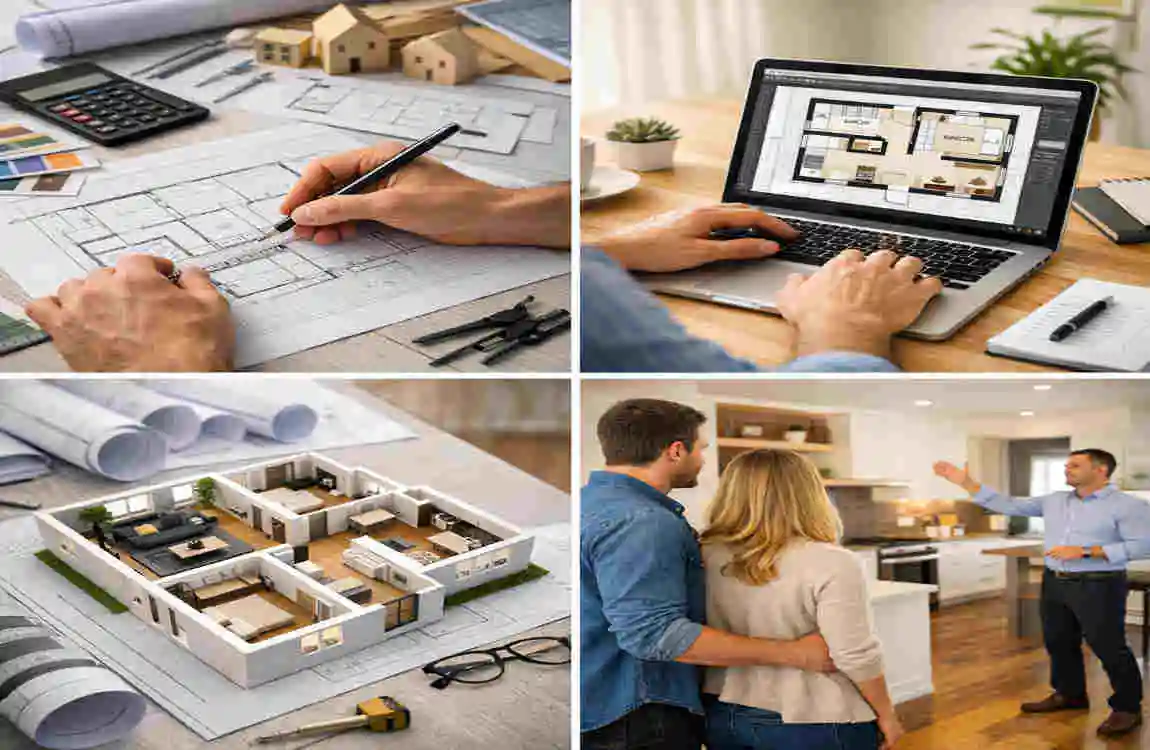
Have you ever walked into a house and immediately felt like you could breathe easier? That feeling usually comes from a modern, airy layout that lets light dance from one room to the next. Today, more than 80% of new homeowners prioritise an open layout over traditional, boxed-in rooms. If you are looking to transform your living space, learning how to create and open floor plan is the first step toward building your dream home.
An open floor plan isn’t just a design trend; it is a lifestyle choice. It’s about breaking down barriers—both literal and figurative—to create a home that feels connected. Whether you are building from scratch or planning a massive renovation, the way you lay out your space will dictate how you live, work, and play for years to come.
Why Everyone is Chasing the Open Concept Layout
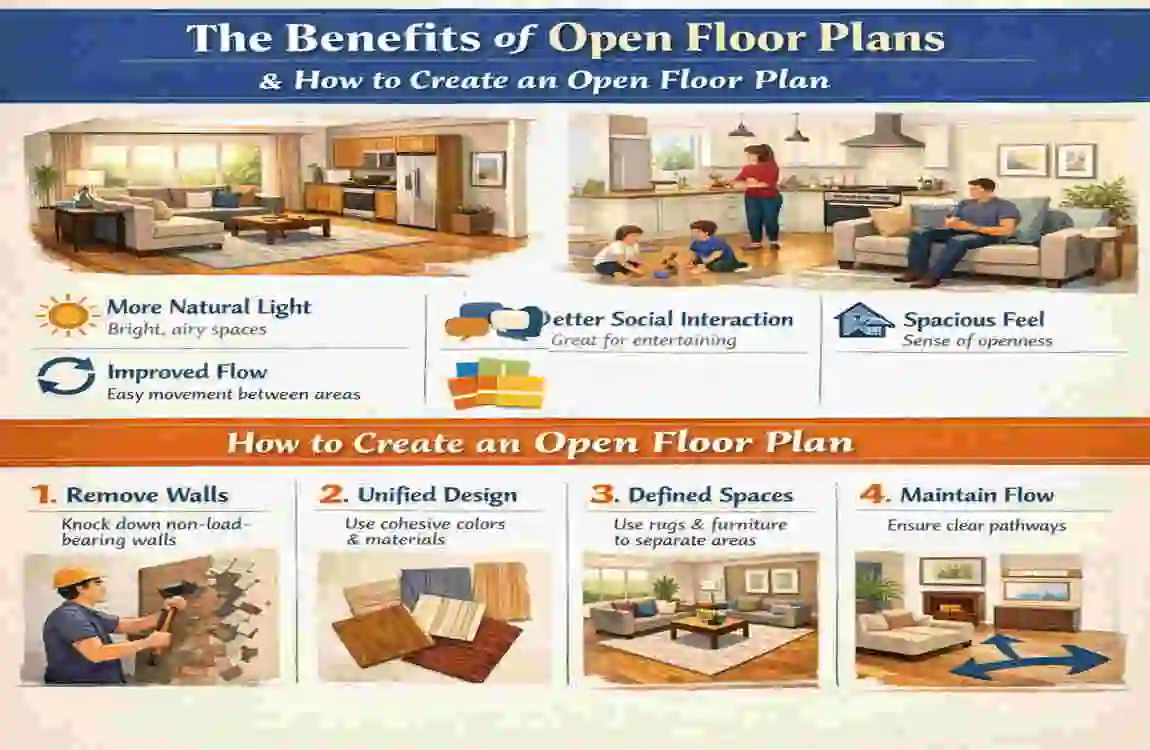
Before we dive into the “how,” let’s talk about the “why.” Why are so many people searching for how to create and open a floor plan? The answer lies in how our lives have changed. We no longer want the cook tucked away in a tiny kitchen while the rest of the family hangs out in the living room. We want interaction.
Maximising Your Natural Light and Airflow
One of the biggest perks of an open layout is the natural light. When you remove interior walls, sunlight from your windows can reach deep into the centre of your home. This doesn’t just make the house look better; it actually makes it feel larger.
Airflow also improves significantly. In a closed-off house, heat or cool air can get trapped in specific rooms. An open plan allows for better circulation, which can actually help with your energy bills if your HVAC system is positioned correctly.
Better Social Connection and Entertaining
If you love hosting dinner parties or having the family over for the holidays, an open plan is your best friend. It creates a seamless entertaining space where the kitchen, dining area, and living room become one giant “great room.”
You can be flipping pancakes at the kitchen island while still chatting with your friends on the sofa. It removes the “isolation” factor of traditional homes. For parents, this is a lifesaver because you can keep an eye on the kids playing in the living room while you prepare dinner.
Boosting Your Home’s Resale Value
Let’s talk money. A modern house layout is a massive selling point. Real estate experts often suggest that opening up a floor plan can boost a home’s value by 10% to 15%. Buyers today are looking for that “wow” factor the moment they walk through the front door. A cramped, dark hallway doesn’t have the same appeal as a wide-open vista of the entire main floor.
FeatureClosed Floor PlanOpen Floor plan
Space feels boxed in and private. Spacious and airy
Social Flow Limited and separated. Excellent for gatherings
Resale Value Standard market rate Higher demand/Premium price
Natural Light Blocked by interior walls floods the entire floor
Flexibility, Fixed room purposes, Multi-functional zones
Planning Your Open Floor plan Strategy
You shouldn’t just start swinging a hammer without a plan. Learning how to create and open a floor plan starts with a lot of “brain work.” You need to understand the bones of your house and how you intend to use the space.
Assessing Your Square Footage and Local Laws
First, grab a tape measure. You need to know exactly how much square footage you are working with. Sometimes, an open plan can actually make a very small house feel too exposed, so you have to be strategic.
You also need to check your local zoning laws and building codes. If you are removing walls, you might need a permit. It is much better to find this out now than to face a fine later. Always check whether a wall is load-bearing (meaning it supports your roof) before you plan to remove it.
Defining Your Family’s Unique Needs
Every family is different. A couple working from home has different needs than a family with three toddlers. Ask yourself:
- Do we need a dedicated home office area?
- How many people usually sit down for dinner?
- Do we want the kitchen to be the central “hub”?
By defining these needs, you can start to sketch rough zones. Even in an open plan, you need “zones”, so the house doesn’t just feel like a giant, empty gymnasium.
Using the Golden Ratio for Better Proportions
Designers often use the Golden Ratio (roughly 1.618) to make spaces feel balanced. When deciding how large the kitchen should be compared to the living room, avoid making them the same size. Having one area slightly larger than the other creates a more pleasing visual “weight” that feels natural to the human eye.
The Best Tools to Help You Design Your Layout
You don’t need to be a professional architect to start designing. There are plenty of free floor plan software options that make the process fun and easy. When you are figuring out how to create and open a floor plan, these tools act as your digital playground.
Top Free and Paid Software Options
If you are a beginner, look for tools with a low learning curve. You want something where you can “drag and drop” walls and furniture.
- Floorplanner: This is a fan favourite for beginners. It’s web-based, so you don’t have to download anything. You can draw your rooms in 2D and then click a button to see them in 3D.
- Canva: While not a dedicated architectural tool, Canva is great for quick mocks. If you want to get a “vibe” of where the furniture goes, it’s very user-friendly.
- SketchUp: This is a step up. Many pros use it, but it also has a free version. It’s excellent for creating 3D renders that show exactly how the light will hit your new open space.
- MagicPlan: a mobile app. You can use your phone’s camera to “scan” your current room, and it will automatically generate a floor plan.
ToolFree Tier?Best For Learning Curve
Floorplanner Yes Beginners/Homeowners Low
Canva Yes Visualising furniture Very Low
SketchUp Limited Detailed 3D Renders Medium
AutoCAD No Professional Blueprints High
Step-by-Step: How to Create and Open a Floor plan
This is the core of our journey. If you want to know how to create and open a floor plan like a pro, follow these steps in order. Taking shortcuts here can lead to costly mistakes later.
Measure Your Space with Precision
Don’t guess. Use a laser measuring tool if you can; they are affordable and incredibly accurate. Measure the length and width of every room, the thickness of the walls, and the height of the ceilings. Note down where the windows and doors are located, as these are “fixed” points that are harder to move.
Draw Your Existing “Shell”
Start by drawing the exterior walls of your home. This is your “shell.” Once you have the perimeter, you can start looking at the interior walls. In your software or on graph paper, mark which walls are currently there. This gives you a clear “Before” picture.
Identify and Zone Your Functional Areas
In an open plan, you don’t have walls to tell you where the “room” ends. You have to use zoning.
- The Kitchen Zone: Use the “work triangle” rule (the distance between your stove, sink, and fridge).
- The Dining Zone: Place this near the kitchen for easy serving.
- The Living Zone: Create a focal point, like a fireplace or a large window view, and arrange seating around it.
Strategically Remove Walls
This is the most exciting part of learning how to create and open a floor plan. Look at the walls separating your kitchen and living room. If you remove them, what happens? Warning: Always consult a structural engineer before removing a wall. If it’s load-bearing, you will need to install a support beam (often called an LVL or steel beam) to take the weight of the house.
Incorporate Flow Elements
To make the transition between zones feel natural, use islands and half-walls. A large kitchen island is the perfect “soft barrier.” It tells people “this is the kitchen,” but it doesn’t block the view or the conversation. You can also use different ceiling heights or floor materials to signal a change in the room’s purpose subtly.
Test Your Design Virtually
Before you buy a single 2×4, do a virtual walkthrough. Most software allows you to “walk” through your 3D model. Does the path from the front door to the kitchen feel cramped? Is the sofa too far from the TV? Testing it virtually saves you from “builder’s remorse.”
Customise with Lighting and Furniture
Finalise your plan by adding lighting layers. You’ll need “task lighting” (like pendants over the island) and “ambient lighting” (like recessed cans in the ceiling). Then, place your furniture in the plan to ensure there is enough “walkway space”—usually at least 36 inches for major traffic paths.
Common Mistakes to Avoid
When people first learn how to create and open a floor plan, they often make a few classic errors.
- Ignoring the Plumbing: Moving a sink or a toilet is expensive. If you can keep your wet zones (kitchen and baths) in their original spots, you’ll save thousands.
- The “Echo Chamber” Effect: Large open spaces can be noisy. Make sure you plan for “soft” elements like rugs, curtains, and acoustic panels to absorb sound.
- Lack of Storage: When you remove walls, you remove places to put cabinets and bookshelves. You must build storage into your islands or perimeter walls to compensate.
Design Tips for Maximum “Dream Home” Appeal
Now that you know the technical side of creating and opening a floor plan, let’s talk about the style. We want your home to look like it belongs in a magazine.
Multi-Functional Islands with Seating
The kitchen island is the MVP of the open floor plan. It’s a prep station, a breakfast bar, and a homework spot all in one. For a modern look, consider a waterfall countertop in which the stone extends down the sides of the island to the floor.
Zoned Lighting for Different Moods
Since you don’t have walls to contain light, you need to be smart. Use dimmer switches for everything. You might want bright kitchen lights while you’re cooking, but soft, warm light in the living area while you’re watching a movie. Pendant lights are great for “anchoring” a dining table in an open space.
Maintaining Material Continuity
To make the space feel like one cohesive unit, use the same flooring throughout. If you have hardwood in the living room and tile in the kitchen, it “breaks” the visual flow. Using one consistent material makes the entire floor feel massive.
Bringing the Outdoors In
A major trend for 2026 is outdoor flow. If your open plan leads to a backyard, consider installing large sliding glass doors or “bifold doors.” This effectively turns your patio into an extension of your living room, doubling your summer entertaining space.
Budgeting and Hiring the Right Professionals
Let’s get real about the costs. Learning how to create and open a floor plan involves understanding the financial commitment.
DIY vs. Professional Remodelling
If you are moving furniture and painting, you can do that for a few hundred dollars. However, if you are removing walls, the costs jump.
- DIY (Non-structural): $2,000 – $5,000 for basic finishes and minor electrical work.
- Pro Remodel: $20,000 – $50,000+, depending on whether you are moving plumbing or adding structural beams.
When to Call an Architect or Engineer
If you are ever in doubt about whether a wall is holding up your house, call a pro. A structural engineer might charge $500 for a consultation, but that is a lot cheaper than your ceiling sagging or collapsing. Architects are also great for helping you maximise small spaces in ways you might not have thought of.
ElementAvg. Estimated Cost
Wall Removal (Non-load bearing) $500 – $1,500
Wall Removal (Load-bearing with beam) $3,000 – $10,000
New Hardwood Flooring $8 – $15 per sq ft
Kitchen Island Installation $1,500 – $6,000
Professional Design Consultation $150 – $300 per hour
Real-Life Examples to Inspire You
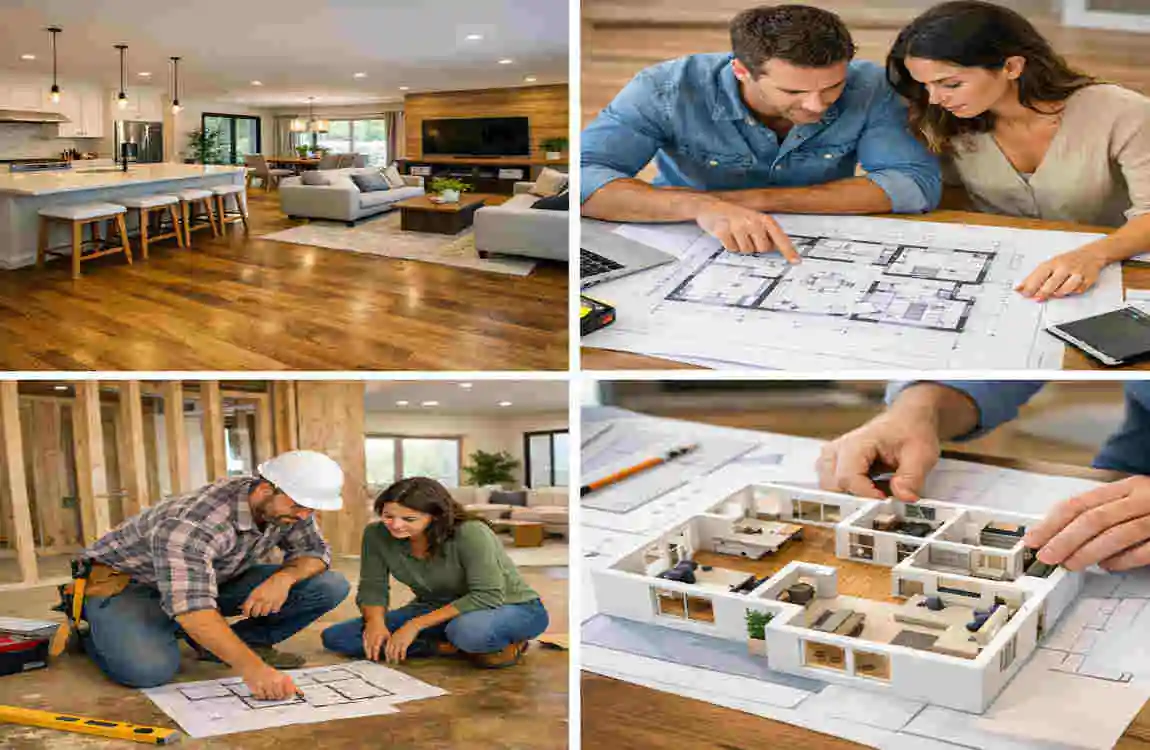
Sometimes, seeing is believing. Let’s look at two common ways people use the “how to create and open floor plan” philosophy.
The Bungalow Transformation
Many older bungalows (built in the 1940s-60s) have “choppy” layouts. By removing the wall between the kitchen and the dining room, owners of these 1,500 sq ft homes often find they suddenly have a huge great room. This makes a small house feel like a luxury estate.
The Modern Farmhouse Merge
The “Modern Farmhouse” style relies heavily on open plans. These homes usually feature a massive kitchen that flows directly into a vaulted-ceiling living room. By using reclaimed wood beams on the ceiling, you can “trace” the zones without needing any walls at all.
Frequently Asked Questions (FAQ)
How do I start drawing my own floor plan?
Start by taking accurate measurements of your existing walls, doors, and windows
Use graph paper and draw to scale so the representation is accurate
Use standard shorthands for features like doors and stairs so the plan is easy to read
Can I have an open plan and still have privacy?
The key is to balance the sense of togetherness in the “great room” with private retreats where you can focus or relax
Do I need a professional to create an open floor plan?
While you can certainly draft the initial ideas yourself using free software
