

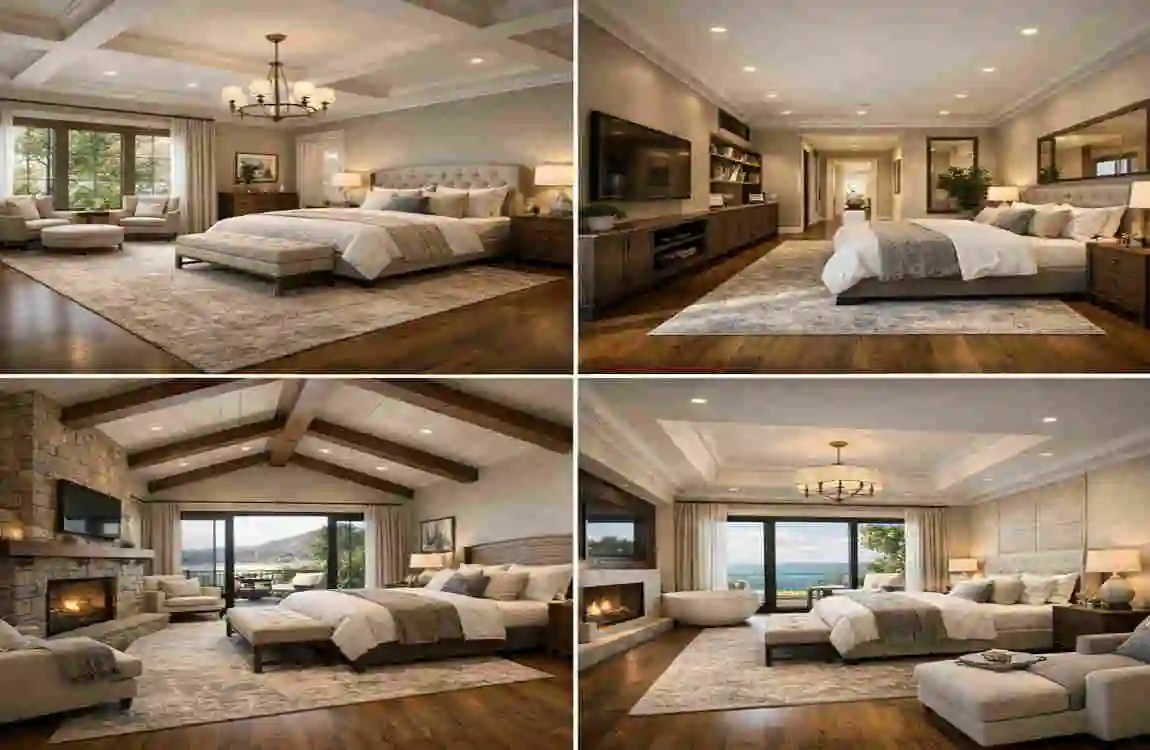
When you think about your home, the main bedroom is more than just a place to sleep. It is your personal retreat, your quiet zone, and sometimes even your workspace. That is why its size matters far beyond appearance.
Many homeowners ask, “what’s a good size main bedroom?” It sounds like a simple question. But the answer affects your comfort, layout flexibility, storage, resale value, and even your daily routine.
A room that is too small feels cramped. A room that is too large can feel empty and disconnected. The goal is balance.
In modern homes, the term “master bedroom” often refers to the largest bedroom in the house, usually connected to:
- A private bathroom (en-suite)
- A walk-in closet
- Sometimes a sitting area or dressing zone
Today, many people call it a primary bedroom, but the function remains the same — it is the main private sleeping space in the home.
What Is a Good Size Main Bedroom? Benchmarks Explained
Let’s break this down clearly and practically.
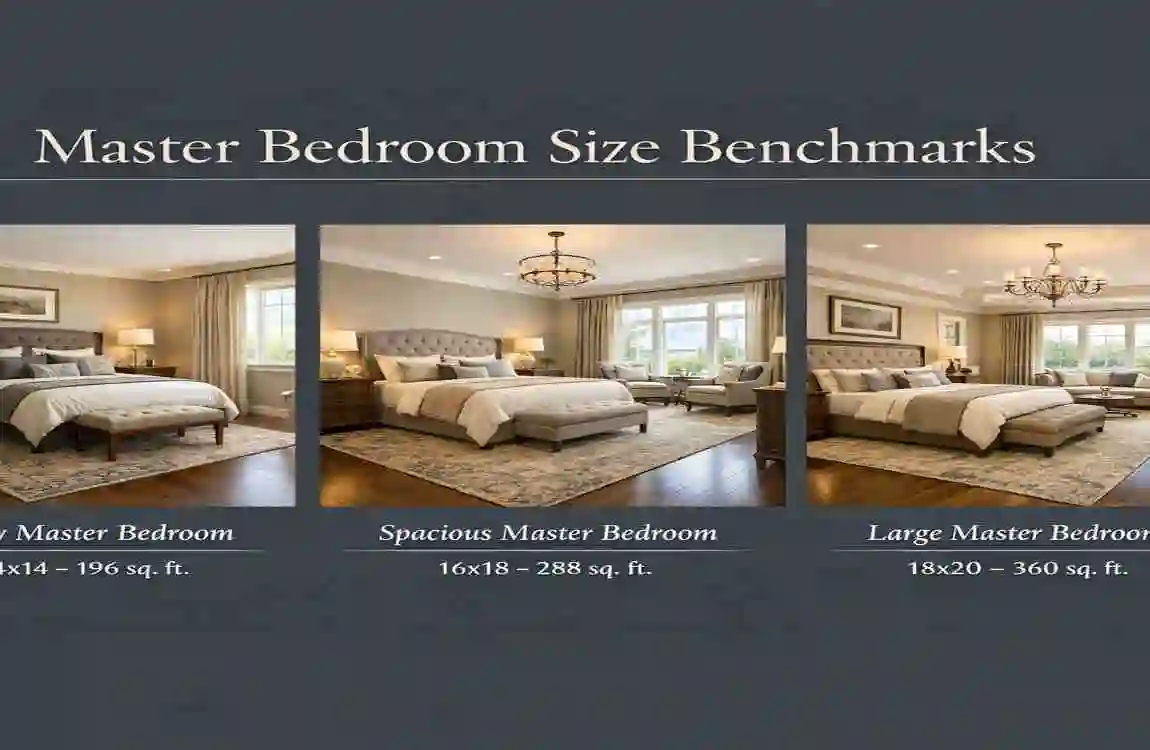
Core Benchmarks for Master Bedroom Sizes
When people search for the ideal main bedroom size, they usually fall into one of three categories: small-to-standard homes, medium-to-large homes, or luxury homes.
Here’s a clear breakdown:
Home Type: Typical Dimensions: Square Footage: What Fits Comfortably
Small to Standard 14′ × 14′ to 14′ × 16′ 200–250 sq ft King bed, 2 nightstands, dresser
Medium to Large 15′ × 18′ to 16′ × 22′ 300–450 sq ft Seating area + larger storage
Luxury Suites 20′ × 20′+ 500+ sq ft Lounge, dressing area, spa bath
Now let’s explore these in detail.
Small to Standard Homes 200–350 sq ft
In most modern homes, especially around 1,500 to 2,500 square feet total, a main bedroom typically measures between 200 and 350 square feet.
A 14′ × 16′ room (224 sq ft) is often considered the practical minimum for comfort.
This size allows you to fit:
- A king-size bed (76″ × 80″)
- Two nightstands
- A dresser
- Comfortable walking space
Ideally, maintain 3 feet of clearance around the bed for easy movement.
If your room is closer to 200 sq ft, it still works — but you need smarter layout planning.
Medium to Large Homes 350–500 sq ft
If your home is larger — say 2,500 to 4,000 square feet — the main bedroom often increases to 350–500 sq ft.
Common sizes include:
- 15′ × 20′
- 16′ × 22′
At this size, the bedroom becomes more than just a sleeping area. It may include:
- A reading chair
- A small sofa
- A work desk
- A vanity station
The room begins to feel like a suite, not just a bedroom.
Luxury or Oversized Master Suites 500+ sq ft
In high-end homes, master suites can exceed 500 square feet.
These may include:
- A dedicated lounge area
- Fireplace
- Dual walk-in closets
- Separate dressing room
- Direct patio or balcony access
But here is something important — bigger is not always better.
Without proper zoning, very large bedrooms can feel cold or disconnected. Layout planning becomes even more important.
Layout Implications: Space Around the Bed
When deciding what’swhat a good size for a for a main bedroom, considerconsider circulation.
Minimum recommendations:
- 30–36 inches around bed sides
- 36–42 inches for main walkways
- 24 inches in front of dressers
If doors, closets, and bathrooms connect awkwardly, the room will feel smaller — even if the square footage is large.
Room Anatomy: What Makes a Room Feel Bigger?
Square footage is only one part of the story.
Other factors matter just as much:
- Ceiling height (9–10 feet feels more open)
- Large windows
- Natural daylight
- Balcony access
- Sliding doors instead of swing doors
A 220 sq ft room with high ceilings and large windows can feel larger than a 300 sq ft room with poor lighting.
Professional Guidance vs Personal Needs
Design professionals often recommend:
- 200–250 sq ft as the minimum comfort range
- 300+ sq ft for flexibility
- 400+ sq ft for luxury features
But your needs may change this.
For example:
- Do you work from home?
- Do you want a meditation corner?
- Do you need extra closet space?
Your lifestyle determines your ideal main bedroom size more than any standard number.
Practical Floor Plans and Layouts
Let’s move from size to layout — because how you arrange furniture matters just as much as room dimensions.
Compact Layouts 200–250 sq ft
In smaller master bedrooms, efficiency is key.
Classic Centered Bed Layout
- King bed centered on the main wall
- Nightstands on both sides
- Dresser opposite the bed
- Closet near the entrance
This layout keeps the flow simple and balanced.
Smart Space Tips
- Use sliding closet doors
- Install wall-mounted lamps
- Choose narrow nightstands
- Avoid oversized dressers
Even at 220 sq ft, the room can feel comfortable with proper planning.
Balanced Layouts 300–400 sq ft
This is where design flexibility begins.
You can create zones.
Zone-Based Design
Divide the room into:
- Sleep Zone (bed area)
- Dressing Zone (near closet)
- Relaxation Zone (chair or loveseat)
You can separate these using:
- Area rugs
- Furniture placement
- Accent lighting
The room feels intentional, not crowded.
Luxurious Layouts 400+ sq ft
Large master suites allow more creativity.
You can include:
- Seating area near the window
- Desk opposite the bed
- Fireplace wall
- Separate dressing alcove
But remember — keep furniture proportionate.
Do not fill space just because it exists.
Recommended Clearances
Here is a simple guide:
- 2.5–3 ft around most furniture
- 3–4 ft for main walkways
- 4 ft for major pathways to the bathroom
This ensures smooth movement.
En-Suite and Closet Integration
If your main bedroom connects to a bathroom and a walk-in closet, plan carefully.
Common mistake: shrinking the bedroom to enlarge the bathroom.
Balance is important.
In most homes:
- Bedroom: 250–350 sq ft
- Bathroom: 80–150 sq ft
- Closet: 40–100 sq ft
This ratio keeps the sleeping area spacious.
House Design Ideas: Aligning Size with Home Type
Your home’s total square footage directly affects what a good-sized main bedroom is for you.
Tiny to Small Homes 200–250 sq ft Master
In compact homes, you must maximize perceived space.
Use:
- Light colors
- Large mirrors
- Built-in wardrobes
- Pocket doors
- Minimal furniture
Keep design simple and clean.
Typical Single-Family Homes (250–500 sq ft Master)
This is the most common category.
Balance is key.
If your home is around 2,000 sq ft total, a 300–350 sq ft main suite works beautifully.
You can comfortably include:
- King bed
- Walk-in closet
- Attached bath
- Small seating corner
Large to Luxury Homes 500+ sq ft Master
Here you can create a retreat experience.
Possible features:
- Dual closets
- Private balcony
- Reading lounge
- Coffee station
But design must remain cohesive.
Real-World Examples
- A 12′ × 16′ room with a built-in wardrobe and wall lights
- A 15′ × 20′ room with dressing alcove
- A 20′ × 20′ master with balcony access and morning sunlight
Each works — depending on the homeowner’s needs.
Design Tips to Improve Perceived and Functional Size
Sometimes the question is not “how big should it be?” but “how big can it feel?”
Color and Lighting
Use:
- Light neutrals
- Soft whites
- Warm beige
- Layered lighting
Avoid dark colors on all walls in small rooms.
Flooring Continuity
Keep the flooring consistent from the hallway into the bedroom.
It visually expands space.
In larger rooms, use rugs to define zones.
Furniture Scale
In smaller rooms:
- Avoid bulky beds
- Choose slim-profile nightstands
- Use floating shelves
In larger rooms:
- Add proportionate furniture
- Avoid tiny pieces that feel lost
Storage Strategies
Keep clutter away.
Use:
- Under-bed drawers
- Built-in wardrobes
- Multi-purpose benches
An uncluttered room always feels bigger.
Accessibility and Comfort
Think long term.
Allow enough clearance for easy movement.
Plan light switches and outlets strategically.
Comfort improves livability more than extra square footage.
How to Measure and Decide Your Ideal Size
Here is a simple calculator approach.
List Essential Furniture
- King or queen bed
- Two nightstands
- Dresser
- Closet
- Optional seating
Add Clearance
Add 3 feet to the perimeter of the main pieces.
Estimate Activity Zones
If you want:
- Desk → add 25–40 sq ft
- Lounge chair → add 30 sq ft
- Dressing nook → add 40–60 sq ft
Add these together.
That total becomes your target size.
Must-Haves vs Nice-to-Haves
Ask yourself:
- Do I really need a sitting area?
- Will I use a desk daily?
- Can storage move to the closet instead?
These decisions directly affect the ideal size of the main bedroom.
Future-Proofing
Consider:
- Growing family
- Work-from-home needs
- Resale value
Rooms between 250 and 350 sq ft typically attract buyers.
Common Pitfalls and How to Avoid Them
Common Mistakes
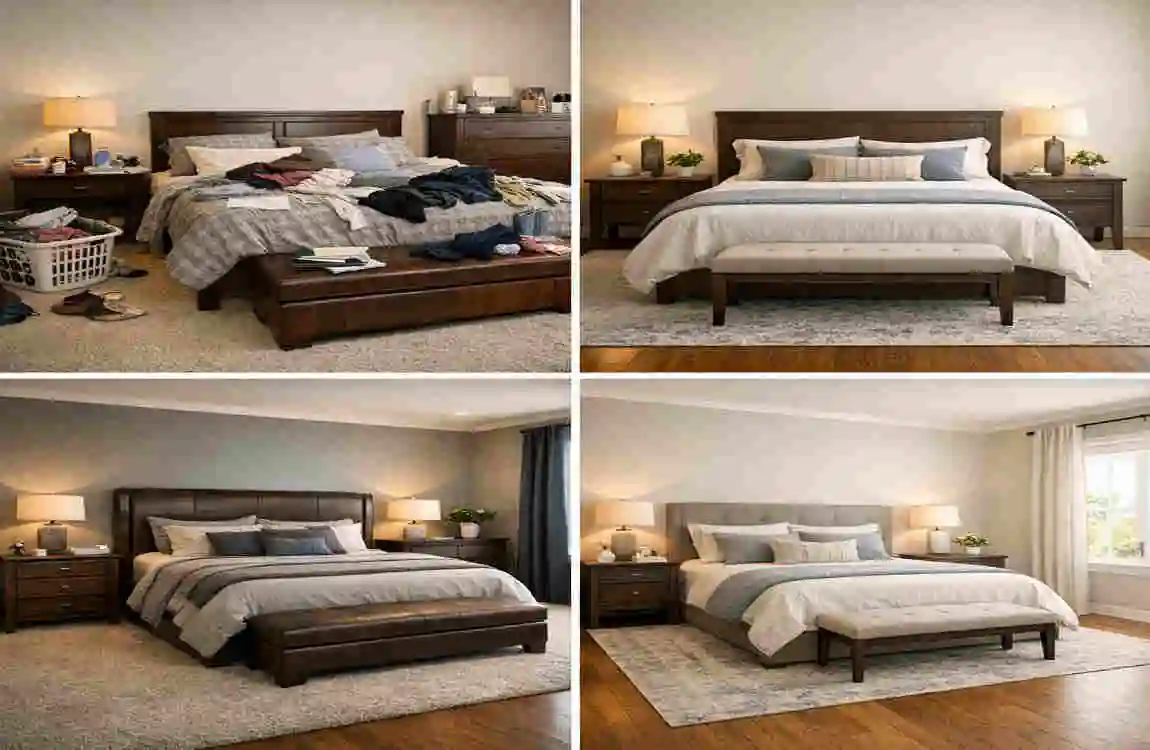
- Overcrowding with furniture
- Ignoring door swings
- Blocking natural light
- Not planning circulation paths
Smart Solutions
- Measure before buying furniture
- Sketch layout on paper
- Prioritize essential pieces
- Use scalable storage
Planning prevents regret.
FAQ: What’s a Good Size for a Master Bedroom?
A good size master bedroom is usually between 12×14 feet (168 sq ft) and 14×16 feet (224 sq ft).
This size gives you enough space for:
- A king-size bed
- Two nightstands
- A dresser
- Comfortable walking space
If you want extra features like a sitting area, walk-in closet, or workspace, then a master bedroom of 250–300+ square feet is even better.
