

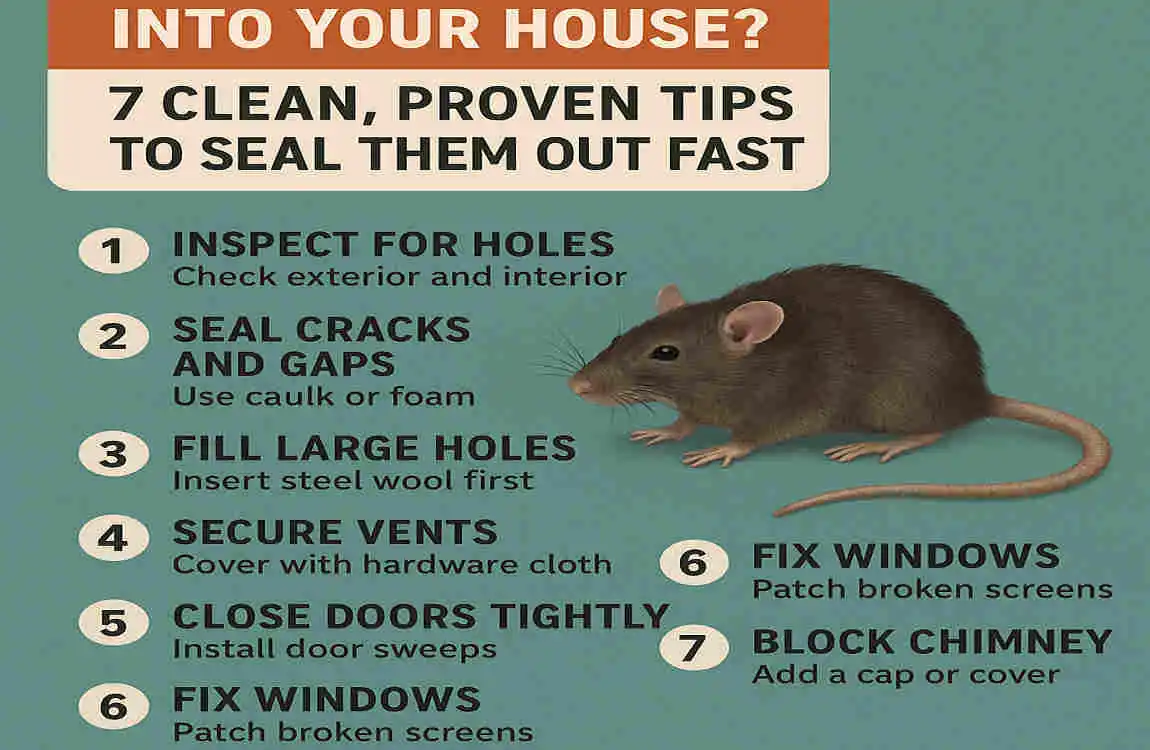
Rats are sneaky invaders that find their way into 1 in 10 homes every year. These tiny pests slip through dime-sized cracks and gaps, causing damage and raising health concerns. For homeowners and businesses alike, especially those worried about health code violations, understanding how pests get into your house and how to keep them out is crucial.
How Do Rats Get Into Your House? Common Sneaky Entry Points
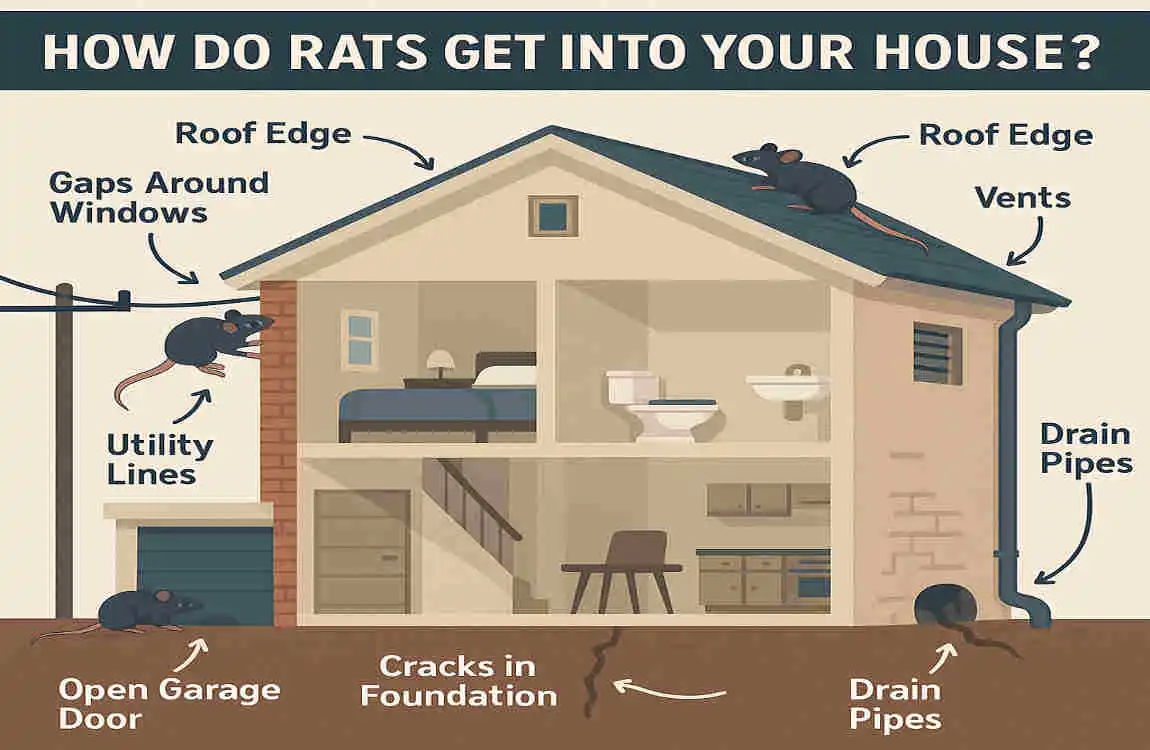
Rats are masters of squeezing through tiny openings. Their flexible bodies allow them to slip through gaps as small as ½ inch or even less. Knowing exactly where they enter helps you target those spots and seal them tight.
7 Most Common Rat Entry Points
- Cracks in walls and foundations
- Rats easily squeeze through cracks half an inch wide or more. These gaps often form around old bricks, concrete, or where building materials meet.
- Gaps under doors and garages
- Missing or damaged door sweeps and weatherstripping create perfect entryways. Garages are especially vulnerable if the door doesn’t seal tightly.
- Drains and sewers
- Rats use uncapped or open-ended pipes to enter your home’s plumbing system. Sewer rats enter through these moist, dark tunnels.
- Vents and AC ducts
- Screens that are chewed through or missing allow rats to slip inside. Airflow draws them toward vents, making them common entry points.
- Roof and roof rats via trees and downspouts
- Rats climb trees and jump onto roofs, then crawl down downspouts or through gaps in shingles.
- Windows and utility lines
- Loose seals around windows, electrical wires, and pipes are inviting gaps for rodents.
- Crawl spaces and attics
- Open vents or poorly sealed attics give rats easy hiding places and access to your home.
Entry Points Comparison Table
Entry Point Gap Size: Why Rats Target It
Wall Cracks ½ inch Easy squeeze, warmth
Drains Open end Sewer access, food scraps
Vents, Mesh holes, Air flow attracts rats
Door Gaps ¼ to ½ inch Frequent use, easy access
Roof/Downspouts Variable Climbing routes from trees
Windows/Utilities Variable Loose seals and gaps
Crawl Spaces Open vents Shelter and less disturbance
Why Rats Love Your Home: Attraction Factors to Address First
Before sealing, it’s important to understand why rats want in in the first place. They’re looking for three things: food, water, and shelter. If your home offers these easily, rats will keep coming back.
What Attracts Rats?
- Accessible food: Unsecured trash cans, pet food left out overnight, or fruit fallen from trees.
- Water sources: Leaky pipes, standing water, or damp areas provide hydration.
- Safe shelter: Overgrown branches touching your roof, cluttered crawl spaces, or open vents invite rats to nest.
Quick Clean Habits to Keep Rats Away
- Secure lids on trash bins and compost.
- Fix dripping faucets or pipes quickly.
- Trim tree branches away from your roof.
- Keep the yard neat and free of debris.
7 Clean, Proven Tips to Seal Rats Out Fast
Now that you know where rats come in and why they stay, let’s look at seven effective, chemical-free ways to seal your home and keep them out.
Steel Wool + Caulk for Cracks
Rats can chew through many materials, but steel wool is one thing they avoid. Use it to fill cracks and holes, then seal with silicone caulk.
How to do it:
- Use gloves and push steel wool tightly into cracks.
- Apply silicone caulk over the steel wool to hold it in place.
- Smooth the caulk for a clean finish.
Door Sweeps & Weatherstripping
Install brush sweeps under doors to block gaps, especially on garage doors. Weatherstripping around doors and windows also seals rat entry points.
Steps:
- Measure door bottoms and buy brush sweeps or rubber strips.
- Clean door edges before installation.
- Press or screw sweeps firmly in place.
- Check weather stripping annually and replace it if worn.
Drain Guards & Caps
Cover open drains and pipes with mesh or metal caps to prevent rats from climbing into sewers or plumbing.
Steps:
- Inspect all drain openings and uncapped pipes.
- Purchase hardware cloth or drain guards from hardware stores.
- Secure the mesh tightly with clamps or screws.
- Clean and maintain caps regularly.
Vent Screens Reinforced
Replace torn or missing vent screens with sturdy hardware cloth (1/4-inch mesh or smaller) to prevent rats from chewing through them.
How to:
- Remove old vent screens.
- Cut hardware cloth to size.
- Attach with screws or heavy-duty staples.
- Check vents seasonally.
Trim Trees & Roof Guards
Rats often use trees to reach your roof. Trim branches so they don’t touch the house. Install metal collars on downspouts and pipes to block climbing.
Steps:
- Trim branches at least 4 feet away from your home.
- Install metal guards or collars around pipes.
- Check roof edges for gaps or loose shingles.
Utility Line Seals
Seal gaps around utility lines (pipes, cables) with a combination of metal flashing and foam sealant.
How to:
- Remove old caulk or insulation.
- Insert metal flashing strips around pipes.
- Apply foam sealant over flashing.
- Allow foam to cure fully.
Regular Inspections
Monthly checks with a flashlight help catch new entry points before rats move in.
Tips for inspections:
- Use a bright flashlight to check dark corners, vents, and crawl spaces.
- Look for signs like droppings, gnaw marks, or grease trails.
- Keep a checklist of inspection points.
Tools you’ll need:
- Flashlight
- Gloves
- Screwdriver (for removing screens)
- Steel wool and caulk
Tools & Materials for Clean Rat-Proofing
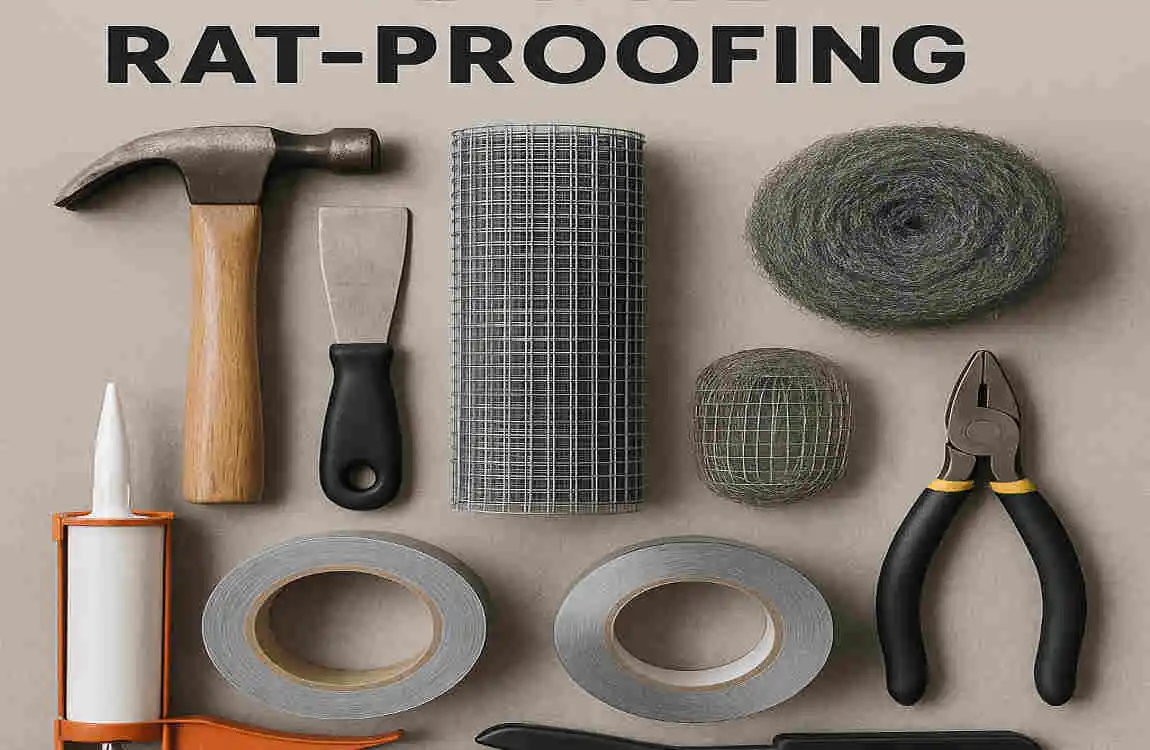
Having the right supplies on hand makes it easier and more effective to seal rats out.
Item Cost Where to Buy
Steel Wool $5 Hardware stores
Silicone Caulk $8 Home Depot, Lowe’s
Door Sweeps $10-$15 Home improvement stores
Hardware Cloth $12 Pest control suppliers
Drain Guards $7 Plumbing supply stores
Foam Sealant $6 Hardware stores
Flashlight $15 General retailers
