

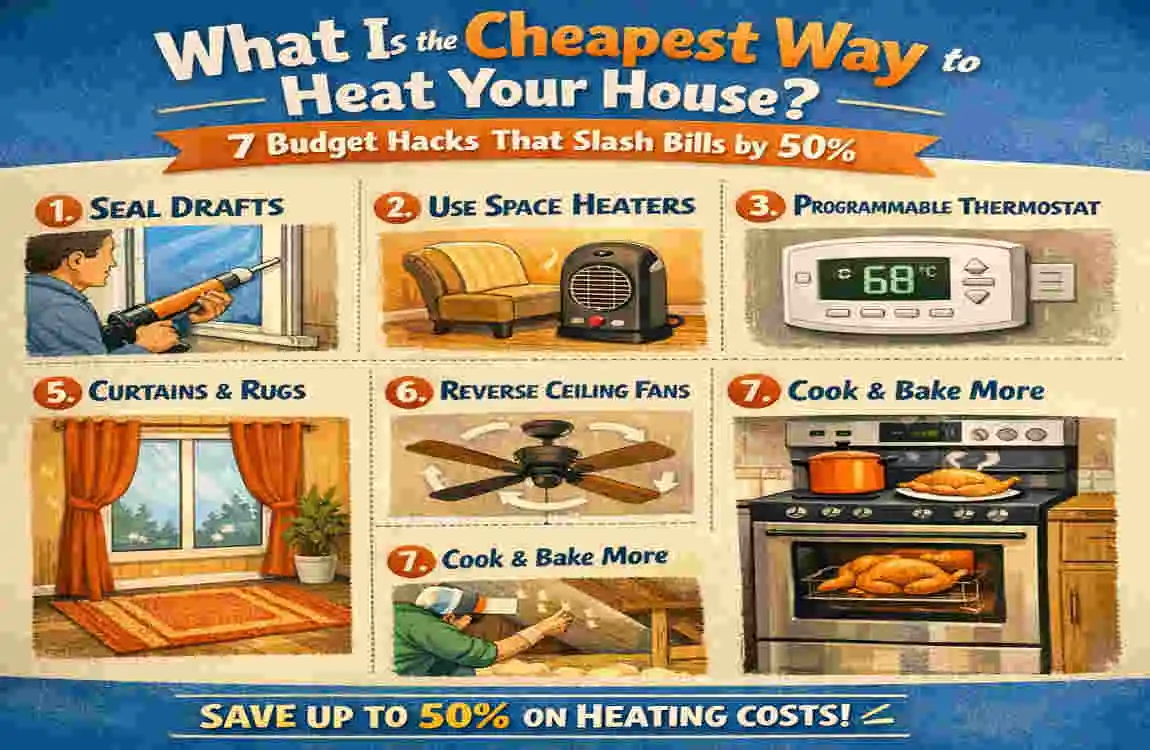
Heating your home affordably starts with simple, low-cost tweaks that trap warmth and cut waste, potentially slashing bills by up to 50% when combined.
Window seals and door draught stoppers block cold air leaks, a top priority for instant savings.
Apply sealing tape to frames and use fabric snakes under doors; these cheap fixes alone can reduce heat loss by 20-30%.
Place reflective mats behind heaters to bounce heat into rooms instead of walls.
Keep furniture clear and bleed air from radiators monthly for even distribution, improving efficiency by 10-15%.
Lower your thermostat 7-10°F for 8 hours daily (like overnight), saving up to 10% per the Department of Energy.
Wear layers and use a humidifier—moist air feels warmer, letting you drop the heat further.
Close heavy curtains or shutters at night to cut window heat loss by 25-33%.
Try DIY bubble wrap on drafty panes for extra insulation without buying thermal curtains.
Turn off radiators, open windows for 5 minutes twice daily, then reheat—this refreshes air without massive energy loss.
Heat only occupied rooms with a small space heater or by closing off unused areas.
Run ceiling fans on reverse (winter mode) to push warm air down for pennies per hour
Switch to fixed-rate energy plans if available, and only run full loads on appliances.
Stack these for 20-50% total cuts, especially in older Lahore homes during Punjab winters.[
Why Your House Loses Heat (And How to Stop It)
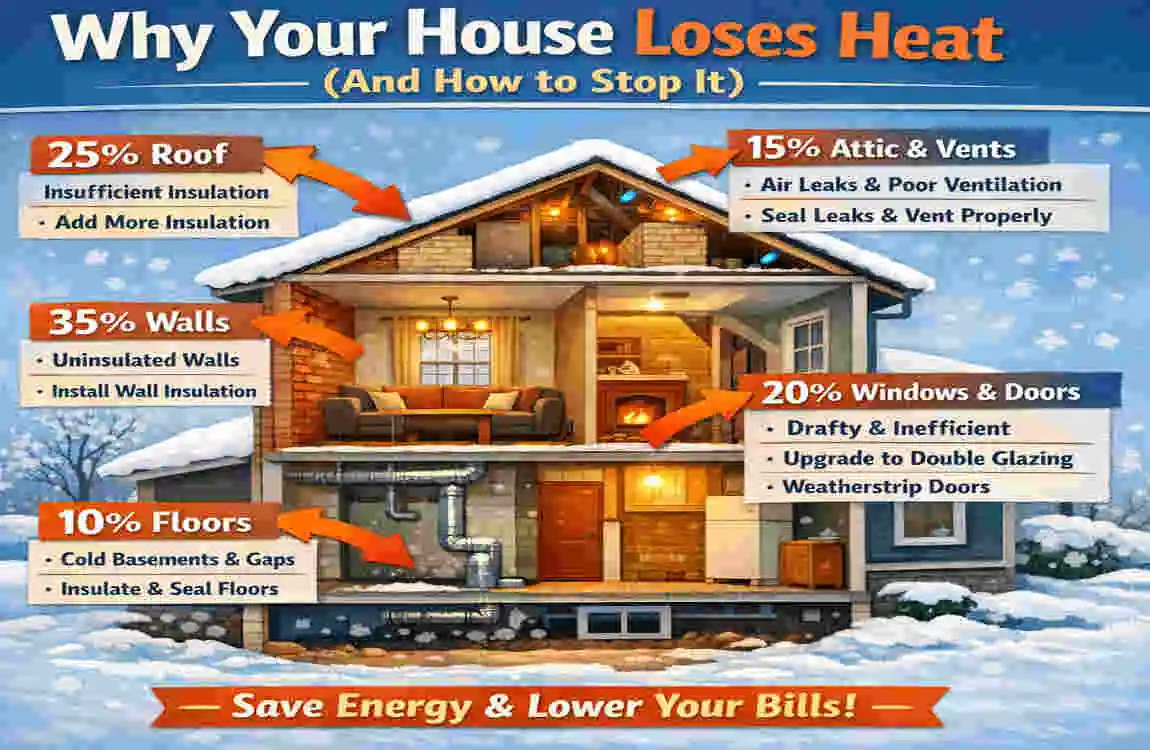
Imagine filling a bucket with water, but the bucket has holes in the bottom. No matter how much water you pour in, it will never stay full. Your house works the exact same way with heat.
If you are constantly asking, “What is the cheapest way to heat your house?”, the answer starts with stopping the heat from escaping. In the real estate world, we call this the “thermal envelope.” When that envelope is breached, you are essentially trying to heat the entire neighborhood.
The Main Culprits of Heat Loss
Most homes, especially older ones, lose heat through three main areas:
- Drafty Windows and Doors: This is usually the biggest offender.
- Uninsulated Attics: Heat rises, and without a barrier, it goes straight through the roof.
- Poorly Sealed Vents and Outlets: Tiny gaps add up to one massive hole.
The Quick Energy Audit
Before you spend a penny on heating, try these three diagnostic steps to find your leaks:
- The Candle Test: On a windy day, carefully hold a lit candle near window frames and door jambs. If the flame flickers, you have a leak that is costing you money.
- The Light Check: At night, have someone stand outside your front door with a flashlight while you stand inside with the lights off. If you can see light coming through the cracks, air is getting through too.
- The Hand Test: Run your hand over electrical outlets on exterior walls. If they feel cold, they are uninsulated.
Optimize Your Thermostat – The Free Daily Saver
When looking for the absolute cheapest way to heat your house, nothing beats optimizing the equipment you already have. Your thermostat is the brain of your heating system, but most people set it and forget it—which is a costly mistake.
The Magic Numbers
You might be tempted to crank the heat up to 75°F (24°C) when you walk in from the cold, but this doesn’t heat the house faster; it just makes the system run longer.
- Daytime: Aim for 68°F (20°C) when you are awake and at home.
- Nighttime/Away: Lower it to 62°F (16°C) or even lower when you are sleeping or at work.
According to the Department of Energy, turning your thermostat back 7°-10°F for 8 hours a day can save you as much as 10% a year on heating and cooling.
The “Morning Preheat” Strategy
If you live in a region with particularly biting mornings, like the winters in Lahore or the frosty dawns in the UK, waking up to a freezing house is miserable.
The trick is to program your thermostat to start warming the house 30 minutes before you wake up, rather than keeping it hot all night long. If you don’t have a programmable thermostat, simply making it a habit to adjust the dial before bed and upon waking is a zero-cost behavior that yields high returns.
Why This Works
It is a myth that it costs more to reheat a house than to maintain a constant temperature. Physics dictates that heat moves to cold. The hotter your house is relative to the outside, the faster it loses heat. By lowering the temperature, you slow down that heat loss, saving fuel.
Layer Up Windows and Doors – No-Cost Draft Blockers
As a décor enthusiast, I love beautiful curtains, but in the winter, window treatments need to be functional armor. Glass is a terrible insulator. If you have single-pane windows, you are practically open to the elements.
The Bubble Wrap Technique
This is one of the most effective “ugly” hacks out there.
- Mist your window pane with a little water.
- Press a sheet of bubble wrap (bubble side toward the glass) against the window.
- The water acts as an adhesive, and the air trapped in the bubbles creates an instant insulating layer.
While it won’t win any interior design awards, it is incredibly effective for guest rooms, basements, or attic windows that aren’t visible from the street.
Heavy Curtains and Door Snakes
If you want to maintain the aesthetic appeal of your home while staying warm, invest in—or make—heavy, thermal-lined curtains. Keep them open during the day to let free solar heat (sunlight) in, and close them tightly at sunset to trap that heat.
Don’t forget the doors: A “door snake” is a fabric tube filled with rice, beans, or batting that sits at the bottom of your door to block drafts. You can make one using an old pair of long socks or a rolled-up towel. This is a classic “cheapest way to heat your house in winter drafts” solution that has been used for generations because it works.
The Plastic Film Upgrade
For about $10-$15, you can buy a window insulator kit. You tape clear plastic film over the window frame and shrink it tight with a hair dryer. This creates a sealed pocket of dead air (like a double-paned window) that stops drafts dead in their tracks. It’s invisible if done right and saves a fortune.
Ceiling Fan Reverse Trick – Push Warm Air Down
This hack is my favorite because it feels like a secret cheat code for your house. Most people associate ceiling fans with cooling, but they are powerful tools for heating if used correctly.
The Science of Heat Distribution
Heat naturally rises. In a room with high ceilings (a feature I often highlight in property listings), all the expensive warm air gets trapped up near the ceiling, where nobody can feel it. Your furnace keeps pumping out more heat to warm the floor level, wasting energy.
How to Execute This Hack
Look at the base of your ceiling fan motor. There is usually a small black switch.
- Summer Mode: The fan spins counter-clockwise, pushing air down to create a breeze.
- Winter Mode: Flip the switch so the fan spins clockwise.
When spinning clockwise at a low speed, the fan pulls cool air up and gently pushes the warm air that has pooled at the ceiling out towards the walls and back down to the floor.
The Result
By recirculating the trapped heat, you can often lower your thermostat by a few degrees without noticing any change in comfort. DOE studies suggest this can help drop bills by up to 10%. Just remember: Low speed is key. If you run it too fast, you’ll create a wind-chill effect, which defeats the purpose.
DIY Radiator Reflectors – Bounce Heat Back Indoors
In the UK and many older homes globally, radiators are attached to external walls. This is a major energy-efficiency flaw.
The Problem
When a radiator gets hot, it radiates heat in all directions—50% into the room and 50% into the wall behind it. If that wall is an external wall, you are essentially paying to heat the street outside your house.
The Solution: Foil and Cardboard
You can buy specialized radiator reflector panels, but since we are discussing what the cheapest way to heat your house is, let’s DIY it.
- Take a piece of sturdy cardboard cut to the size of your radiator.
- Wrap it completely in high-quality kitchen aluminum foil (shiny side out).
- Slide this panel behind the radiator to create a barrier between the heating unit and the wall.
Why It Works
The foil reflects the heat into the room rather than letting it soak into the cold brick or drywall. Pro Tip: If using electric heaters, make sure the reflector doesn’t touch the heating element, and ensure there is enough space for air to flow.
For a slightly more advanced version, you can use Mylar emergency blankets (the shiny silver ones used in first aid kits). They are incredibly cheap and reflective. Case studies in UK homes have shown this simple trick can improve heating efficiency by around 12%.
Block Unused Rooms – Zone Your Heat
If you have a 4-bedroom house but only use the living room and one bedroom, why are you heating the other three rooms? As a real estate agent, I often see clients buying large homes and struggling to maintain them. “Zoning” is the answer.
The Closed-Door Policy
It sounds simple, but it requires discipline.
- Close the doors to spare bedrooms, bathrooms, and dining rooms that aren’t in use.
- If you have a central air system, close the vents in those rooms (but be careful not to close more than 40% of your vents, or you can damage the furnace pressure).
Advanced Zoning
If your home has an open floor plan, it is harder to zone, but you can use tension rods and heavy thermal curtains to partition off hallways or stairwells. This keeps the heat concentrated in the living areas where you actually sit.
The Chimney Balloon
If you have an open fireplace that you aren’t using, it is a massive hole in your roof, sucking warm air out. You can buy a “chimney balloon” or stuff a trash bag filled with insulation (carefully!) into the flue to block the airflow. Crucial Safety Note: You must ensure this blockage is removed before you ever light a fire again.
By reducing the square footage you heat, you concentrate the warmth where you need it. In large homes, this can slash consumption by 20%.
Hot Water Bottle Army + Layered Clothing
Sometimes, the answer to “what is the cheapest way to heat your house?” is to stop trying to heat the house and focus on heating the human. This is a passive heating strategy that costs virtually zero electricity.
The Revival of the Hot Water Bottle
This is an old-school method that has made a huge comeback.
- Pre-bed Routine: Fill a rubber hot water bottle with boiling water 20 minutes before you go to sleep and place it under your duvet. By the time you get in, the bed is toasty warm.
- Daytime Use: Sitting at a desk or on the couch with a hot water bottle on your lap or behind your back provides immense comfort, allowing you to tolerate a much lower room temperature.
Dress for the Season
I am amazed at how many people wear t-shirts indoors in January and complain about the cold.
- The Power of Wool: Wool socks and sweaters are superior to cotton because they trap body heat even when slightly damp.
- Wear a Hat: You lose a significant amount of heat from your head. A light beanie worn indoors can make 64°F feel like 70°F.
The “Bed Fortress”
Create a micro-climate in your bed. Use flannel sheets and layer blankets. A down comforter or heavy duvet traps your body heat incredibly efficiently. When you combine this with the hot water bottle trick, you can turn your thermostat down drastically at night—which is where the biggest savings happen.
Insulate Attic and Pipes – Long-Term Bill Killer
While some previous hacks are temporary, this one is a permanent boost to your property’s value. As a real estate expert, insulation is the single best ROI (Return on Investment) for home efficiency.
DIY Loft/Attic Insulation
You lose about 25% of your heat through the roof. If your attic floor joists are visible, you need more insulation.
- The Fix: Buy rolls of fiberglass or mineral wool insulation.
- The Cost: It might cost $100-$200 for a small attic, but the savings are permanent.
- The Method: Roll the insulation out between the joists. It’s like putting a woolly hat on your house.
Pipe Lagging
Go to your basement or utility closet and look at your hot water pipes. Are they bare copper or PVC? If so, they are radiating heat into the basement air before the water even gets to your tap or radiator.
- The Fix: Foam pipe insulation sleeves (pool noodle style).
- The Cost: extremely cheap—often less than $1 per meter.
- The Method: Snap them over the pipes and secure them with tape.
This not only keeps your house warmer but also means you don’t have to run the water as long to get it hot at the tap, saving water and energy. This is truly the cheapest way to permanently heat your house.
Combining Hacks: Your 50% Bill-Slash Plan

Doing one of these things will help. Doing all of them will transform your bills. Here is how the math breaks down for a typical household:
Your Weekly Checklist
To make this work, you need a routine.
- Sunday: Check the weather forecast. If a cold front is coming (like those harsh Lahore winters), prep your draft snakes.
- Daily: Open curtains at 9 AM to let in the sun; close them at 4 PM to trap heat.
- Nightly: Turn the thermostat down and fill the hot water bottles.
FAQs
What is the cheapest way to heat your house without electricity?
The absolute cheapest way without electricity is to use passive solar gain (opening south-facing curtains during the day), using wood stoves if available, and focusing on personal warmth with layers, wool clothing, and hot water bottles.
Can these hacks work in severe winters like in Lahore or Punjab?
Absolutely. The principles of thermodynamics apply everywhere. In fact, in areas like Lahore, where homes are often built with concrete and brick (which have low insulation values), using draft blockers, rugs, and heavy curtains (Hacks #2 and #5) is even more effective than in insulated wooden homes.
How much can I really slash heating bills?
While every home is different, combining thermostat management (10%), draft sealing (15%), and proper zoning (15%) creates a compounding effect. Many homeowners report seeing their usage drop by 40-50% after a full “energy audit” and DIY implementation.
