

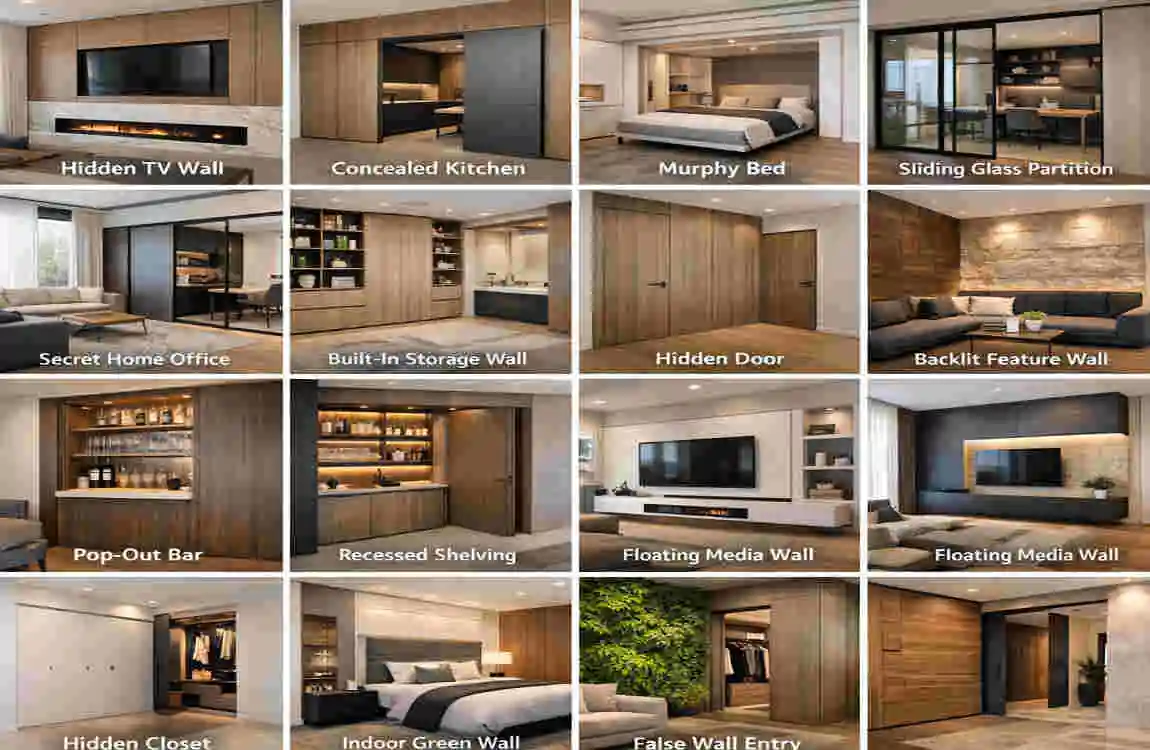
Is urban living squeezing your square footage tighter than you’d like? You are definitely not alone. Whether you are in a compact studio apartment or trying to zone a large open-concept living area, the struggle to find privacy without sacrificing flow is real.
This is where modern false wall house ideas come into play. These aren’t the dusty, permanent walls of the past. We are talking about clever, temporary partitions that divide spaces without the heavy construction. They save you money (many projects come in under $500) and instantly boost your home’s style.
What Are Modern False Wall House Ideas?
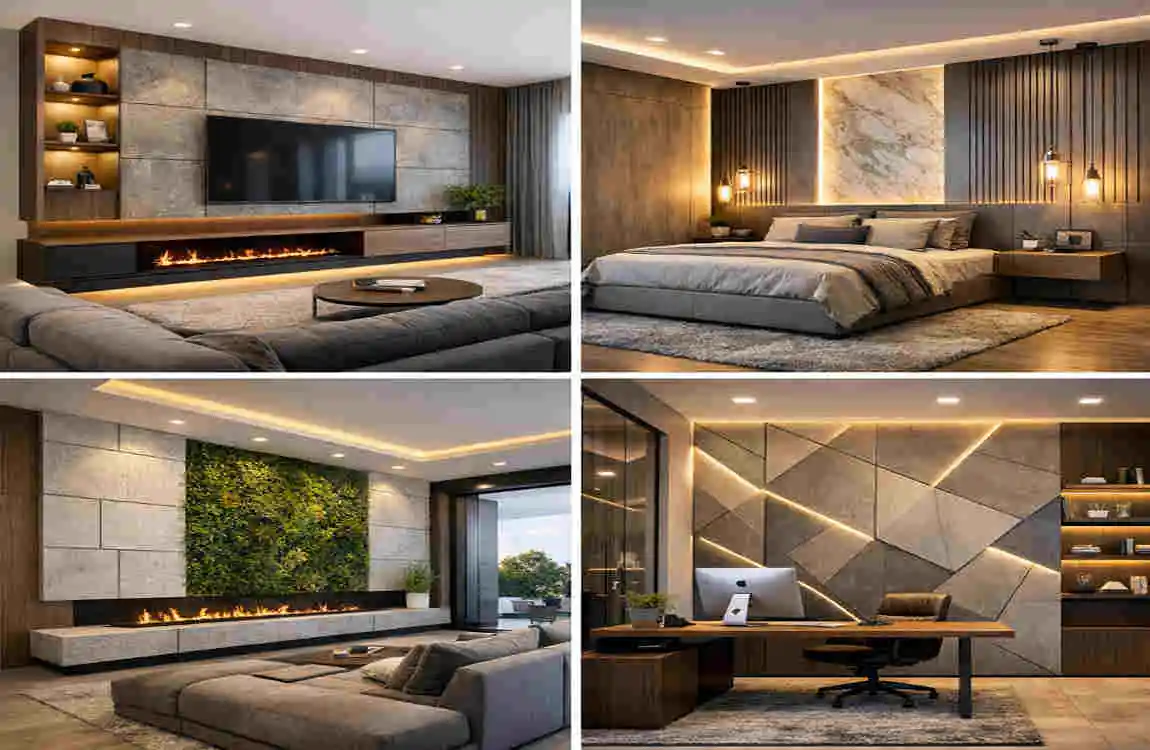
Before we jump into the specific designs, let’s clear up exactly what we mean. When we talk about modern false wall house ideas, we mean temporary or semi-permanent panels that mimic the look and feel of a solid wall but don’t require structural permits.
Unlike real drywall partitions that require framing, drywalling, and painting, false walls are often modular. They can be movable, sliding, or freestanding. They are the ultimate solution for renters who want to separate a bedroom from a living room but can’t knock down or build permanent structures.
Materials vary wildly—from sturdy plywood and sleek acrylic to soft fabrics and industrial metal mesh. The trend right now is moving toward minimalism and industrial chic, but there are plenty of boho options too.
Why go “False”?
- Cost-Effective: You save massive amounts on labor and materials.
- Renter-Friendly: most can be removed without losing your security deposit.
- Customizable: You control the height, width, and transparency.
However, keep in mind a few cons. They offer less soundproofing than a real wall, and if you don’t light them well, they can add “visual weight” to a room, making it feel smaller rather than organized.
Here is a quick look at how they stack up in terms of cost and utility:
Feature Benefit Example Cost (DIY)
Movability You can rearrange your layout anytime Free (if using sliders/wheels)
Style Versatility Can be painted or styled to match any decor $100 – $300
Space Gain Hides clutter and defines zones Up to 20% more usable sq. ft.
Why Choose Modern False Walls for Your Home?
Why should you bother with modern false wall house ideas? If you live in a tiny home, a studio apartment, or a loft, you know the pain of having your “bedroom” also serve as your “dining room” and “office.” It can be mentally exhausting to see your work desk from your pillow.
False walls address this psychological and physical problem by creating zones. By physically separating where you sleep from where you work, you create a healthier mental boundary.
Furthermore, false wall ideas for small spaces often double as storage. In 2026, the trend is all about “working walls”—partitions that hold books, plants, or even hide a fold-down desk. Sustainable materials are also huge right now; think reclaimed wood or bamboo dividers that look good and help the planet.
Ultimately, these walls allow you to upgrade your home’s aesthetic without a renovation crew. You get the high-end look of a custom build for a fraction of the price. Ready to see how? Pick your favorite from the 15 ideas below!
15 Modern False Wall House Ideas (With DIY Tips)
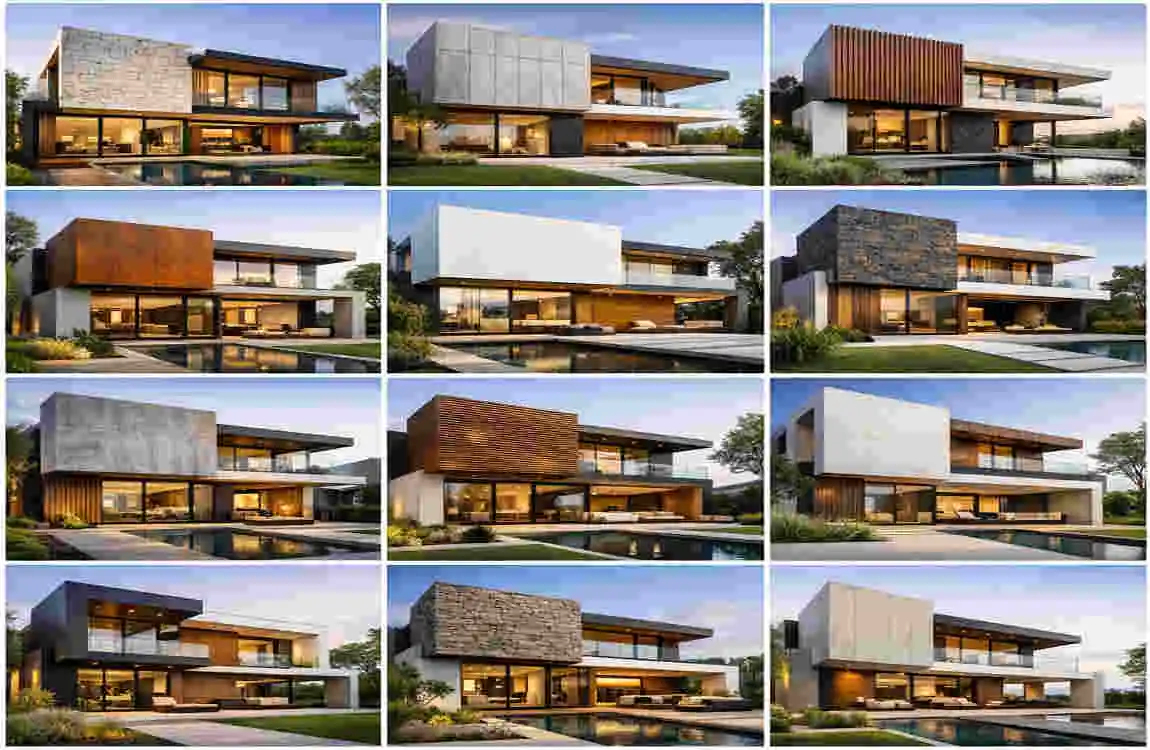
Here is the ultimate list of modern false wall house ideas to transform your space. We have broken these down with pros, cons, and even DIY steps so you can get started this weekend.
Sliding Panel False Wall
This is the classic solution for a reason. Sliding panel false walls offer the best of both worlds: total privacy when you need it, and an open concept when you don’t. Usually made of frosted glass or lightweight wood, these panels glide on a track mounted to the ceiling.
- Real-World Application: Perfect for separating a sleeping nook from a living area in a studio apartment.
- Pros:Flexible privacy settings.
- Saves floor space (no swing radius like doors).
- Looks incredibly high-end and architectural.
- Cons:Requires installing a ceiling track (drilling required).
- Glass versions can be pricey.
- DIY Steps:Measure your ceiling height accurately.
- Purchase a sliding barn door kit or curtain track system.
- Mount the track to a ceiling beam or use heavy-duty anchors.
- Attach rollers to your chosen panels (hollow core doors work great).
- Slide them onto the track and install floor guides.
- Material/Cost: $150- $400, depending on the panel material.
- Visual/Alt Text: Modern false wall house ideas: Sliding frosted glass panels separating a bedroom from a living room.
Bookshelf Partition Wall
Function meets form with this idea. A bookshelf partition wall is a large, open-back shelving unit that acts as a divider. It is one of the most practical modern false wall house ideas because it creates separation without blocking light.
- Real-World Application: Ideal for creating a hallway entrance in a home that opens directly into the living room.
- Pros:Massive amount of storage added.
- Allows light and air to pass through.
- No installation required (freestanding).
- Cons:Can look cluttered if not styled well.
- Not soundproof at all.
- DIY Steps:Buy two tall, identical open-back bookshelves (like IKEA Kallax).
- Place them side-by-side or stack them (secure them together with brackets).
- Anchor the top to the wall or ceiling for safety if you have kids/pets.
- Style with books, baskets, and decor items to create “blocks” of privacy.
- Material/Cost: $100-$300.
- Visual/Alt Text: A large wooden bookshelf acting as a room divider filled with plants and books.
Mirror-Fronted False Wall
If your space feels small and dark, this is the trick for you. A mirror-fronted false wall reflects the room on itself, effectively doubling the visual space and bouncing light into dark corners.
- Real-World Application: Great for narrow dining areas or small bedrooms that feel claustrophobic.
- Pros:Makes small rooms look huge.
- Increases natural light brightness.
- Serves as a full-length dressing mirror.
- Cons:Mirrors are heavy and fragile.
- Needs frequent cleaning (fingerprints!).
- DIY Steps:Build a simple frame using 2×4 lumber.
- Cover the frame with a sheet of plywood.
- Purchase large frameless mirror tiles or a large mirror sheet.
- Use heavy-duty mirror adhesive to stick the mirror to the plywood.
- Secure the wall in place using L-brackets to the floor and ceiling.
- Material/Cost: $200-$450.
- Visual/Alt Text: Modern false wall house ideas: A mirrored partition wall reflecting a sunny living room.
Fabric Draped Divider
Looking for a softer, more romantic vibe? A fabric draped divider creates a whimsical, boho atmosphere. This is one of the cheapest modern false wall house ideas and requires zero construction skills.
- Real-World Application: surrounding a bed to create a “canopy” feel or hiding a messy closet area.
- Pros:Extremely inexpensive.
- Adds texture and softness to the room.
- Easy to change colors/patterns seasonally.
- Cons:Does not offer sound privacy.
- Can look “cheap” if the fabric is too thin.
- DIY Steps:Install a curtain rod or a tension wire across the room.
- Buy heavy-weight curtains (velvet or linen works best).
- Hang the curtains.
- Use tie-backs to open the space when needed.
- Material/Cost: $50-$100.
- Visual/Alt Text: Thick linen curtains acting as a soft room divider in a bohemian bedroom.
Industrial Metal Mesh Wall
For those who love the urban loft look, the industrial metal mesh wall is a stunner. It defines the room’s boundary firmly but keeps the visual lines completely open.
- Real-World Application: Separating a kitchen from a dining area in an industrial-style apartment.
- Pros:Very durable and easy to clean.
- Allows 100% light and airflow.
- You can hang plants or utensils on the mesh.
- Cons:Working with metal can be tricky for beginners.
- Zero visual privacy.
- DIY Steps: Construct a frame using black iron piping or painted black wood.
- Purchase sheets of expanded metal or welded wire mesh.
- Staple or screw the mesh to the back of the frame.
- Secure the frame vertically between floor and ceiling using adjustable feet.
- Material/Cost: $150-$250.
- Visual/Alt Text: Black metal mesh screen dividing a kitchen and living space with hanging pots.
LED-Lit Acrylic Panel
This is for the modernists and gamers. An LED-lit acrylic panel serves as a futuristic divider that can change colors to match your mood. It’s a standout among modern false wall house ideas.
- Real-World Application: Perfect for a home office setup or a gaming corner in a living room.
- Pros:Acts as ambient lighting.
- Looks incredibly modern and high-tech.
- Acrylic is lighter and safer than glass.
- Cons:Acrylic scratches easily.
- Requires access to a power outlet.
- DIY Steps:Order a custom-cut piece of frosted acrylic.
- Build a U-channel wooden base to hold the acrylic upright.
- Install an LED strip light inside the wooden base channel.
- Slide the acrylic into the channel; the light will shine up through it.
- Material/Cost: $200-$350.
- Visual/Alt Text: Glowing blue LED acrylic partition wall in a modern home office.
Foldable Screen Wall
Sometimes the best solutions are the portable ones. A foldable screen wall is the ultimate renter hack. You can buy these vintage or new, and they require absolutely no installation.
- Real-World Application: Hiding a peloton bike or a desk in the corner of a bedroom when guests come over.
- Pros:100% portable; take it with you when you move.
- Can be folded away under a bed when not in use.
- Adds an artistic element.
- Cons:Can be unstable if knocked over.
- Usually quite short (doesn’t reach the ceiling).
- DIY Steps:Cut three or four panels of plywood (15 inches wide, 6 feet tall).
- Paint or wallpaper them.
- Attach the panels using double-acting hinges (which allow folding in both directions).
- Stand it up in a zigzag pattern for stability.
- Material/Cost: $80-$150.
- Visual/Alt Text: Wooden foldable screen divider standing in a living room with geometric patterns.
Hidden Storage False Wall
This is the holy grail of modern false wall house ideas. A hidden storage false wall appears to be a flat wall on one side, but the other side is a deep cabinet or closet.
- Real-World Application: Creating a walk-in closet vibe in a large main bedroom.
- Pros:Maximizes utility by adding massive storage.
- Looks like a permanent architectural feature.
- Offers good sound dampening.
- Cons:Heavy and harder to move.
- More expensive and complex to build.
- DIY Steps:Use tall wardrobe cabinets (like IKEA Pax).
- Arrange them facing away from the living area.
- On the back of the cabinets, attach a thin sheet of plywood or beadboard.
- Paint the backing to match your room’s walls.
- Now you have a wall on one side and a closet on the other.
- Material/Cost: $400-$800.
- Visual/Alt Text: White false wall that is actually the back of a wardrobe cabinet.
Plant Wall Divider
Bring the outdoors in! A plant wall divider uses greenery to create a visual barrier. It promotes wellness and improves air quality while separating your space.
- Real-World Application: Separating a sunny dining nook from the rest of the apartment.
- Pros:Air purifying and stress-reducing.
- Constantly changing as plants grow.
- Allows light to filter through leaves.
- Cons:Requires maintenance (watering, pruning).
- Can be messy (dirt/water spills).
- DIY Steps:Buy a tall, open garment rack or a dedicated vertical planter stand.
- Hang macramé plant holders or place pots on the shelves.
- Use bushy plants like Pothos or Ferns to create density.
- Material/Cost: $100-$250 (depending on plant costs).
- Visual/Alt Text: Vertical garden room divider filled with lush green plants.
Geometric Patterned Plywood
Cheap materials don’t have to look cheap. Geometric patterned plywood walls are trendy, artistic, and very budget-friendly. By cutting patterns into the wood, you create art.
- Real-World Application: An artistic separator between an entryway and a living room.
- Pros:Very inexpensive material.
- Highly customizable patterns.
- Paintable in any color.
- Cons:Requires a jigsaw and patience.
- Edges need sanding to avoid splinters.
- DIY Steps:Get a 4×8 sheet of high-grade plywood.
- Draw a geometric pattern (circles, triangles) on the wood.
- Drill pilot holes, then use a jigsaw to cut out the shapes.
- Sand everything smooth and seal with varnish.
- Hang from the ceiling using chains or mount on legs.
- Material/Cost: $50-$100.
- Visual/Alt Text: Plywood screen with cut-out geometric circles dividing a modern room.
Smart Tech False Wall
We live in a digital age, so why not have a wall that powers your life? A smart tech false wall is a partition with built-in cable management, USB ports, and screen mounts.
- Real-World Application: A partition for a home office that holds the monitor on one side and the TV on the other.
- Pros:Hides ugly cords completely.
- Adds functionality to the center of a room.
- Great for floating desk setups.
- Cons:Requires electrical know-how or extension cords.
- Needs a sturdy base to prevent tipping.
- DIY Steps:Build a hollow stud wall frame (about 6 inches thick).
- Run an extension cord through the bottom to the inside.
- Install recessed power strips into the face of the drywall/plywood.
- Clad the wall and mount your TV or monitors.
- Material/Cost: $200-$400.
- Visual/Alt Text: Modern false wall with mounted TV and hidden cable management.
Rustic Wood Slat Wall
This is the most popular design on Pinterest right now. A rustic wood slat wall involves vertical strips of wood spaced slightly apart. It creates a beautiful Scandinavian look.
- Real-World Application: Defining a staircase or an entryway.
- Pros:Timeless, elegant design.
- Maintains airflow and light visibility.
- Adds warmth with natural wood tones.
- Cons:Dusting between slats can be tedious.
- Lumber prices can vary.
- DIY Steps:Buy 1×2 or 2×2 lumber strips (pine or oak).
- Stain or seal the wood.
- Build a top and bottom plate (track).
- Screw the vertical slats into the plates with a 2-inch gap between them.
- Secure the structure to the floor and ceiling.
- Material/Cost: $150-$300.
- Visual/Alt Text: Vertical wood slat partition wall in a Scandinavian style living room.
Floating Shelf Cascade
A variation on the bookshelf, the floating shelf cascade uses a central column with shelves extending on both sides, or shelves suspended on wires. It creates a “floating” illusion.
- Real-World Application: Displaying collectibles between a dining and living area.
- Pros:Looks very light and airy.
- Great for displaying art objects.
- Minimal floor footprint.
- Cons:Cannot hold heavy items.
- Items can be knocked off easily.
- DIY Steps:Install floor-to-ceiling tension rods or cables.
- Drill holes in wooden planks to thread them onto the rods.
- Use clamps underneath each shelf to hold them at desired heights.
- Material/Cost: $100-$200.
- Visual/Alt Text: Shelves suspended on cables acting as a transparent room divider.
Velvet Upholstered Panel
Bring the hotel luxury home. A velvet upholstered panel is a solid partition covered in foam and fabric. It serves as a headboard or a sound-dampener.
- Real-World Application: Behind a bed in a studio to create a distinct “bedroom” zone separate from the sofa.
- Pros:Excellent sound absorption.
- Looks incredibly luxurious.
- Soft to the touch (kid-friendly).
- Cons:Hard to clean stains.
- Dust magnet.
- DIY Steps:Cut a plywood sheet to size.
- Glue 1-inch foam to the plywood.
- Stretch velvet fabric over the foam and staple gun it to the back.
- Add buttons for a tufted look if desired.
- Mount on legs or hang from the ceiling.
- Material/Cost: $150-$250.
- Visual/Alt Text: Green velvet upholstered room divider partition.
Modular Block Wall
Think Lego for adults. A modular block wall consists of lightweight, stackable plastic or cardboard blocks designed for interior partitions. It is fun, quirky, and super easy.
- Real-World Application: A playful divider in a child’s room or a creative studio space.
- Pros:Zero tools required.
- Fun to build and reconfigure.
- Lightweight and safe.
- Cons:Can look like a toy.
- Not very structural (don’t lean on it).
- DIY Steps:Purchase a modular partition kit (like EverBlock).
- Design your pattern.
- Stack the blocks to form the wall.
- Change the shape whenever you get bored.
- Material/Cost: $200-$500.
- Visual/Alt Text: White modular blocks stacked to create a partition wall in a playroom.
Materials and Tools for Building Modern False Walls
If you are going the DIY route with these modern false wall house ideas, selecting the right material is half the battle. You want something that balances weight, cost, and durability.
Here are the top contenders:
Material Durability Approx Cost (per sq m)Style Fit
Plywood High $20 Minimalist, Industrial, Scandi
Fabric Low $10 Bohemian, Soft, Romantic
Acrylic Medium $30 Contemporary, Gamer, Modern
MDF Medium $15 Painted, Classical
Metal Mesh High $25 Industrial, Loft
Essential Tools Checklist: Before you start building, head to your local hardware store (if you are in Lahore, places like Paint Point or local hardware markets on Ferozepur Road are great; otherwise, Home Depot or Lowe’s works).
- Drill & Driver: For anchoring and screwing frames.
- Saw: Circular saw or Jigsaw (or ask the lumber yard to cut for you).
- Measuring Tape: Measure twice, cut once!
- Stud Finder: Essential if you are anchoring to the ceiling.
- Level: Nobody wants a crooked wall.
Cost Breakdown and DIY vs. Pro Installation
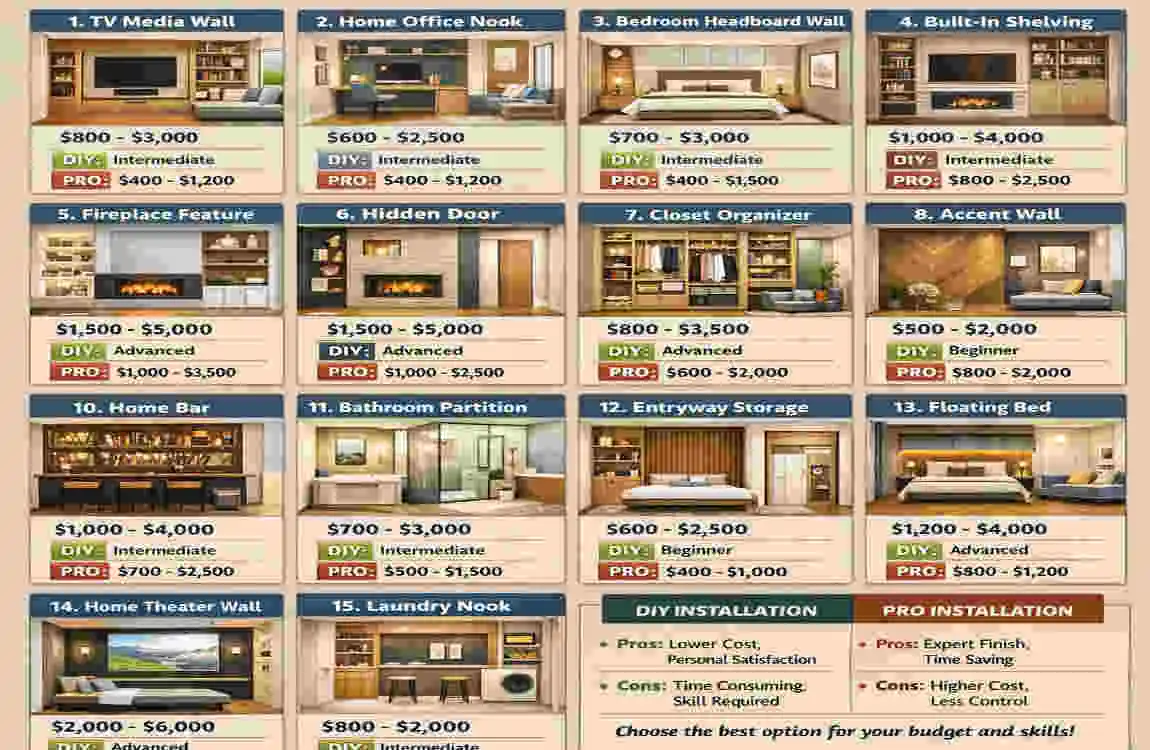
How much will this actually cost you?
The DIY Route: If you build it yourself, you pay only for materials. Most of the modern false wall house ideas listed above fall within the $100- $300 range. You save about 50-60% of the total cost by putting in the labor yourself.
The Professional Route: Hiring a carpenter or a contractor significantly increases the price. You are looking at $ 500- $1,500, depending on complexity.
When to Hire a Pro:
- Heavy Loads: If you plan to hang a TV or heavy cabinets on the false wall.
- Electrical: If you need outlets installed inside the wall.
- Glass: Handling large sheets of glass is dangerous and requires expertise.
If you are unsure, start with a simple project like the Bookcase Wall (#2) or the Foldable Screen (#7) to test the waters!
Common Mistakes to Avoid with False Walls
Even with the best modern false wall house ideas, things can go wrong. Here is how to avoid disaster:
- Overloading Weight: Never hang heavy items on a false wall unless you have built a proper internal stud frame and anchored it to the floor and ceiling. A tension rod wall cannot hold a TV!
- Ignoring Lighting: Putting a solid wall in the middle of a room can block the only window. Fix: Use slat walls, mesh, or glass if the room only has one light source.
- Poor Airflow: In hot climates, blocking airflow can make one “zone” stuffy. Fix: Leave a gap at the top or bottom, or use breathable materials.
- Forgetting the Floor: If you drill into the floor, you might ruin your hardwood or tile. Fix: Use felt pads or tension-based systems if you are renting.
Frequently Asked Questions (FAQ) About Modern False Wall House Ideas
Q: Can I build a false wall without drilling holes in the floor or ceiling? A: Yes! This is perfect for renters. You can use tension rod systems (which use pressure to stay in place between the floor and ceiling) or freestanding options like heavy bookshelves or weighted screens. These require zero screws and leave no damage when removed.
Q: Do modern false walls provide soundproofing? A: Generally, no, not as well as a real wall. However, you can improve privacy by using dense materials like bookshelves filled with books or acoustic foam panels upholstered with fabric. Glass and open slats will block visuals but let sound pass through easily.
Q: What is the cheapest modern false wall idea? A: The most budget-friendly option is a fabric drape divider or a curtain wall. You can set this up for under $50 using a simple wire or rod system. For a sturdier structure, a PVC pipe frame covered in fabric or a repurposed pallet wall are very low-cost DIY projects.
Q: Can I hang a TV on a false wall? A: Only if it is reinforced. A simple plywood or screen wall cannot support a heavy TV. You must build a wooden stud frame (similar to a real wall) and anchor it securely to the floor and ceiling to safely hold the weight of a television or heavy cabinets.
Q: How much does it cost to build a DIY false wall? A: Most DIY projects fall between $100 and $500. Simple dividers like curtains or slat walls are on the lower end ($100–$200), while complex structures involving glass, acrylic, or sliding tracks can cost upwards of $400–$800.
Q: Do I need a permit to build a false wall? A: In most cases, no. Because false walls are considered “temporary furniture” or non-structural partitions, they usually don’t require building permits. However, if you are adding electrical wiring or completely closing off a room (blocking fire exits/windows), you should check your local building codes.
