

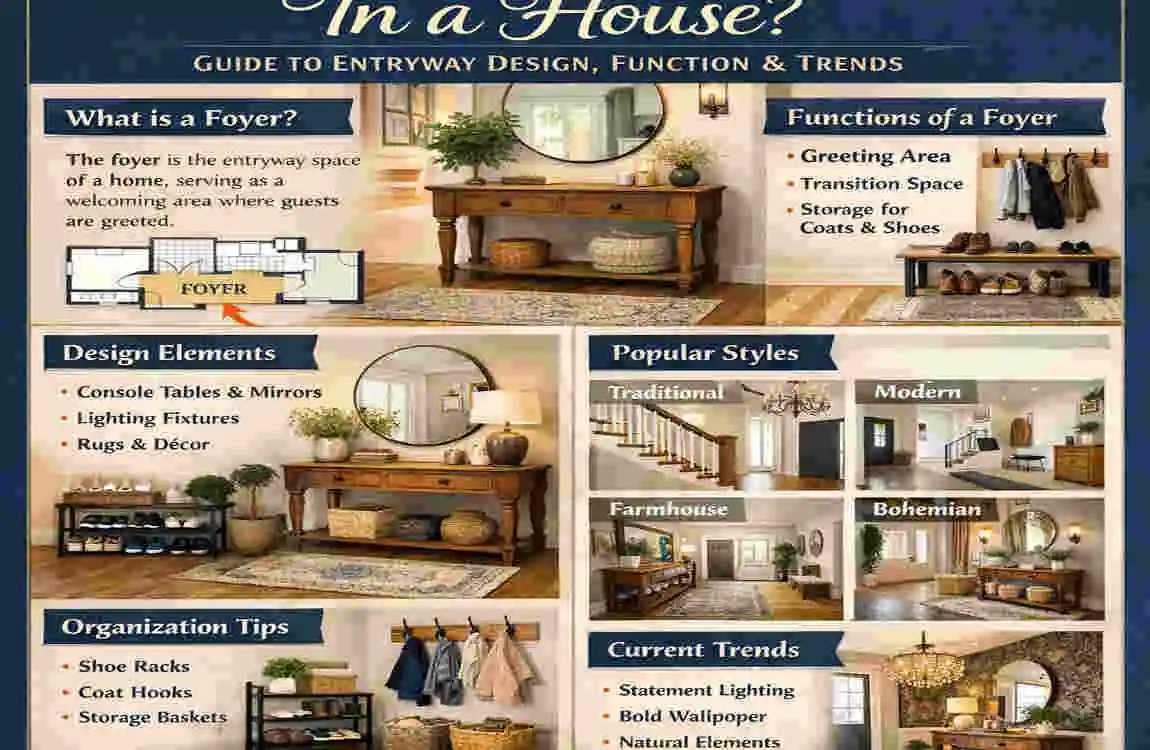
Have you ever walked into a home and immediately felt a sense of calm and welcome? Or, conversely, have you stepped inside only to feel cluttered and overwhelmed before you’ve even taken off your coat? That initial feeling is almost entirely dictated by one specific space: the foyer.
If you have ever found yourself asking, “What’s a foyer in a house?” you are not alone. It is a term that gets thrown around a lot in real estate listings and interior design magazines, often interchangeably with “entryway” or “hallway.” But a true foyer is something special. It is the handshake of your home—the very first impression you make on the world.
Did you know that according to real estate statistics, nearly 80% of prospective homebuyers form an opinion about a property within seconds of stepping through the front door? That puts a lot of pressure on this relatively small space!
What Is a Foyer? Definition and Basics
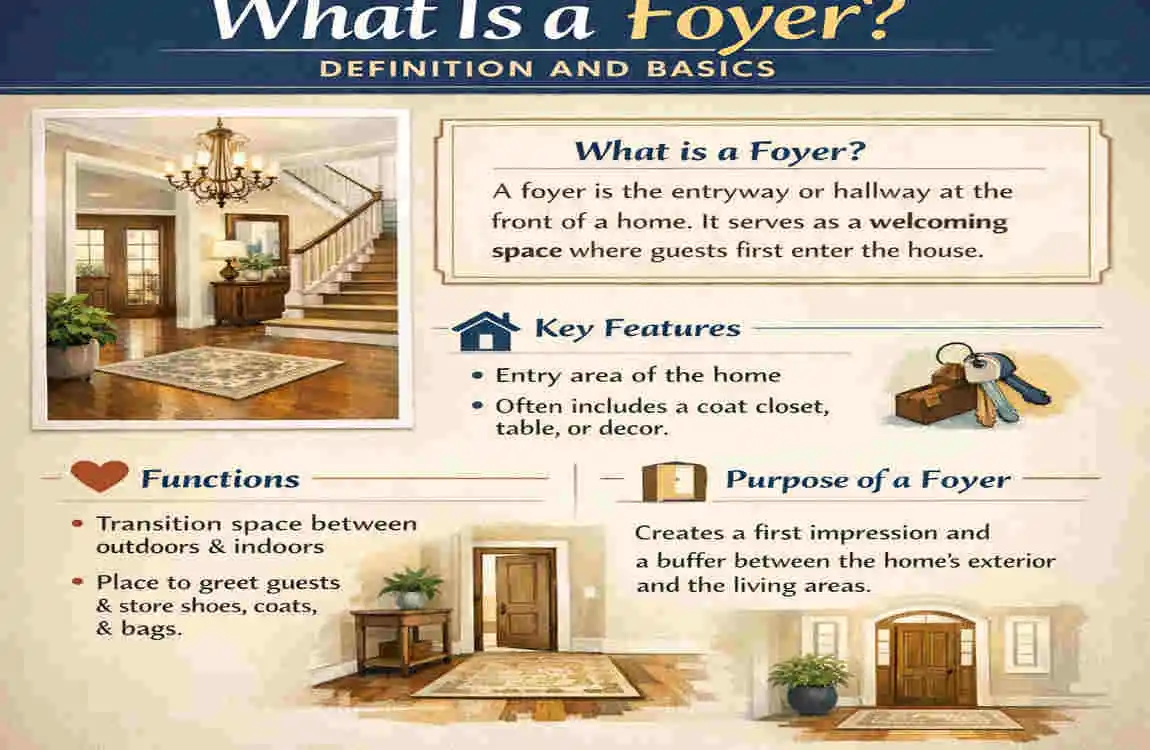
Let’s start with the basics to answer your burning question: What’s a foyer in a house?
Core Definition of a Foyer in a House
Technically speaking, a foyer (pronounced foy-ay or foy-er, depending on where you live) is an area at the front of the home, just inside the main entry door, that connects the outdoors to the rest of the house. It serves as a transitional space—a buffer zone, if you will—that separates the public world outside from your private sanctuary inside.
The word itself has a warm and inviting history. It comes from the French word foyer, which means “hearth” or “fireplace.” Centuries ago, this space was where the fire burned, serving as the central gathering spot for warmth. Over time, as architecture evolved, the “foyer” moved to the front of the house. While we rarely keep fireplaces there anymore, the spirit of warmth and welcoming remains its core purpose.
Unlike a simple hallway that leads you from point A to point B, a foyer is a destination in itself. It is a dedicated pause point where guests are greeted, coats are removed, and the tone for the rest of the home is set.
Foyer vs. Entryway vs. Mudroom: Key Differences
This is where things often get confusing. You might hear these terms used as synonyms, but they actually serve different functions. Understanding the difference is key to designing the space correctly.
Here is a simple breakdown to help you distinguish them:
Feature Foyer Entryway Mudroom
Primary Purpose: Formal greeting, aesthetics, and transition. General term for any entrance area. Utility, storage, and mess containment.
Vibe Clean, decorative, and welcoming. Functional and direct. Casual, durable, and often “lived-in.”
Typical Location: Front door (Main entrance). Front, side, or back door. Back door, side door, or garage entry.
Key Elements: Console table, mirror, statement lighting. Doormat, simple hooks. Cubbies, heavy-duty benches, laundry.
Best Flooring Wood, polished stone, decorative tile. Durable tile or laminate. Waterproof vinyl, slate, and concrete.
Think of it this way: The foyer is where you welcome your dinner party guests. The mudroom is where the kids drop their muddy soccer cleats and wet raincoats. If your home only has one entrance, you often have to blend these two functions, creating a “formal” look with “mudroom” durability.
Common Foyer Sizes and Layouts
Foyers come in all shapes and sizes, and you don’t need a mansion to have one.
- The Petite Foyer (Approx. 5×5 ft): Common in apartments and smaller bungalows. This is usually just a square of distinct flooring or a small nook behind the door. The goal here is efficiency.
- The Standard Foyer (Approx. 8×10 ft): Found in most suburban family homes. You have enough room for a console table, a mirror, and a small bench without blocking traffic.
- The Grand Foyer (15×15 ft and up): These are the two-story, chandelier-laden spaces you see in luxury estates. They often feature winding staircases and are designed purely for architectural drama.
The Function of a Foyer in Modern Homes
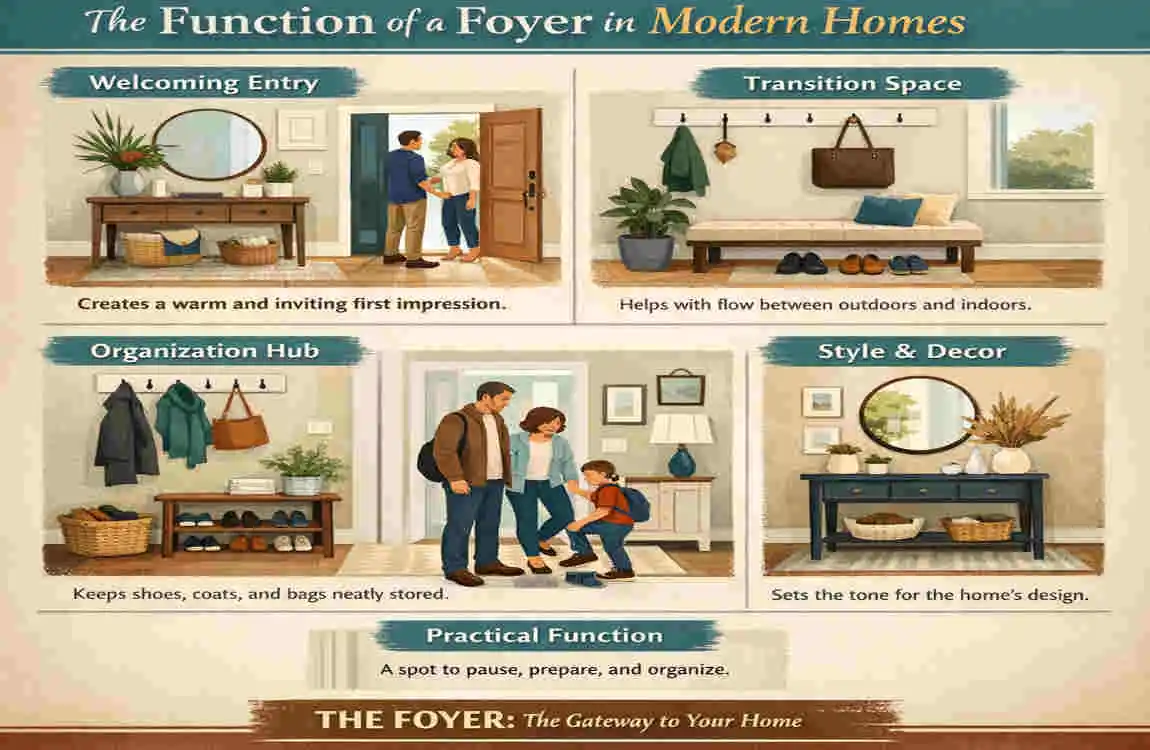
Why does your home actually need a foyer? Is it just wasted square footage? Absolutely not. In modern homes, the function of a foyer is critical for flow and sanity.
Primary Functions: Welcome, Buffer, and Flow
At its most practical level, the foyer acts as an airlock. It prevents the cold of winter or the scorching heat of summer from blasting directly into your living room every time the door opens. It also acts as an acoustic buffer, dampening street noise.
Beyond temperature control, the foyer manages the traffic flow of your house. It directs people where to go. Without a defined foyer, guests might walk straight into the middle of a conversation in the living room or stumble into the kitchen. The foyer gives them a moment to orient themselves. It says, “Take a breath, take off your shoes, and come in when you’re ready.”
Psychological Impact: First Impressions Matter
We cannot overstate the psychology of this space. Interior designers often refer to the “arrival experience.”
When you enter a home that is cluttered, dark, or undefined, your brain instantly registers stress. Conversely, a well-designed foyer that smells good (maybe a diffuser?), has soft lighting, and an organized place to put your keys creates an immediate dopamine hit of relief.
Studies suggest that the “halo effect” applies to homes, too. If a guest sees a beautiful, organized foyer, they subconsciously assume the rest of the house is equally clean and well-maintained. This is why home stagers spend so much money fixing up entryways—it sets the expectation for the entire tour.
Multi-Purpose Uses in Small Spaces
For those of us living in urban apartments or smaller homes (as in many cities, including Lahore, London, and New York), the foyer has to moonlight as other things.
- The Drop Zone: It’s the designated spot for keys, mail, and wallets so they don’t end up on the kitchen counter.
- The Mini-Library: A console table with shelves can hold books.
- The Art Gallery: In a small home, the foyer walls are often the best place to display large artwork that might overwhelm a small living room.
Foyer Design Ideas: Elements for Stunning Entryways

Now that we know what a foyer in a house is, let’s get into the fun part: making it look incredible. You don’t need a professional designer to create a space that wows; you need to focus on a few essential elements.
Essential Foyer Design Elements
To build a functional and beautiful foyer, focus on these three pillars:
- Flooring: The floor in your foyer takes a beating. It sees dirt, mud, high heels, and paw prints.
- Tile: Porcelain or ceramic tiles are top-tier choices because they are waterproof and scratch-resistant. Patterned tiles (like herringbone or mosaics) are huge in 2026 for defining the space.
- Hardwood: Hardwood flows beautifully in an open floor plan, but you must use a high-quality rug to protect it from moisture near the door.
- Lighting: Never rely on a single boob-light fixture. You need layers.
- Overhead: A chandelier or semi-flush mount creates a focal point.
- Accent: Sconces on the wall or a lamp on the console table provide that warm, welcoming glow in the evening.
- Walls: Since the foyer is a pass-through space (you don’t sit and stare at the walls for hours), this is the perfect place to take a risk!
- Try a bold wallpaper print.
- Use wainscoting or beadboard to add architectural interest and protect walls from scuffs.
Foyer Furniture and Storage Solutions
Furniture in a foyer must be slim and functional. You want to avoid “hip-bruisers”—furniture that sticks out too far and catches you as you walk by.
- The Console Table: The MVP of foyer furniture. It should be narrow (12-15 inches deep). Look for one with drawers to hide “ugly” clutter like mail and keys.
- The Bench: If you have the space, a bench is a polite gesture. It gives guests (and you) a place to sit while putting on or taking off shoes. In 2026, we are seeing many storage benches with hidden compartments.
- Hooks and Racks: If you lack a coat closet, install decorative wall hooks. Brass or matte black hooks can look like art even when empty.
Color Schemes and Lighting Trends
For 2026, the trend is moving away from the stark, clinical whites of the early 2020s. We are craving warmth.
- Warm Neutrals: Think creamy whites, taupes, and soft terracottas.
- Moody Entryways: Dark navys, forest greens, or charcoal grays are incredibly popular for foyers. A dark foyer makes the adjoining living room feel brighter and larger by comparison—a classic designer trick!
DIY Foyer Makeover on a Budget
You don’t need a contractor to fix your foyer. Here is a simple weekend roadmap:
- Paint the Front Door: Paint the inside of your front door a contrasting color (like black or sage green). It hides dirt and looks custom.
- Change the Hardware: Swap out the doorknob and light switch plates for fresh metal finishes.
- Thrift a Mirror: Find a unique vintage mirror at a thrift store. Gold spray paint can turn a $10 frame into a $200 antique.
Foyer Decor Tips to Personalize Your Space

Once you have the bones (flooring, furniture, lighting), it is time to add the soul. This is how you answer “what’s a foyer in a house” with your own personal style.
Wall Decor and Mirrors for Depth
If you have a small foyer, a mirror is non-negotiable. It reflects light, making a cramped hallway feel airy and open. Place the mirror directly across from a light source (like the door window) to maximize the effect.
For wall art, consider a gallery wall. A collection of smaller frames can guide the eye into the home. Just be sure to secure them well so they don’t rattle every time the front door slams!
Rugs, Plants, and Accessories
- The Runner Rug: A long runner rug draws the eye forward, inviting guests in. It also traps dust before it reaches your living room. Pro tip: Use an outdoor rug inside. They are indistinguishable from indoor rugs these days, but are virtually indestructible and hose-washable.
- Greenery: Plants breathe life into a space. If your foyer has natural light, a tall Fiddle Leaf Fig or a Monstera looks stunning. No light? A Snake Plant or ZZ Plant will survive almost anything.
- The “Scent” of Home: Place a reed diffuser on your console table. Scents like vanilla, citrus, or cedarwood are universally welcoming.
Seasonal Foyer Decor Swaps
Because the foyer is small, it is easy to update for the seasons without spending a fortune.
- Spring: A vase of fresh tulips and a pastel doormat.
- Ramadan/Eid/Christmas: Lanterns on the floor, a wreath on the inside of the door, or a garland draped over the mirror.
- Autumn: A bowl of pinecones or dried wheat stems on the console.
2026 Foyer Trends: What’s Hot in Entryway Design
As we navigate through February 2026, interior design is shifting towards spaces that feel personal, grounded, and smart. Here is what is trending right now.
Sustainable and Biophilic Designs
Sustainability isn’t just a buzzword anymore; it’s a standard. In 2026, we are seeing a surge in “Biophilic Design” in foyers. This means bringing the outdoors in.
- Materials: Reclaimed wood console tables, bamboo flooring, and natural stone tiles (travertine is having a huge moment).
- Living Walls: Small vertical gardens or preserved-moss walls are becoming popular in high-end apartments where floor space is limited, but wall space is plentiful.
Smart Tech Integration
The “Smart Home” starts at the front door.
- Smart Locks: Keyless entry systems are now sleek and stylish, no longer looking like clunky gadgets.
- Automated Lighting: Motion-sensor lighting in the foyer is a huge feature. Imagine walking in with groceries and the lights fading up automatically—no fumbling for switches.
- Video Doorbells: These are now being integrated into the overall design, with faceplates that match the door hardware.
Bold Minimalism and Textures
Minimalism is still here, but it’s no longer boring. The 2026 trend is “Bold Minimalism.” This means fewer items, but the items you do have are sculptural and interesting. Think of a console table made of rough-hewn stone paired with a sleek, frameless mirror. We are seeing a lot of texture play—mixing smooth glass with rough wood or boucle fabrics on benches.
FAQs
Here are answers to the most common questions people ask about foyers.
What’s a foyer in a house exactly?
A foyer is the entryway area of a home, located immediately inside the front door. It serves as a connecting space between the exterior and the interior living areas. Its main purpose is to welcome guests, provide a space to remove coats/shoes, and buffer the home from outdoor weather.
What’s the difference between a foyer and an entryway?
“Entryway” is a broad term that refers to any entrance to a home (front, back, or side). A “foyer” specifically refers to the formal main entrance at the front of the house. While all foyers are entryways, not all entryways are foyers.
How can I design a small foyer?
Focus on vertical space! Use a large mirror to reflect light and create the illusion of depth. Install wall-mounted hooks instead of a bulky coat rack, and use a narrow “floating” console shelf to hold keys without taking up floor space.
What are the latest foyer trends for 2026?
The biggest trends for 2026 include Biophilic design (living plants, natural wood/stone), Smart lighting (motion sensors and voice control), and Warm Minimalism (using texture rather than clutter to create interest).
How much does a foyer remodel cost?
A budget DIY refresh (paint, new rug, mirror) can cost as little as $200-$500. A moderate update (new light fixtures, console table, wallpaper) typically runs $1,000-$3,000. A full renovation with new tile flooring and custom carpentry can cost $5,000+ or more.
