

You’ve had a long day at work. You unlock your front door, ready to kick off your shoes and relax, but the moment you step inside, it hits you. A sharp, stinging scent that burns your nose slightly. You pause and sniff the air. It doesn’t smell like home; it smells like a public swimming pool.
If you are currently standing in your living room, wondering if someone secretly installed a hot tub while you were away, take a deep breath (well, maybe not too deep). You are not alone. This is actually a fairly common issue for homeowners, tied to everything from your local water supply to hidden plumbing quirks.
According to EPA data, over 70% of U.S. homes connected to municipal water systems deal with chlorinated water daily. While chlorine is essential for killing bacteria, it’s not exactly a fragrance you want lingering in your bedroom or kitchen. Aside from being unpleasant, constant exposure to strong chlorine odors can lead to irritated eyes, dry skin, and respiratory issues among sensitive family members.
What Causes a Chlorine Smell in Your House?
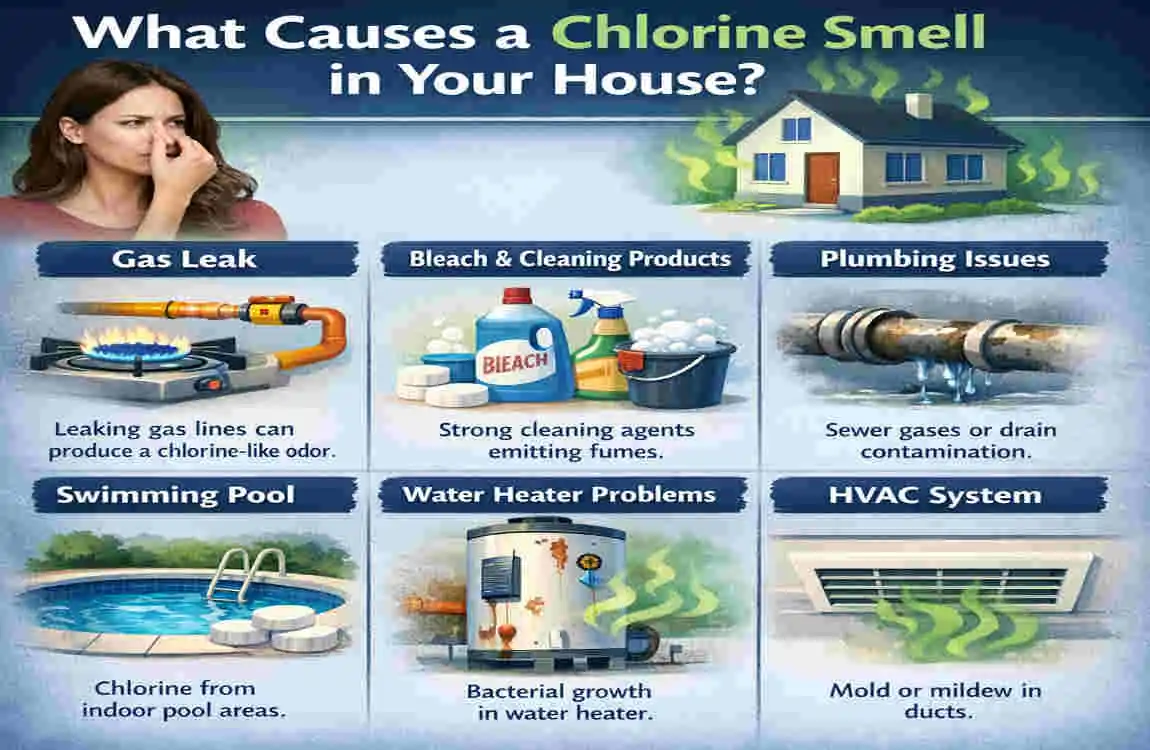
Before we start ripping apart the plumbing, it is helpful to understand what you are actually smelling.
Chlorine is a powerful disinfectant used by water treatment plants to ensure your tap water is safe to drink. The CDC guidelines generally allow up to 4 parts per million (ppm) of chlorine in drinking water. While this is safe for consumption, chlorine is highly volatile. This means it can easily turn from a liquid to a gas (vapor) when it comes into contact with air, especially if the water is hot or moving fast, like in a shower.
However, it is crucial to ensure you identify the right smell.
- Ammonia smell: This is often sharper and is frequently associated with cat urine or mold.
- Rotten egg smell: This usually points to sulfur or a gas leak.
- Bleach/Chlorine smell: This smells clean but sterile, exactly like a pool or laundry day.
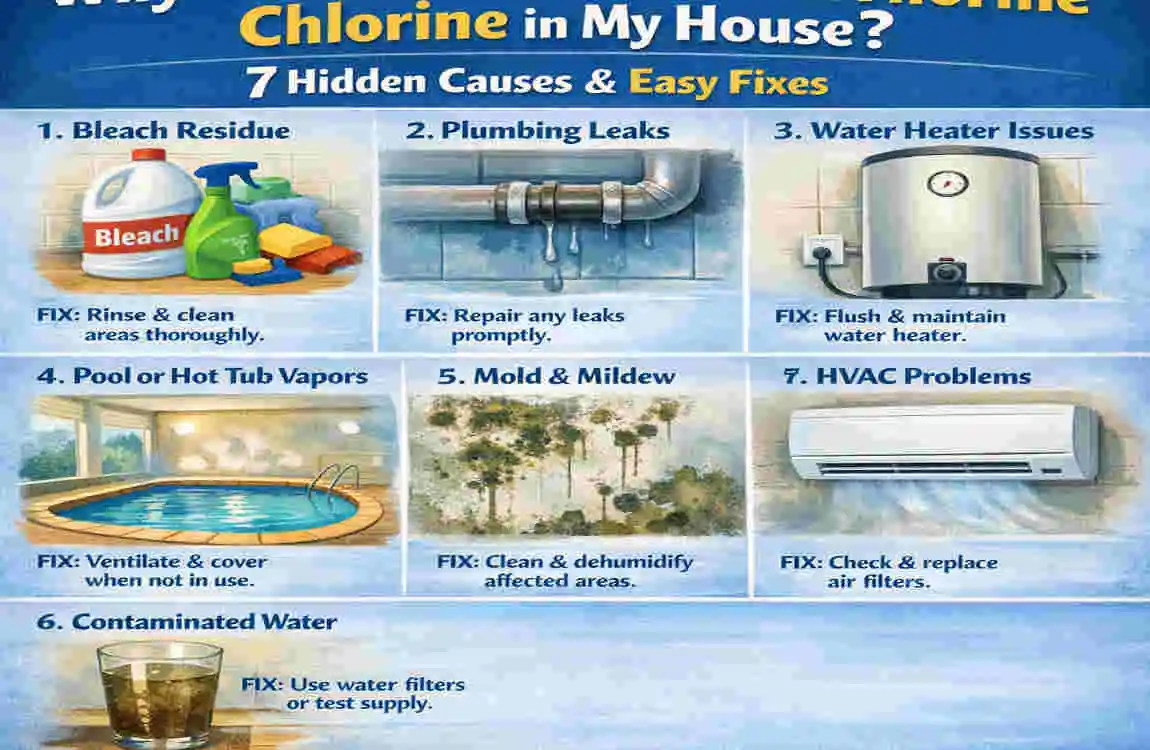
If you are certain it is the latter, keep reading. Here are the 7 most hidden culprits behind that pervasive chlorine odor.
7 Hidden Causes of Chlorine Smell in Your House
We have broken these down into detailed sections so you can diagnose the specific issue in your home.
Chlorinated Municipal Water Supply
The most common reason for a chlorine smell in the house is simply the water coming out of your tap. Municipal water treatment plants have a tough job: they have to make sure water travels miles through pipes without picking up bacteria. To do this, they add chlorine or chloramines.
Why it happens: Sometimes, the levels of chlorine fluctuate. If you live close to the treatment plant, your water might have a higher concentration of disinfectant than someone living ten miles away. Furthermore, as we mentioned earlier, chlorine vaporizes easily. When you take a hot shower, run the dishwasher, or do a load of laundry, that heat accelerates the process. The chlorine leaves the water and fills the air, turning your bathroom into a steam room that smells like a YMCA pool.
Symptoms:
- The smell is strongest in humid areas, such as bathrooms and kitchens.
- The odor spikes in the morning when everyone is showering.
- You can taste a slight chemical flavor in your tap water.
How to diagnose: Run the hot water for 2 minutes at a faucet, then fill a glass. Sniff it immediately. Does the smell waft up from the glass? If yes, your municipal supply is the likely source. You can also buy cheap water test strips online to verify chlorine levels yourself.
Well Water Contaminated by Bleach or Sanitizers
If you live in a rural area and rely on a private well, you might think you are safe from “city water” smells. Surprisingly, well owners frequently ask, “Why does it smell like chlorine in my house?”
Why it happens: This usually happens after a process called “shock chlorination.” If you or a technician recently treated your well with bleach to kill bacteria (shocking the well), it takes a significant amount of time to flush that chemical out of the system. Additionally, in agricultural areas, runoff containing sanitizers can sometimes seep into groundwater.
Note for readers in regions like South Asia (e.g., Lahore): In many areas relying on groundwater, local authorities often perform unannounced “super-chlorination” of supply lines to combat seasonal waterborne diseases, which can result in a sudden, overpowering odor.
Symptoms:
- A sudden onset of the smell after well maintenance.
- Earthy undertones mixed with the chemical smell.
- The water may feel slightly “slimy” due to the chemical reaction.
How to diagnose: Check your maintenance logs. Was the well shocked recently? If not, test the pH levels of your water. A sudden shift in pH, along with the smell, suggests chemical intrusion.
Leftover Bleach in Cleaning Products or Drains
Sometimes, the culprit isn’t the water supply—it’s the way we clean our homes. We often become “nose blind” to the scents we use while scrubbing, only to notice them lingering hours later.
Why it happens: Bleach is a heavy, dense chemical. If you use it to scrub your toilet, clean your mop heads, or disinfect the garbage disposal, the residue can stay behind long after you finish. If you pour straight bleach down a drain and don’t flush it with enough water, the fumes can drift back up through the pipes.
Warning: Never mix bleach with other cleaners (such as ammonia or vinegar), as this creates toxic chloramine gas that smells similar but is very dangerous.
Symptoms:
- The smell lingers specifically in the kitchen or guest bathroom.
- It smells “clean” but too intense.
- You recently did a deep clean or had a cleaning service visit.
How to diagnose: Do a “sniff test” of your drains. Put your nose near the sink drain (safely). If the smell is emanating from there, it’s likely trapped residue in the P-trap or disposal blades.
Swimming Pool or Hot Tub Chemicals Indoors
This seems obvious, but it is often a hidden cause because the source isn’t the pool itself, but the chemical storage.
Why it happens: Chlorine tablets and shock powder are incredibly potent. Even when sealed in plastic tubs, vapors can escape. If you store your pool chemicals in an attached garage, a basement utility room, or a mudroom, those heavy fumes can migrate into the rest of the house. They get pulled into the house through drafty doors or, worse, sucked into your HVAC return vents.
Symptoms:
- The smell is strong near the door leading to the garage or basement.
- It gets worse on hot days when the storage area heats up (causing more evaporation).
- You don’t even have the pool open, but the smell persists.
How to diagnose: Go to where you store your chemicals. Is the smell overpowering in that specific zone? Check your HVAC intake—is it near your chemical storage? If so, you are effectively pumping that smell into every room of your house.
Faulty Water Heater or Softener Issues
This is one of the trickier causes to pin down. Your water heater or water softener can actually create chemical reactions that mimic the smell of chlorine.
Why it happens: Water heaters contain an anode rod (usually made of magnesium or aluminum) that attracts rust, preventing your tank from corroding. Sometimes, bacteria in the water react with this rod, producing gases. While this often smells like rotten eggs, certain bacterial strains combined with chlorinated water can produce a sharper, bleach-like gas. Similarly, if your water softener is stuck in a regeneration cycle or using the wrong salt ratio, it can release odors.
Symptoms:
- The smell peaks strictly after using hot water. Cold water smells fine.
- You have noticed your water softener running more often than usual.
- The smell seems “metallic” mixed with chlorine.
How to diagnose: Fill two glasses: one with hot water, one with cold water. If only the hot water smells, the issue is almost certainly inside your water heater tank.
Hidden Plumbing Leaks or Sewer Gas
This is the one you do not want to ignore. While sewer gas usually smells like sulfur, it can vary depending on the bacteria present and the chemicals you put down your drains.
Why it happens: Every drain in your house has a U-shaped pipe called a P-trap. This trap holds a small amount of water that acts as a seal, blocking sewer gases from rising into your home. If you have a sink in a guest room or a rarely used floor drain in the basement, the water in the trap can evaporate. Once that seal is dry, gases from the sewer—which can smell chemically due to municipal treatment—float right into your home.
Symptoms:
- Intermittent smells near floor drains, laundry sinks, or unused bathrooms.
- The smell comes and goes with the wind or weather changes.
- No water is running, but the smell is present.
How to diagnose: Pour a bucket of water down any rarely used drains. If the smell disappears after an hour, it was just a dry P-trap. If the smell persists, you may have a cracked vent pipe behind a wall.
7. HVAC System or Air Conditioner Contamination
If the smell is everywhere at once, rather than localized to a sink or room, look up at your vents.
Why it happens: Your air conditioner produces condensation (water) as it cools the air. This water drips into a pan and drains away. However, if that drain gets clogged, the water sits there. If you use bleach or strong chemical tablets to clean your drain line, or if the condensate absorbs chlorine vapors from nearby cleaning products, the system will circulate that scent. Additionally, mold growing on the coils can sometimes give off a sharp, acrid scent that is mistaken for chemicals.
Symptoms:
- The smell is a “whole-house” phenomenon.
- It gets stronger the moment the AC or heat kicks on.
- You cannot pinpoint a specific room where it originates.
How to diagnose: Check your air filters. Sniff them. Inspect the condensate pan near your furnace or air handler. Is there standing water? Does it smell chemical?
Easy Fixes: How to Get Rid of Chlorine Smell in Your House
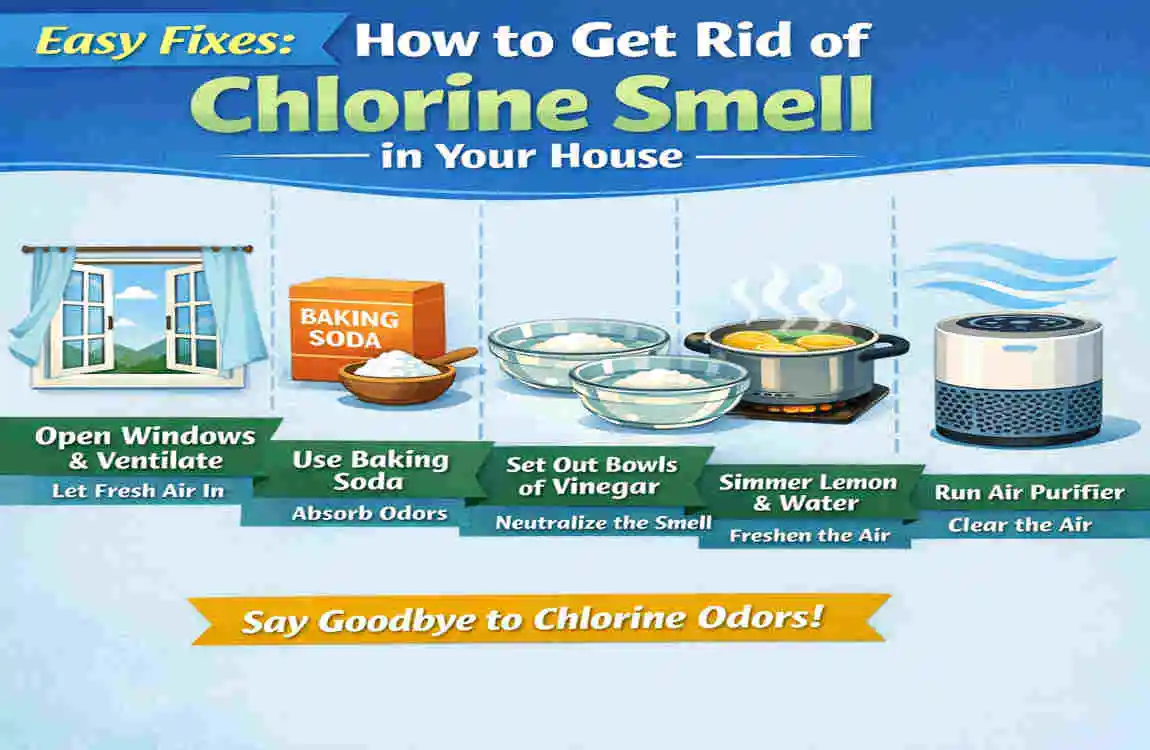
Now that we have identified the “why,” let’s talk about the “how.” You don’t always need a plumber to fix this. Here are actionable steps you can take.
Immediate Steps (The “Right Now” Fixes)
Ventilate: Open windows immediately to create a cross-breeze. Chlorine gas is heavier than air, so getting air moving is essential to dissipate the concentration.
The 10-Minute Flush: If you suspect the municipal supply or a recent well shock, turn on every cold water faucet in your house. Let them run for 10 to 15 minutes. This flushes out the water sitting in your pipes (which has likely concentrated the smell) and brings in fresh water from the main line.
Check the P-Traps: Go to every sink, shower, and floor drain that hasn’t been used in a week. Pour a quart of water down each one. This reseals the barrier against sewer gases.
Long-Term Solutions
If the smell is a chronic issue from your water supply, you need a permanent barrier.
install Activated Carbon Filters: Carbon is the enemy of chlorine. It absorbs it instantly. You can install:
- Whole-house filters: These treat the water before it enters your pipes.
- Point-of-use filters: These go under your kitchen sink.
- Refrigerator filters: Ensure your drinking water is crisp and odorless.
Vitamin C Showerheads: This sounds like a gimmick, but it is science. Vitamin C (ascorbic acid) neutralizes chlorine and chloramines. You can buy showerheads with replaceable Vitamin C cartridges for under $50. This stops the bathroom from smelling like a pool when you shower.
Water Softener Maintenance: If the heater is the issue, flush your water heater tank (a good yearly practice anyway) to remove sediment. For softeners, check the manufacturer’s manual to ensure you are using the correct salt and settings.
Comparison of Fixes
Fix Cost Time Required Effectiveness
Activated Carbon Filter $50 – $300 1 Day High (Removes source)
Ventilation Boost Free Immediate Medium (Temporary)
Vitamin C Showerhead $30 – $60 15 Mins High (For bathrooms)
Water Softener Flush $20 (DIY) 30 Mins Medium (Specific issues)
P-Trap Refill Free 5 Mins High (For sewer gas)
Safety Note: If the smell persists for more than a week despite these fixes, or if you feel dizzy or nauseous, call a professional plumber. It could be a gas leak or a chemical interaction that requires expert handling.
Health Risks and Prevention Tips
Is this smell dangerous? Generally, the levels found in tap water are not acutely toxic, but they are an irritant.
According to the World Health Organization (WHO), while chlorine in water is safe for consumption, inhaling chlorine byproducts (like chloroform) during hot showers can trigger asthma attacks and irritate the bronchial passages. Long-term exposure to high levels of chlorinated vapors can also dry out your skin and hair, leading to eczema flare-ups.
Prevention is simple:
- Annual Water Tests: Don’t guess. Test your water once a year to monitor chemical levels.
- Eco-Friendly Cleaners: Switch to vinegar and baking soda for general cleaning to reduce the chemical load in your home’s air.
- Regular HVAC Maintenance: Change your air filters every 3 months to ensure your home is circulating clean air, not recycled odors.
FAQs: Why Does It Smell Like Chlorine in My House?
Here are answers to the most common questions homeowners ask about this issue.
Is a chlorine smell in the house dangerous? Usually, it is not an immediate emergency but an irritant. If the smell is incredibly strong (burning eyes/throat), evacuate and call a professional, as it could be a dangerous chemical mixture.
How long does the chlorine smell last? If it’s from cleaning, it should dissipate in 1-2 hours with ventilation. If it’s from the water supply, it will persist until you filter the water.
Does a chlorine smell mean there is no bacteria? Yes and no. It means chlorine is present, which kills bacteria. However, a strong chlorine smell (chloramines) actually indicates the chlorine is working hard to fight contaminants. Ironically, “clean” water often smells less like chlorine than dirty water being treated.
Can a gas leak smell like chlorine? Rarely. Natural gas smells like rotten eggs (mercaptan). However, old refrigerant leaks from an AC unit can sometimes have a sweet, chemical, chloroform-like scent that mimics chlorine.
Why does it smell like chlorine in my house when I run the dishwasher? The dishwasher heats water to high temperatures and sprays it vigorously. This causes maximum chlorine evaporation from the water, venting the gas directly into your kitchen.
