

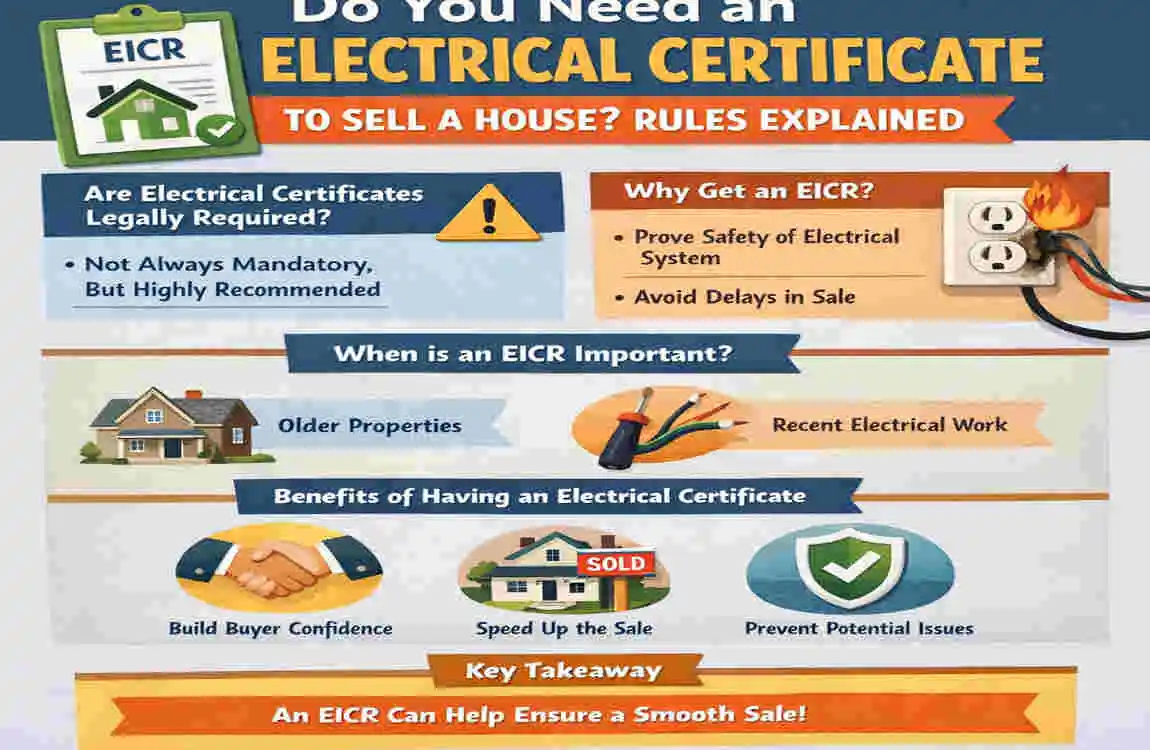
Selling a home is one of the most stressful life events you can go through. There is an endless stream of paperwork, viewings, negotiations, and legal hoops to jump through. Amidst all the chaos, a common question pops up that confuses many sellers: “Do you need an electrical certificate to sell a house?”
Here is a startling statistic to kick things off: In 2025, faulty or undocumented electrics caused nearly 20% of UK house sale delays, according to data from Electrical Safety First. That is one in five sales hitting a brick wall due to paperwork or wiring issues.
What Is an Electrical Certificate?
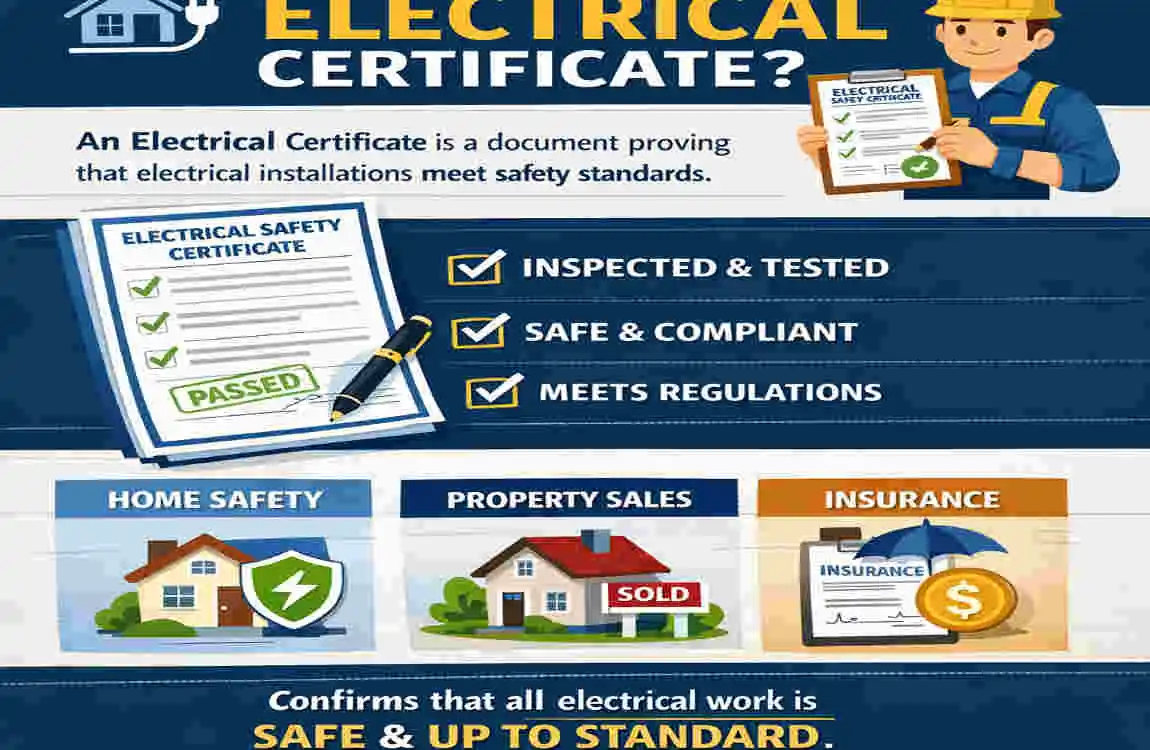
Before we dive into the rules, let’s make sure we are all speaking the same language. “Electrical certificate” is a bit of a catch-all term that people use, but in the world of property and construction, there are two main documents you need to understand.
Think of these documents like the health records for your house. Just as a car needs an MOT or a service history to prove it runs safely, your house needs proof that the wires inside the walls won’t spark a fire.
Electrical Installation Certificate (EIC)
This is the “birth certificate” of your wiring. You get an Electrical Installation Certificate (EIC) when you have significant new work done.
- When you get it: If you build a new house, rewire an old one, or install a brand-new circuit (like for an electric shower or a specialized cooker).
- What it proves: It proves that the installation was done correctly at the time by a competent person.
Electrical Installation Condition Report (EICR)
This is the big one for home sellers. An Electrical Installation Condition Report (EICR) is like a health check-up or an MOT for existing electrics.
- When you get it: This is an inspection of the current state of your wiring, fuse board, and sockets.
- The Grading System: The electrician will grade your system.
- C1: Danger present (Risk of injury). Immediate remedial action is required.
- C2: Potentially dangerous. Urgent remedial action is required.
- C3: Improvement recommended (but not dangerous).
If your report returns C1 or C2 codes, your electrical system is deemed “Unsatisfactory.” To sell smoothly, you generally want a “Satisfactory” report.
Visual Explainer: Which One Do You Need?
To make this easier to digest, here is a quick breakdown of the differences:
Certificate TypePurposeValidityCost Estimate
EIC (Installation) Certifies new wiring or major changes. Valid for the specific install, £100 – £200 (Usually included in the work cost)
EICR (Condition) Inspects existing systems for safety 5 – 10 years (5 for rentals/sales usually) £200 – £500 (Depends on property size)
Why this matters for sales: Even if the law doesn’t require you to have these, a buyer will still ask for them. If you claim you rewired the kitchen last year but can’t produce an EIC, the buyer’s surveyor will flag it immediately.
Do You Need an Electrical Certificate to Sell a House? The Short Answer
If you are in a rush and want the bottom line, here it is.
The Direct Answer: There is no blanket legal mandate in most jurisdictions (including the UK) that prohibits selling a private residential home without an electrical certificate. Technically, you can put a house on the market and sell it with 50-year-old wiring, provided you don’t lie about its condition.
However—and this is a massive “however”—over 80% of buyers and their solicitors will demand one.
The “Buyer Beware” Shift
In the past, the principle of Caveat Emptor (Buyer Beware) ruled the market. It was up to the buyer to check if the roof leaked or the lights worked. But in 2026, the market has shifted. Buyers are more risk-averse, and safety regulations are tighter.
Regional Breakdown
- In the UK, a seller doesn’t need to provide an EICR. However, you must provide certificates (EIC) for any electrical work you’ve had done since 2005 (Part P regulations). If you can’t, you need an EICR to prove it’s safe. Furthermore, almost every buyer’s solicitor will request an EICR as part of standard enquiries.
- In the US, this varies wildly by state.
- Some states only require a “Disclosure Statement” that lists known issues.
- Other states (and specific municipalities) require a Certificate of Occupancy or specific safety inspections before the title can transfer.
- In Australia/Canada: Similar to the UK, it is largely advisory for private sales but mandatory for rentals.
The Reality Check
Imagine you are a buyer. You are about to spend hundreds of thousands of pounds or dollars. Would you buy a house if the seller said, “I don’t know if the wiring is safe, and I won’t check”? Probably not. Not having a certificate gives the buyer a powerful bargaining chip to lower your asking price.
Legal Requirements: When Is It Mandatory?
While the general rule is “voluntary,” there are specific legal traps you need to be aware of. If you fall into these categories, getting an electrical certificate isn’t just a good idea—it’s the law.
UK Rules: The Part P Trap
In the UK, the biggest legal hurdle is Part P of the Building Regulations. Introduced in 2005, this law states that most electrical work in a home must be notified to the Local Authority Building Control or carried out by a registered electrician who can self-certify.
The Seller’s Obligation: When you sell, you will fill out a TA6 Form (Property Information Form). It asks specific questions about electrical work.
- “Has there been any electrical work since 2005?”
- “Do you have the certificates for it?”
If you say “Yes” to work but “No” to certificates, you have a legal problem. You lack the necessary Building Regulations Compliance Certificate. To fix this without involving the council (which can take months), you usually have to pay for an EICR to prove to the buyer that the uncertified work is safe.
Landlords Selling Properties: If you are selling a house that was previously rented out, you must already have a valid EICR. Since 2020/2021, it has been a legal requirement for all UK rentals to have a satisfactory electrical safety certificate. You cannot legally rent the property without one, and if you are selling it with a tenant in situ (or selling it as a rental investment), that certificate is mandatory.
US State Variations
In the United States, real estate laws are hyper-local. Here is how it breaks down in a few key states:
StateRequirementNotes
California Seller Disclosure: You must disclose known defects. You generally don’t need a new certificate unless a city ordinance requires one.
New York Inspection Often Required. While state law focuses on disclosure, many attorneys add riders requiring working systems. Some municipalities require a Certificate of Occupancy update.
Texas Advisory : Standard contracts allow buyers to inspect. If the inspection fails, the buyer can exit. Sellers rarely provide a cert upfront but often pay for repairs.
Massachusetts Smoke/Carbon Certs strictly require a certificate from the Fire Department verifying that smoke and carbon monoxide detectors are installed, which often ties into electrical checks.
Case Study: The 2025 Sale That Fell Through
Let’s look at a real-world example.
- The Situation: A couple in Manchester, UK, was selling a 1930s semi-detached home.
- The Issue: They had installed a new fancy kitchen in 2018 with new lighting and sockets, but used a friend of a friend to do the wiring for cash. No certificate was issued.
- The Sale: They accepted an offer. Two weeks before the exchange, the buyer’s solicitor asked for the Part P certificate for the kitchen. The sellers didn’t have it.
- The Result: The buyer panicked, assuming the entire house had been rewired in a dangerous manner. They demanded a full rewire price reduction (£5,000). The sellers refused. The sale collapsed.
- The Lesson: A £200 EICR done before listing would have highlighted that the kitchen was safe, saving the sale.
Why Buyers and Lenders Insist on It
You might be thinking, “My lights work, so why is everyone making a fuss?” It’s not about whether the lights turn on; it’s about risk.
Buyer Psychology: The Fear of Rewiring
To a regular homeowner, “electrical work” sounds expensive, messy, and dangerous. Buyers are terrified of moving in and having to rip the plaster off the walls to fix old wires.
- The Cost Factor: A full rewire of a 3-bedroom house can cost between £4,000 and £8,000 ($6,000 – $12,000).
- The Leverage: If you don’t provide a certificate, the buyer will assume the worst. They won’t just deduct the test cost; they’ll also deduct the full rewire cost from their offer.
Mortgage Lender Rules
This is often the dealbreaker. Mortgage lenders (banks) are the ones actually paying for the house. They want to know their asset is secure.
- The Valuation Survey: When the bank sends a surveyor, they do a visual check. If they see an old fuse box (the old wire type) or a light switch in a bathroom that looks unsafe, they will flag it.
- The Retention: The bank might say, “We will lend you the money, but we are holding back £5,000 until you provide a satisfactory electrical certificate.” This stops the buyer from having the cash to pay you.
- Lender Policies: Major lenders, such as Nationwide or Santander in the UK, or Chase in the US, often require an electrical report for any property over 25 years old.
Insurance Implications
Home insurance policies are getting stricter. Many policies include clauses requiring the electrical system to be well-maintained. If a buyer moves in and the house burns down a week later due to faulty wiring that was never inspected, their insurance might be void. Smart buyers (and their lawyers) know this and won’t take the risk.
How to Get an Electrical Certificate: Step-by-Step Guide
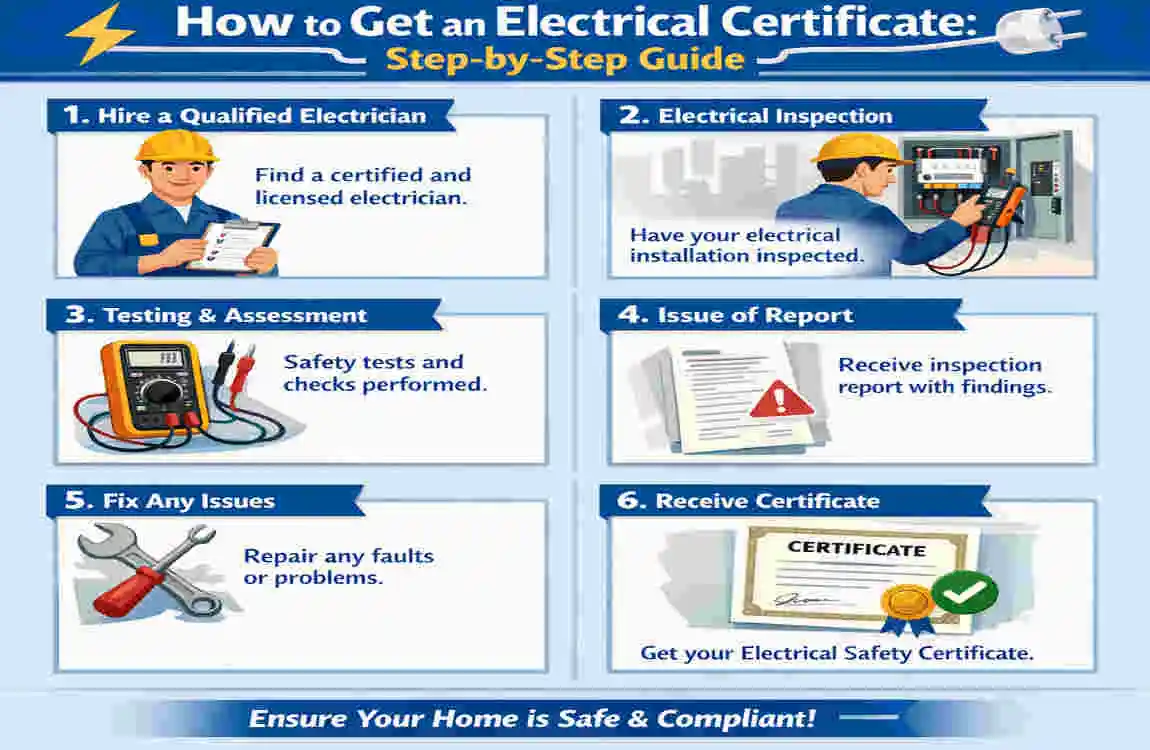
Okay, you have decided it is smarter to get the certificate. How do you actually do it? It’s a straightforward process, but you need to hire the right people.
Hire a Registered Electrician
Do not just hire a handyperson. You need a “competent person.”
- In the UK: Look for an electrician registered with NICEIC, NAPIT, or ELECSA. They are authorized to issue EICRs and notify the council.
- In the US, you need a Licensed Master Electrician.
Schedule the Inspection
The inspection usually takes 2 to 4 hours, depending on the size of your house.
- Preparation: You need to clear access to the fuse board (consumer unit) and ensure they can reach most sockets.
- Power Outage: Be aware that the power will be turned off for a portion of the test. Don’t plan to work from home on your desktop computer during this time!
The Testing Process
The electrician will perform two types of tests:
- Visual Inspection: Looking for broken sockets, exposed wires, or signs of burning/overheating.
- Dead Testing: Sending test signals through the wires (while power is off) to check the integrity of the copper and insulation.
- Live Testing: Checking that the system trips (turns off) quickly enough if there is a fault.
Receive the Report
You will receive your EICR (Electrical Inspection Condition Report) or Inspection Report a few days later. It will be marked as either:
- Satisfactory: You are good to go!
- Unsatisfactory: You have C1 or C2 faults.
The Fix (If Needed)
If the report is “Unsatisfactory,” you don’t necessarily have to rewire the whole house. Often, it’s a case of replacing a cracked fuse box cover or earthing a gas pipe.
- Pro Tip: You can use the same electrician to do the repairs, but you are free to get quotes from others. Once the repairs are done, you can get a certificate confirming the work, which, combined with the original EICR, proves the house is safe.
Costs, Validity, and Common Pitfalls
Budgeting for selling a house is crucial. Here is what you should expect to pay for an electrical certificate, though prices vary by region and city.
Cost Breakdown Table
Property SizeAverage Cost (UK)Average Cost (US)Time Required
1-2 Bed Flat/Condo £150 – £250 $200 – $350 1 – 2 Hours
3 Bed House £200 – £350 $300 – $500 2 – 3 Hours
4+ Bed House £400 – £600 $500 – $800 3 – 5 Hours
Rewire (if failed) £3,500 – £6,000 $5,000 – $10,000 1 – 2 Weeks
Validity: How Long Does It Last?
- For Homeowners: An EICR is generally valid for 10 years.
- For Rentals: Valid for 5 years.
- For Selling: Even if you have a certificate from 8 years ago, a buyer will likely reject it. The general rule of thumb for selling is that the certificate should be less than 5 years old. If it is older, get a new one to avoid arguments.
Common Pitfalls to Avoid
- The “Drive-By” Inspection: Some unscrupulous electricians offer “cheap” tests for £80. They spend 20 minutes and tick boxes. These are often worthless and can be rejected by solicitors. Pay for a proper job.
- Ignoring Minor Faults: A “C3” code means “Improvement Recommended.” It is not a fail. Don’t let a buyer bully you into fixing C3 items (like upgrading from plastic to metal fuse boards) unless you are desperate to sell. It is a recommendation, not a requirement.
- Losing the Paperwork: This happens constantly. You had the work done, but you lost the certificate. Contact the electrician who did the work; they are required to keep duplicates for a certain period.
Benefits of Having One Before Selling
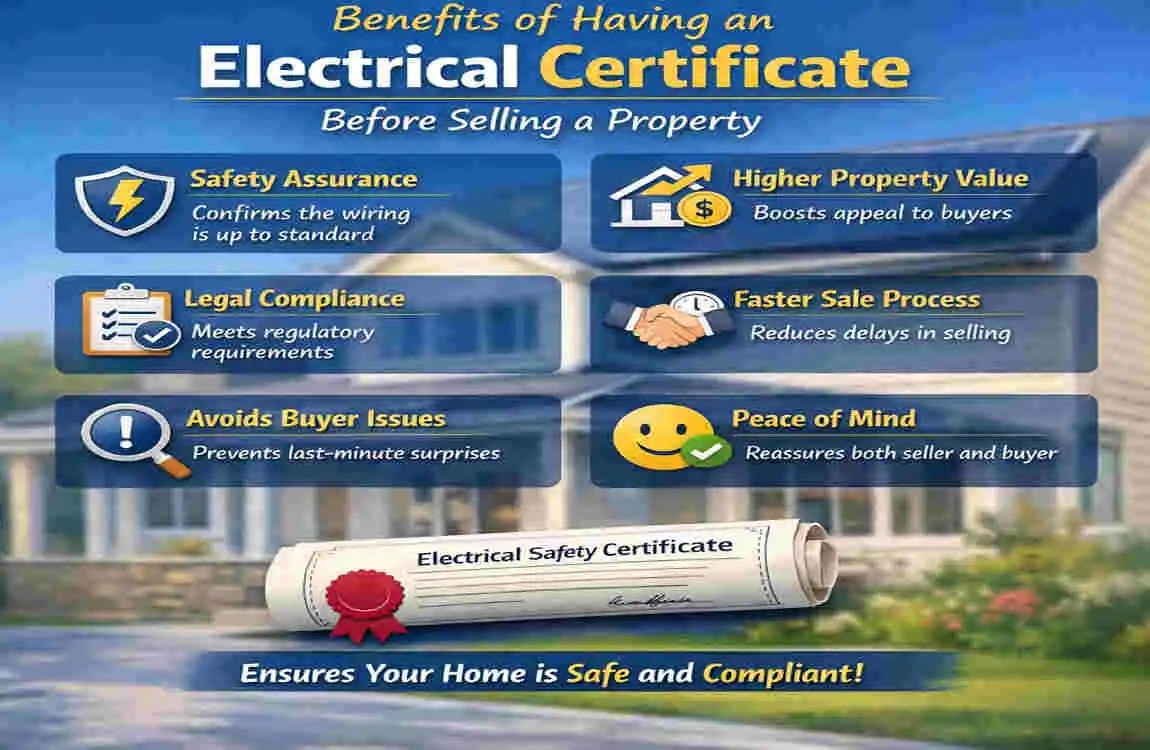
You might still be thinking, “Why spend £300 if I don’t have to?” Here is why proactive sellers win in the current market.
Speed Up the Sale
Nothing kills a sale’s momentum like waiting 3 weeks for an electrician to be available. Having the EICR ready in your “Seller’s Pack” removes a major hurdle. You can hand it to the buyer at the first viewing and say, “The electrics are certified safe.” It builds instant trust.
Protect Your Asking Price
If a survey reveals “electrical issues,” the buyer will almost always ask for a price reduction equal to twice the actual cost of the repair.
- Scenario: A £500 fix becomes a £1,000 price chop negotiation.
- Solution: Spend the £200 on the cert, fix the £100 issue, and keep your asking price firm.
Peace of Mind regarding Liability
Once you sell, you want to cut ties. You don’t want a buyer coming back 6 months later, claiming you sold them a death trap and suing you for misrepresentation. A clean electrical certificate is your legal shield. It proves that, to the best of your knowledge and according to a professional, the house was safe when you handed over the keys.
Frequently Asked Questions (FAQs)
Do you need an electrical certificate to sell a house in the UK?
No, there is no law compelling you to provide an EICR to sell a private home. However, you must disclose any electrical work you have had done. If you cannot prove that the work is safe (with an EIC), you may still be forced to get an inspection. Furthermore, most buyers will insist on one.
What happens if I get an ‘Unsatisfactory’ report?
Don’t panic. The report will list exactly what is wrong. You can choose to fix the issues yourself (using an electrician) to get a ‘Satisfactory’ grade. Alternatively, you can show the report to the buyer and agree to reduce the house price by the cost of fixing the faults. Transparency is key.
My house is brand new; do I need an EICR?
No. If your house is less than 10 years old, it should still be covered by the original Electrical Installation Certificate (EIC) provided by the builder. This is valid for 10 years on a private dwelling. Just make sure you can find the original document!
Who pays for the electrical certificate: Buyer or Seller?
This is up for negotiation. In a “Seller’s Market” (lots of buyers), you might refuse and tell the buyer to pay for their own inspection. In a “Buyer’s Market,” the seller usually pays to make the property more attractive. Generally, it is best practice for the seller to pay, as it remains your property until the sale is completed.
Can I sell a house with old wiring?
Yes, absolutely. You can sell a house that needs a total rewire. However, the price must reflect this. You cannot sell a “doer-upper” for the price of a “turn-key” home. If the wiring is old, be honest about it to avoid legal claims later.
