
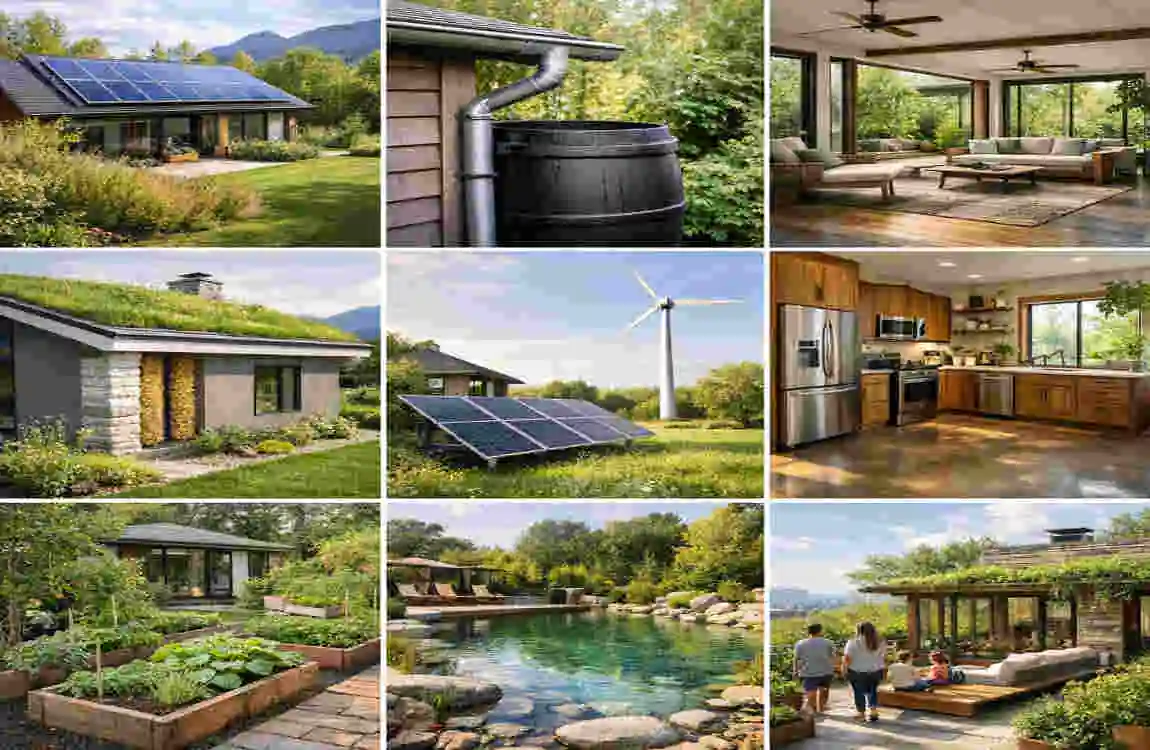
Imagine walking into a home that stays naturally cool during a blistering summer afternoon without the hum of an expensive air conditioner. Picture a living space where the air feels as crisp as a mountain breeze and your monthly utility bills are so low they almost make you smile. This isn’t a futuristic fantasy from a sci-fi movie; it is the reality of sustainable living in 2026.
As we navigate the climate challenges of this year, from unpredictable weather patterns to rising energy costs, the way we build our homes has never been more important. Many homeowners are now asking: how to activate sustainable architecture in a way that is practical, affordable, and beautiful?
Sustainable architecture is no longer just a “buzzword” for the elite. It is a set of design principles that focuses on harmony between your home and the environment. By integrating eco-friendly strategies into your dream house, you aren’t just “going green”—you are making a savvy financial investment. In fact, global trends show that zero-energy homes are growing at an incredible rate, with more people realising that a house should work for its owners, not the other way around.
Why Sustainable Architecture Matters for Houses
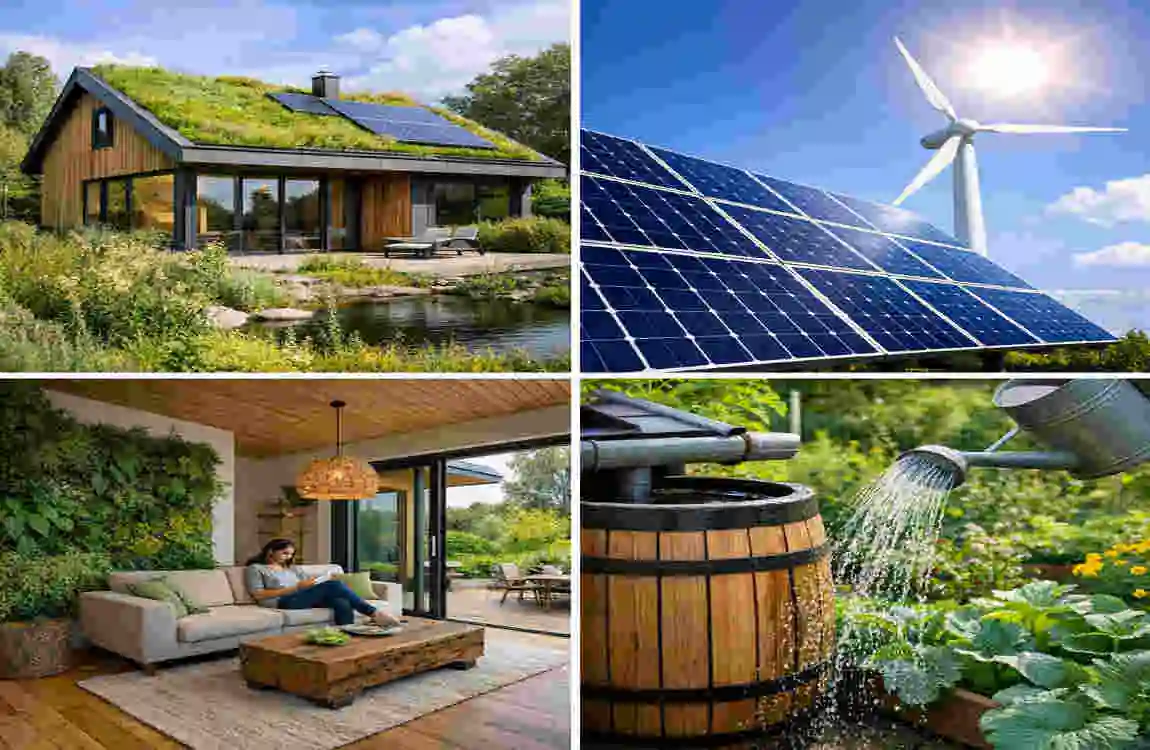
Before we dive into the “how,” let’s talk about the “why.” You might wonder if all this extra planning is worth the effort. In 2026, the answer is a resounding yes. Sustainable architecture is the practice of designing buildings that minimise their environmental impact. This involves using renewable materials, focusing on energy efficiency, and ensuring the building sits comfortably within its natural surroundings.
The Shift Toward Net-Zero Living
Current trends are leaning heavily toward net-zero homes. These are houses that produce as much energy as they consume over the course of a year. We are also seeing a massive rise in biophilic design, which is a fancy way of saying “bringing the outdoors in.” People are realising that humans feel better when they are connected to nature, whether through natural light, indoor plants, or views of greenery.
The Real-World Benefits
When you learn how to activate sustainable architecture, you unlock three major benefits:
- Massive Cost Savings: A well-designed sustainable home can reduce energy bills by 30% to 50%. Think about what you could do with that extra cash every month.
- Healthier Living: Eco-friendly homes use non-toxic materials and better ventilation, which means fewer allergies and better sleep for you and your family.
- Higher Resale Value: In today’s market, buyers are hunting for energy-efficient homes. Your sustainable house will likely be worth much more than a traditional one in the years to come.
Optimise Site and Orientation
The first step in activating sustainable architecture starts before you lay the first brick. It begins with where and how you place your house on the land. This is known as passive solar design, and it is the most cost-effective way to manage your home’s temperature.
Understanding the Sun’s Path
The goal is to position your home so it captures the sun’s warmth in the winter but stays shaded in the summer. If you live in the Northern Hemisphere, having large south-facing windows lets the low winter sun shine deep into your rooms, heating them for free. In the summer, when the sun is high, you can use roof overhangs or “brows” to block that heat from entering.
Using Nature to Your Advantage
Don’t just look at the sun; look at the trees and the wind. Planting deciduous trees (the ones that lose leaves in winter) on the sunny side of your house is a brilliant move. In the summer, their thick leaves provide natural shade. In the winter, the bare branches let the sunlight through.
A Real-World Example
Take a look at recent eco-home projects in Lahore. By simply orienting the main living areas away from the harsh afternoon sun and using strategic shading, homeowners have reduced their cooling needs by a staggering 40%. Even on a small urban plot, you can use “sun path tools” (many are free apps!) to figure out the best spot for your windows.
Choose Eco-Friendly Materials
The “skin and bones” of your house matter. Traditional construction often relies on materials that require significant energy to produce and transport. To truly master how to activate sustainable architecture, you need to look at what your house is actually made of.
Low-Impact Building Blocks
Instead of standard concrete and virgin timber, consider these alternatives:
- Reclaimed Wood: Using wood from old barns or factories gives your home character and saves trees.
- Bamboo: This is one of the fastest-growing plants on earth, making it a highly renewable resource for flooring and cabinetry.
- Recycled Steel: It is incredibly durable and keeps waste out of landfills.
- Adobe or Rammed Earth: These ancient techniques are making a comeback because they have “thermal mass,” meaning they stay cool during the day and warm at night.
The Lifecycle Mindset
When selecting materials, consider the lifecycle assessment. This is just a professional way of asking: “Where did this come from, and where will it go when I’m done with it?” Sourcing materials locally is a huge win because it reduces carbon emissions from heavy trucks driving across the country.
install High-Performance Insulation
If you think of your home as a person, insulation is the high-quality winter coat—without it, your expensive heating and cooling just “leaks” out through the walls. If you want to know how to activate sustainable architecture effectively, you must prioritise a “tight” building envelope.
Beyond Fiberglass
Most old houses use pink fibreglass batts, but technology has moved on. Today, we have much better options:
- Sheep’s Wool: It’s natural, fire-resistant, and even filters the air.
- Cellulose: Made from recycled newspapers, it’s great for blowing into tight spaces.
- Aerogel: Known as “frozen smoke,” this is a high-tech material that provides incredible insulation in very thin layers.
Sealing the Leaks
Before you even add insulation, you must seal air leaks. Small cracks around doors, windows, and electrical outlets can add up to the size of a whole window being left open! Use high-quality caulk and weatherstripping to make your home airtight.
The Goal: High R-Values
In sustainable design, we aim for high “R-values” (a measure of thermal resistance). For a truly green home in 2026, you should aim for R-50 in your walls and R-70 in your roof. This can eliminate drafts and reduce your HVAC (heating and cooling) usage by at least 25%. You can even do a “DIY energy audit” with a simple thermal camera to see where your heat is escaping!
Harness Natural Ventilation
Why pay for a fan when the wind is free? One of the most refreshing ways to learn how to activate sustainable architecture is by designing your home to breathe on its own. This is called natural ventilation, and it’s all about creating “cross-breezes.”
The Art of the Cross-Breeze
By placing windows on opposite sides of a room, you allow air to flow through easily. But you can go even further. Have you heard of the stack effect? It’s a simple scientific principle: warm air rises. By placing vents or windows high up (like in an atrium or a clerestory), the hot air escapes out the top, naturally pulling cool air in from the lower windows.
Night Purging
In warmer climates, “night purging” is a game-changer. This involves opening windows at night to let the cool air soak into your floors and walls. During the day, you close the windows and let that “stored coolness” keep you comfortable.
Case Study: Punjab Eco-Homes
In the Punjab region, modern architects are revisiting traditional “wind catchers.” These are towers that catch the breeze high above the ground and funnel it down into the living spaces. By combining these old-school tricks with modern ceiling fans, many homes are slashing their reliance on air conditioning by half.
Integrate Solar Power Systems
We cannot talk about how to activate sustainable architecture without mentioning the sun. In 2026, solar energy is no longer a luxury; it is a standard feature for any forward-thinking home.
Panels, Batteries, and Beyond
A complete solar system usually involves:
- Photovoltaic (PV) Panels: These go on your roof to catch sunlight.
- Inverters: These turn the sun’s energy into the type of electricity your fridge and TV use.
- Battery Storage: Systems like the Tesla Powerwall allow you to store energy during the day so you can use it at night or during a power outage.
Net Metering and Incentives
Many regions now offer net metering. This means that if your solar panels produce more electricity than you need, you can “sell” it back to the power grid. It’s a great feeling to see your electric meter spinning backwards! Plus, with green subsidies available in many countries for 2026, the government might even help cover the cost of your installation.
Calculating Your ROI
Most homeowners see a full Return on Investment (ROI) in just 5 to 7 years. After that, your electricity is essentially free. When you think about how to adopt sustainable architecture, a hybrid solar setup (where you stay connected to the grid while producing most of your own power) is often the smartest move for beginners.
Use Energy-Efficient Windows and Doors
Think of your windows as the “eyes” of your home. If they are thin and leaky, they are letting all your comfort escape. Modern sustainable architecture demands high-performance glazing.
The Power of Triple-Glazing
While double-paned windows used to be the gold standard, triple-glazed windows are now the way to go. These windows have three layers of glass with a special gas (such as argon) trapped between them. This creates a massive barrier against heat and noise.
Smart Tints and Low-E Glass
You should also look for Low-E (low-emissivity) glass. This has a microscopic coating that reflects heat. In the summer, it reflects the sun’s heat away from your house. In winter, it reflects your indoor heat into your home. Some “smart windows” can even tint themselves automatically when the sun gets too bright!
Pay Attention to the U-Factor
When shopping, look for the U-factor. This tells you how well the window prevents heat from escaping. You want a U-factor below 0.15 for maximum efficiency. Replacing old, drafty windows can save you 15-30% on your monthly bills.
Implement Smart Water Management
Sustainability isn’t just about energy; it’s about water too. As water scarcity becomes a growing global issue, learning how to implement sustainable architecture through water management is vital.
Rainwater Harvesting
Why let rain run off into the street when you could use it? By installing a rainwater harvesting system, you can collect water from your roof, filter it, and use it for your garden, flushing toilets, or even laundry.
Greywater Recycling
Greywater is the gently used water from your sinks, showers, and washing machines. With a simple filtration system, this water can be reused to water your lawn or plants. It’s a brilliant way to give your water a “second life.”
Outdoor Strategies
- Permeable Pavers: Instead of solid concrete driveways, use pavers that allow rain to soak into the ground. This prevents flooding and recharges the local groundwater.
- Low-Flow Fixtures: Installing modern showerheads and toilets can cut your indoor water use by 50% without you even noticing a pressure difference.
Incorporate Green Roofs and Walls
Have you ever seen a house with a garden on top? That is a green roof, and it is one of the most beautiful ways to “activate” sustainable design.
The Living Blanket
A green roof acts like a natural layer of insulation. It keeps the house cool in the summer and warm in the winter. It also provides a home for bees and birds, helping with local biodiversity. If you don’t have a flat roof, you can try vertical gardens or green walls. These are plants grown on the exterior or interior walls of your home.
Benefits for the city
Green roofs help combat the “urban heat island effect,” in which cities become much hotter than the surrounding countryside due to all the concrete. Adding plants to your home helps cool your entire neighbourhood.
Maintenance Guide
Don’t worry—you don’t have to be a professional gardener. Many green roofs use sedum, a hardy plant that requires very little water or maintenance. There are modular systems available now that are as easy to install as Lego bricks!
Leverage Smart Home Tech
In 2026, a sustainable home is a “smart” home. Activating sustainable architecture in the digital age involves using the Internet of Things (IoT) to monitor and control energy use.
The AI Energy Monitor
Imagine an AI that learns your schedule. It knows when you leave for work and automatically turns down the heat. It knows when the sun is brightest and closes your smart blinds to keep the house cool. Devices like Nest thermostats and AI energy monitors can find “vampire loads” (devices that use power even when they are off) and shut them down.
Automation is Key
You can automate your lighting to turn off when a room is empty or set your dishwasher to run only when your solar panels are producing the most power. This level of integration ensures that not a single watt of energy is wasted. It’s all about future-proofing your home for the next decade of technological shifts.
Prioritise Indoor Air Quality
Finally, a truly sustainable home must be a healthy one. We spend about 90% of our time indoors, so the air we breathe is incredibly important.
Non-Toxic Living
Many traditional paints and carpets emit VOCs (Volatile Organic Compounds), chemicals that can cause headaches and allergies. To activate sustainable architecture, always choose VOC-free paints and natural fibre carpets like wool or jute.
Fresh Air Systems
Because sustainable homes are often very airtight, you need a way to bring in fresh air without losing heat. This is where HRV (Heat Recovery Ventilation) or ERV (Energy Recovery Ventilation) systems come in. They swap stale indoor air for fresh outdoor air while “recycling” the air’s temperature as it exits.
The Power of Plants
Never underestimate the power of a few good houseplants. Peace lilies, snake plants, and spider plants are natural air purifiers. They look great, and they work for free!
Implementation Roadmap
Now that you know the ten ways, how do you actually start? You don’t have to do everything at once. Sustainable architecture is a journey, not a race.
- Start with an Audit: Hire a professional to do an energy audit of your current space or your plans.
- Budget Wisely: Focus on the “bones” first (orientation and insulation) before moving to high-tech gadgets.
- Hire the Right Team: Look for architects and builders with green building certifications.
- Phase Your Retrofits: If you are renovating, do it in stages. Start with sealing leaks, then move to windows, and finally solar.
Cost and Savings Overview
Phase Estimated Cost (Initial)Savings Timeline Impact Level
Site & Orientation 50,000 – 100,000 Immediate Very High
Insulation & Sealing 200,000 – 500,000 2-4 Years High
High-Efficiency Windows 400,000 – 800,000 5-8 Years Medium
Solar Power Systems 1,000,000+ 5-7 Years Massive
Smart Tech & Water 100,000 – 300,000 3-5 Years Medium
Challenges and Solutions
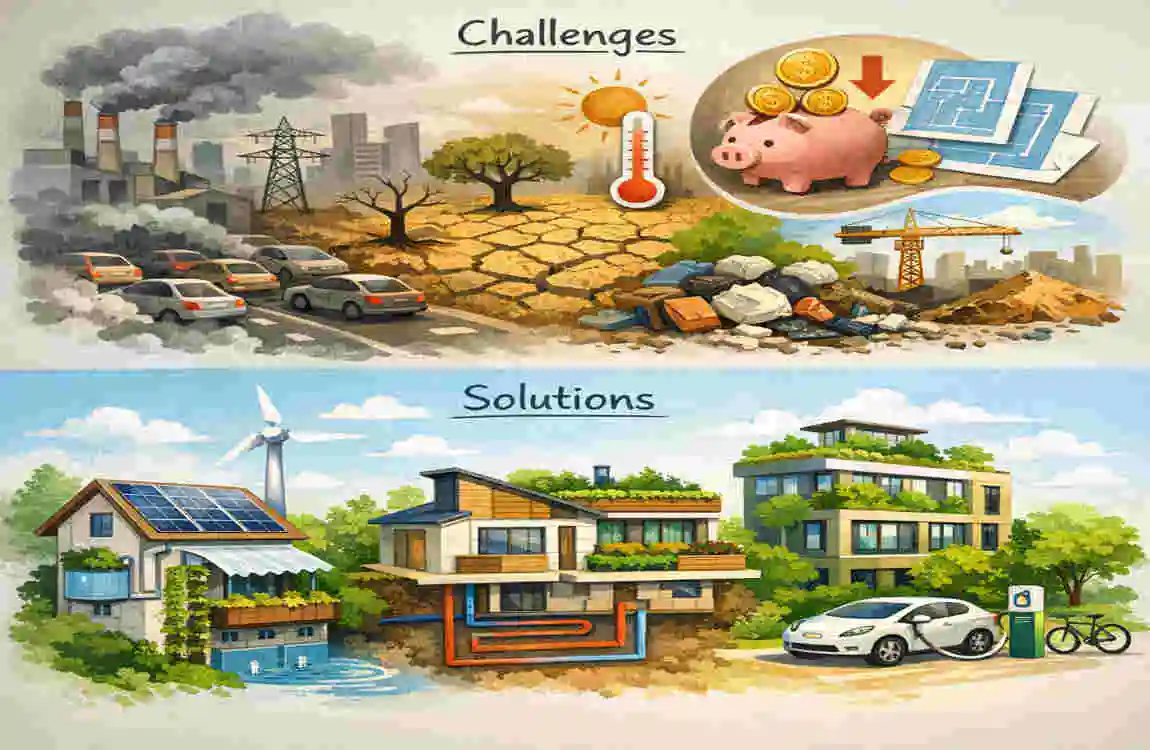
It is important to be honest: building sustainably can sometimes feel overwhelming. Many people believe the myth that it is “too expensive.” While some materials have a higher upfront cost, the long-term savings on utilities and maintenance almost always make up for it.
Another challenge is finding skilled workers. In 2026, however, more contractors are becoming “green certified.” Don’t be afraid to ask for their portfolio of eco-friendly projects. If you are on a tight budget, look for government grants or green loans specifically designed to help homeowners activate sustainable architecture.
FAQ
What does it actually mean to “activate” sustainable architecture?
Activating sustainable architecture means moving from the “idea” of being green to taking real action. It involves choosing specific design strategies—like where your windows face or what materials you use—to ensure your home uses as little energy and water as possible. It is about making your house work in harmony with nature rather than fighting against it.
Is sustainable architecture only for expensive new builds?
Not at all! While it is easier to plan these things from scratch, you can activate sustainability in any home. This is often called “retrofitting.” You can start small by sealing air leaks, upgrading to smart thermostats, or installing low-flow showerheads. Even small changes can lead to massive savings on your monthly utility bills.
Will building a sustainable house cost me more upfront?
In some cases, yes. High-performance materials like triple-glazed windows or solar panels can cost about 5% to 10% more than standard options. However, you have to look at the long-term picture. Because these homes are so efficient, they usually pay for themselves within 5 to 7 years through reduced energy costs and lower maintenance.
What is the single most important step I can take?
If you are building a new home, the most important step is site orientation. Simply placing your house and windows to follow the sun’s path can reduce your heating and cooling needs by up to 40% for zero extra cost. If you already own a home, the best first step is a professional energy audit to see where you are losing the most heat or electricity.
Can sustainable architecture really improve my health?
Yes, absolutely! Sustainable homes prioritize indoor air quality. By using non-toxic, VOC-free paints and advanced ventilation systems, you significantly reduce the dust, allergens, and chemicals in your air. This leads to better sleep, fewer respiratory issues, and a generally happier environment for your family.
