

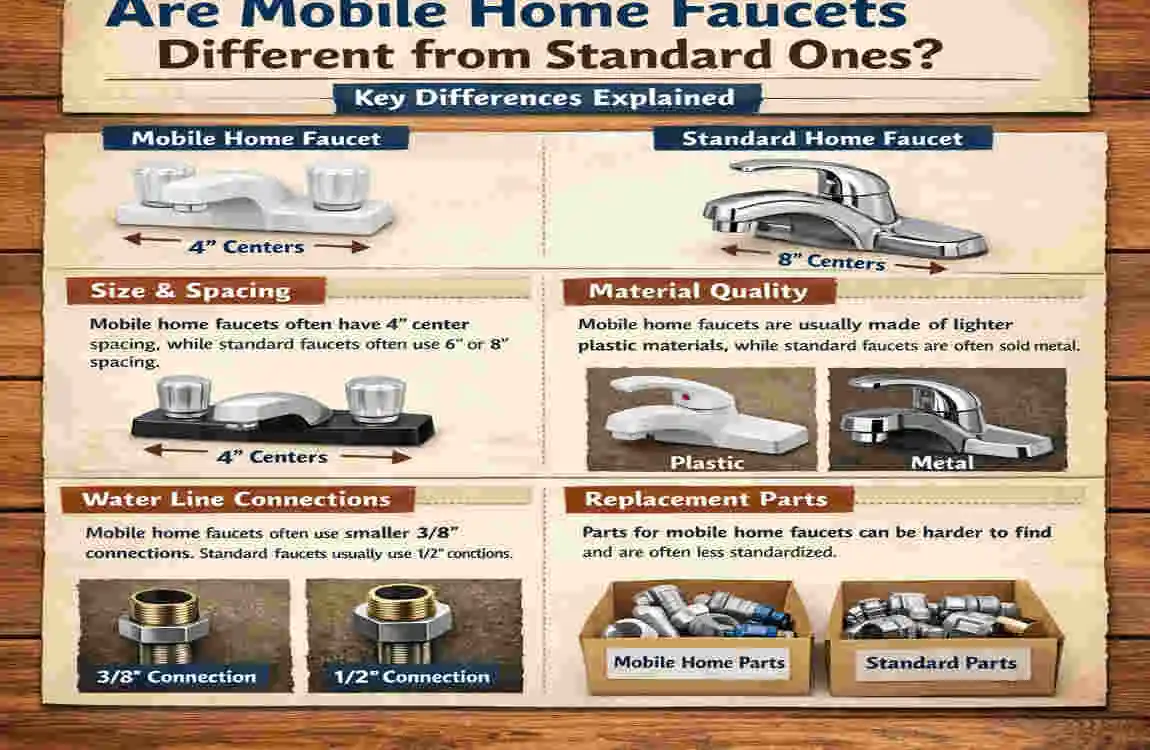
Have you ever stood in your mobile home kitchen, staring at a dripping faucet, and wondered, are mobile home faucets different from the ones in regular stick-built houses? If you’re like many mobile homeowners, you’ve probably faced that frustrating moment when a standard faucet just doesn’t fit right during a replacement job. Picture this: You’re excited to upgrade your sink, but after hours of wrestling with pipes, you end up with leaks everywhere. It’s a common headache that could have been avoided with the right knowledge.
In this 2026 guide, we’ll dive deep into why mobile home faucets are different and how these differences impact your daily life. Over 22 million Americans live in mobile homes, and they often deal with unique plumbing challenges that can lead to costly repairs if ignored. From design tweaks to installation quirks, understanding these variations can save you time, money, and a lot of frustration. Think about it—avoiding a plumbing disaster means more peace of mind in your cosy home on wheels.
Why Mobile Home Plumbing Differs
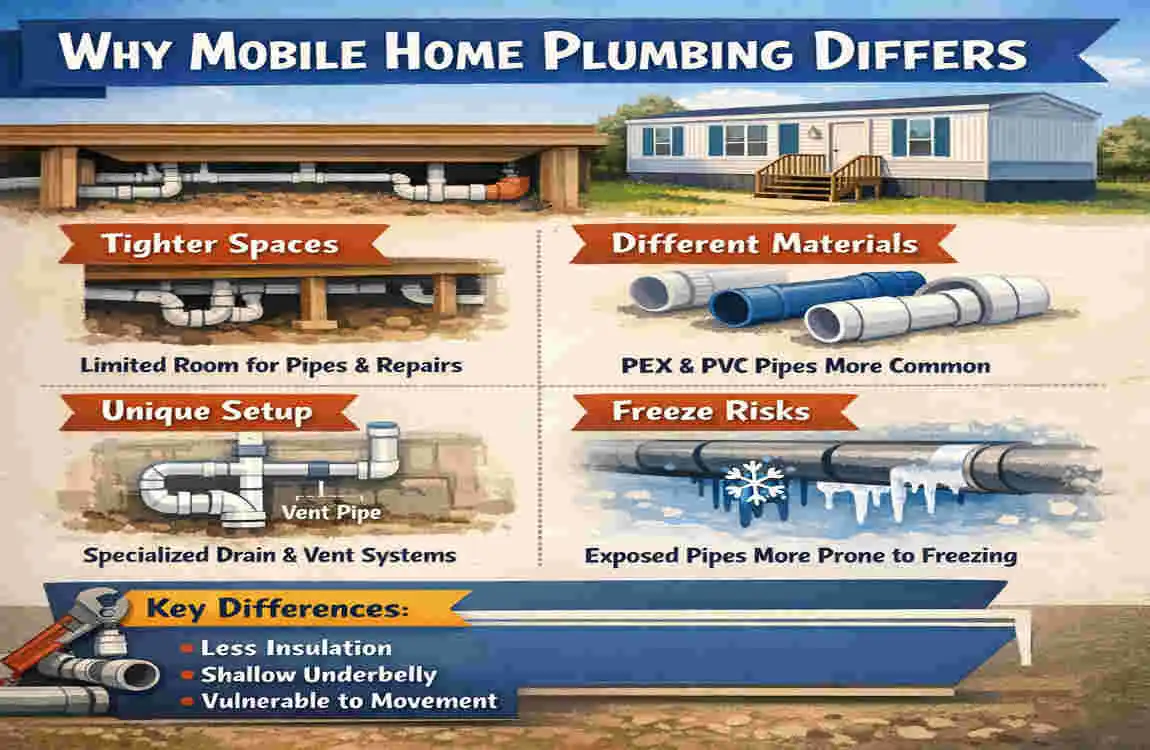
Mobile homes aren’t just smaller versions of traditional houses—they’re built differently from the ground up. This unique construction affects everything, including the plumbing. Unlike stick-built homes with sturdy foundations and thick walls, mobile homes are designed for transport and flexibility. That means their plumbing systems have to adapt to things like road vibrations, compact layouts, and even varying water sources.
One big reason mobile home faucets are different is the use of thinner walls and flexible piping materials. Most mobile homes rely on PEX (cross-linked polyethene) pipes instead of the rigid copper or PVC found in standard homes. PEX is lightweight and bends easily, which is perfect for a home that might be towed or set up on uneven ground. But this flexibility demands faucets that connect securely without stressing the lines.
Water pressure is another factor. Mobile homes often have weaker pumps or well systems, leading to lower PSI (pounds per square inch). Standard faucets might overwhelm these setups, causing bursts or inefficiency. Plus, building codes play a role—mobile homes follow HUD (U.S. Department of Housing and Urban Development) standards, while site-built homes use the IRC (International Residential Code). These rules ensure safety but create specialised needs for faucets.
Let’s break down the key plumbing traits in a simple bullet list for clarity:
- Lightweight materials: Mobile homes use corrosion-resistant plastics and composites to keep everything portable and rust-free.
- Vertical or underfloor piping: Unlike horizontal runs in traditional homes, this setup saves space but requires faucets with shorter reaches.
- Compact layouts: Sinks and counters are shallower, so faucets must fit without bulky bases or long spouts.
Understanding these basics helps explain why swapping in a standard faucet can lead to mismatches. If you’ve ever dealt with a leaky connection, you know how important compatibility is. Next, we’ll look at the core mobile home faucet differences in a handy table.
Core Differences Between Mobile Home and Standard Faucets
When it comes to mobile home vs standard faucets, the variations aren’t just cosmetic—they’re functional necessities. Are mobile home faucets different? Absolutely, and these differences stem from the need to handle mobility, space constraints, and unique water systems. In this section, we’ll unpack seven key areas, starting with a comparison table for easy scanning. Then, we’ll analyse each one to show why it matters for your home.
Think about your own setup: If you’ve tried installing a faucet from a big-box store, you might have noticed it doesn’t quite align. That’s because mobile home designs prioritise efficiency over heavy-duty builds. Let’s dive in and see how these tweaks can make or break your plumbing experience.
Key Differences Table
Yes, mobile home faucets are different in design and function. To make this clear, here’s a straightforward comparison table. It highlights the features, contrasts them with standard faucets, and explains the real-world impact.
FeatureMobile Home FaucetsStandard FaucetsWhy It Matters
Mounting Holes: 1-3 holes, often single-hole, 4+ holes or deck-mount. Fits compact sinks; easier install in tight spaces, reducing DIY headaches.
Thread Size 1/2″ or 3/8″ compression 1/2″ NPT standard. Prevents leaks in flexible pipes; mismatches can cause water damage over time.
Material: Plastic/chromium composite, Brass/heavy metal. Lighter weight for transport; resists corrosion in humid mobile environments.
Water Pressure Low-flow (1.5-2.0 GPM) High-flow (2.2+ GPM) Suits weaker pumps; saves water and avoids pressure-related bursts.
Aerators Anti-clog, fine mesh Standard removable Handles sediment buildup from wells; keeps flow steady without frequent clogs.
Handle Design Single-handle common Centerset or widespread Space-saving in tight spaces; easier to use in small kitchens or bathrooms.
Durability: Vibration-resistant, heavy-duty, stationary. Absorbs road/trailer movement; lasts longer despite bumps and shifts.
This table shows why mobile home faucet differences aren’t arbitrary—they’re smart adaptations. For instance, mobile faucets often cost $20-80, while standard ones run $50-200. That affordability adds up when you’re on a budget.
Analysing the Mounting Holes Difference
Let’s start with mounting holes, a top reason mobile home faucets are different. In mobile homes, sinks are smaller, and counters are shallower, so faucets typically use 1-3 holes. This single-hole setup is a breeze to install—you drop it in and secure it. Compare that to standard faucets, which might need four holes for separate handles and spouts. Why does this matter to you? It means quicker upgrades without drilling new holes, saving you hours of work.
Imagine remodelling your tiny mobile kitchen. A single-hole faucet slips right in, giving you more counter space for meal prep. If you’re dealing with an older mobile home, this design prevents compatibility issues that could lead to uneven fittings or leaks.
Thread Size: A Hidden Leak Risk
Thread size is another subtle but crucial mobile home faucet difference. Mobile versions often use 1/2″ or 3/8″ compression fittings, which grip flexible PEX pipes tightly. Standard faucets stick to 1/2″ NPT (National Pipe Thread), a rigid standard for copper lines. Mixing them up? You risk cross-threading and drips that waste water and damage cabinets.
For mobile homeowners, this means choosing the right threads keeps everything watertight. If you’ve ever mopped up after a botched install, you get it—proper threads prevent those disasters. Pro tip: Always measure your pipes before buying.
Materials Built for Mobility
Materials set mobile home vs standard faucets apart in big ways. Mobile faucets lean on plastic or chromium composites—light, rust-proof, and easy to ship. Standard ones use hefty brass for longevity in fixed homes. This lightweight choice helps during transport, as heavy metal could crack under vibrations.
What does this mean for you? Your faucet stays durable without weighing down your home. It’s especially handy in humid areas where rust is a foe. Sure, composites might feel less premium, but they’re optimised for real-life mobile challenges.
Water Pressure Optimisation
Low-flow designs make mobile home faucets different for efficiency. At 1.5-2.0 gallons per minute (GPM), they match weaker mobile pumps, unlike the 2.2+ GPM in standard models. This prevents overloads and conserves water, which is great if you’re on a septic system.
Picture washing dishes without the spray going everywhere—that’s the benefit. It also lowers your utility bills. If your home has low pressure, sticking to mobile specs avoids frustration.
Aerators That Fight Clogs
Aerators in mobile faucets feature a fine mesh to trap sediment, a common issue with well water. Standard ones are basic and removable but clog faster. This design keeps your water flowing smoothly, even in rural setups.
For you, it means less maintenance time. Twist off the aerator monthly, clean it, and you’re good—no more sputtering streams.
Handle Designs for Tight Spaces
Single-handle faucets dominate in mobile homes for their compactness. Standard ones are spread out with multiple handles. This saves space in cramped baths, making daily use easier.
Envision reaching for the handle without bumping elbows—that’s the appeal. It’s user-friendly for families or those with mobility needs.
Durability Against Vibrations
Finally, vibration resistance ensures mobile home faucets endure movement, unlike stationary standard ones. Seals and joints flex without breaking, perfect for trailer homes.
Types of Faucets in Mobile Homes
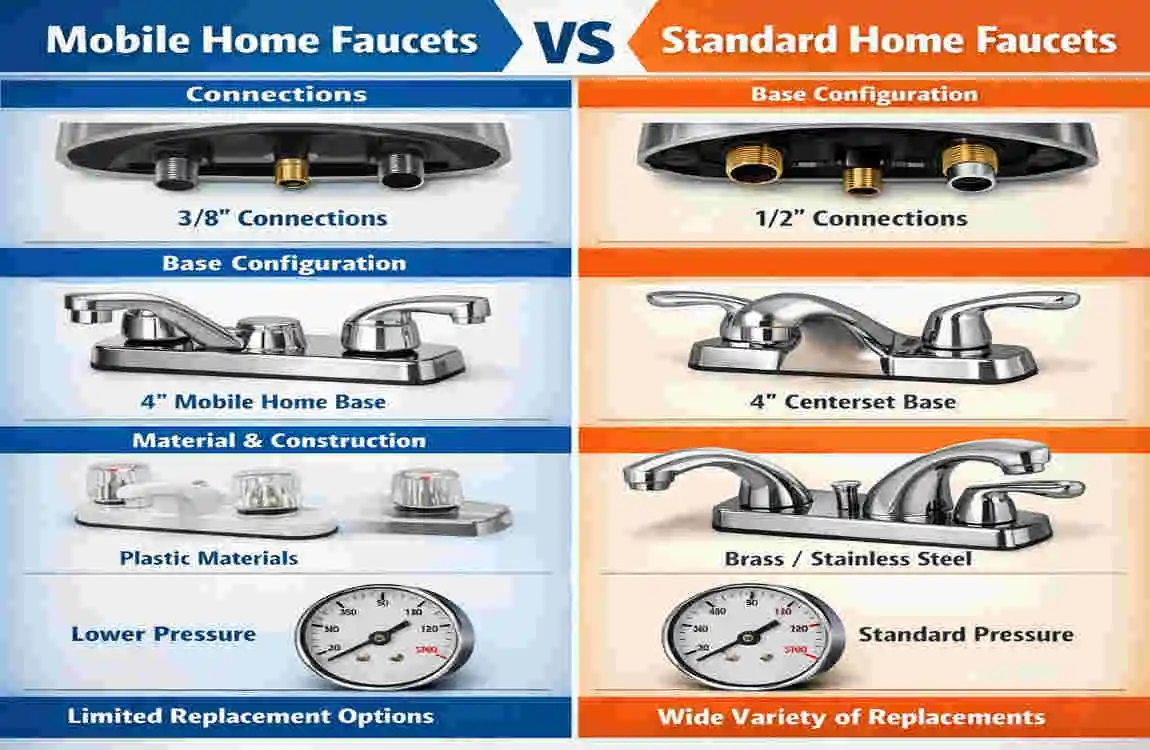
Now that we’ve covered the basics, let’s talk about the various types of mobile home plumbing faucets. These aren’t one-size-fits-all; they’re tailored to specific rooms and needs. Understanding them helps you pick the right one for your setup, avoiding those pesky mobile home faucet differences that trip people up.
Kitchen Faucets: Practical and Versatile
In mobile home kitchens, pull-out sprayers rule the roost. These come with short hoses perfect for double sinks in compact spaces. Side-mount options are popular too, fitting snugly against walls without wasting room. Unlike standard kitchen faucets with long arcs for deep sinks, mobile versions keep it low-profile.
Why choose these? They make rinsing veggies or filling pots a snap, even in tight quarters. If your kitchen is your home’s heart, a pull-out model enhances functionality without overwhelming the space.
Bathroom Faucets: Simple and Space-Saving
Bathroom faucets in mobile homes often go for single-hole or wall-mount designs. Compression fittings work seamlessly with PEX lines, ensuring a tight seal. Compare this to widespread standard faucets that need more deck space—mobile ones prioritise efficiency.
Visualise a sleek single-handle faucet over your vanity. It’s easy to clean around and fits shallow basins. This type shines in small bathrooms where every inch counts.
Shower and Tub Faucets: Combo Functionality
For showers and tubs, mobile homes favour tub-shower combos with built-in diverters. Low-arc spouts prevent splashing in confined areas. Standard setups might have separate controls, but mobile designs integrate everything for simplicity.
This matters for families—switch from bath to shower effortlessly. It’s a space-saver that keeps your bathroom organised and functional.
Compatibility Challenges with Mobile Home Faucets
Switching faucets sounds simple, but mobile home vs standard faucets often clash due to compatibility issues. Trying a standard model? It might leak from thread mismatches or not fit the sink holes. This section tackles those challenges head-on, so you can upgrade without regrets.
Common Mismatches and Fixes
One big hurdle is pre-1976 HUD code sinks versus newer ones. Older models have unique hole spacings that standard faucets ignore. Measure your shank length—mobile ones are shorter to fit thin counters.
Adapters can bridge the gap, converting NPT to compression. But they’re not foolproof; always test for leaks. Are mobile home faucets different in compatibility? Yes, and ignoring that leads to frustration.
Checklist for Smooth Upgrades
Use this handy checklist before buying:
- Pipe type: Confirm PEX or flexible lines.
- Hole spacing: Measure sink holes (e.g., 4-inch centerset).
- PSI rating: Ensure a low-flow match for your system.
Installation Guide: Step-by-Step to Replace a Mobile Home Faucet
Ready to replace the mobile home faucet yourself? This DIY guide makes it straightforward. Follow these steps for a leak-free install, and remember safety first—wear gloves and eye protection.
Gather Your Tools
Start with basics: an adjustable wrench, plumber’s putty, a bucket, and Teflon tape. For mobile-specific clips, a screwdriver helps.
Shut Off Water
Turn off the main water supply under your home or at the valves. Drain lines by opening the faucet—catch water in a bucket.
Remove the Old Faucet
Disconnect supply lines carefully. Note any clips or nuts unique to mobile setups—they’re often plastic for easy removal. Wiggle the faucet out gently.
Prep and Install New Faucet
Clean the sink area. Apply plumber’s putty around the base, then insert the new faucet. Secure with mounting nuts—hand-tighten to avoid cracks.
Connect and Test
Attach compression nuts to lines—tighten by hand, then a quarter-turn with a wrench. Turn the water on slowly, check for drips, and adjust the aerator if needed.
Maintenance and Upgrade Tips
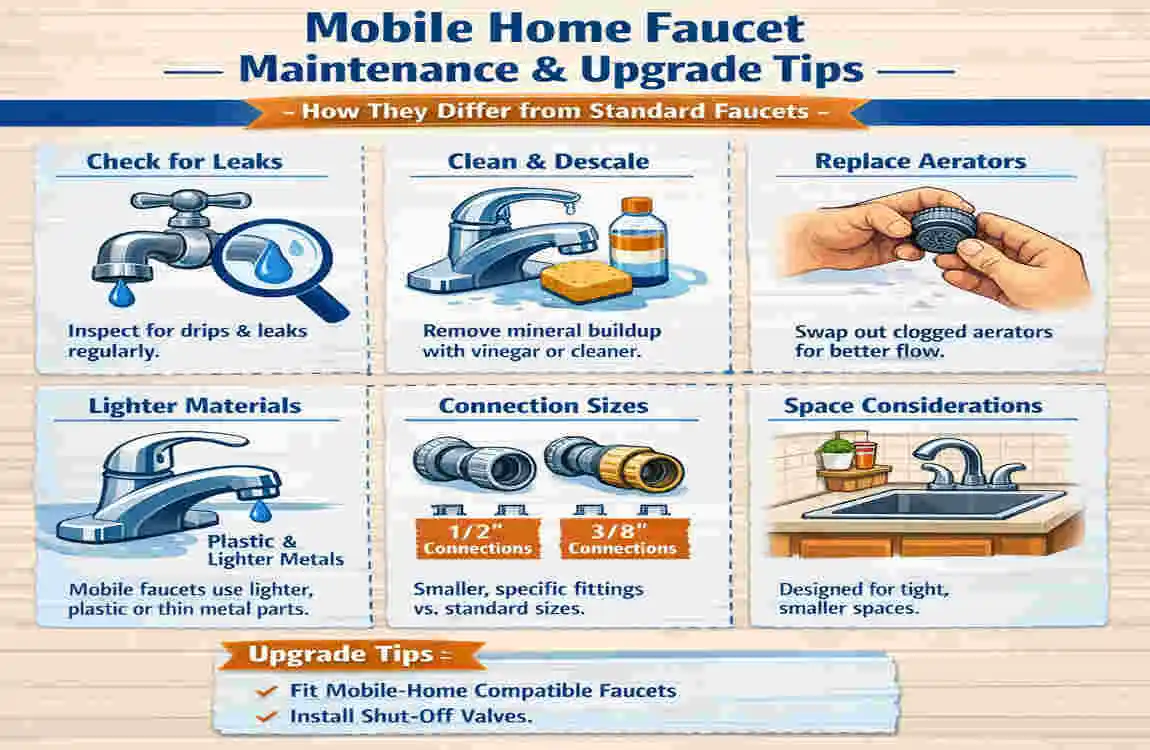
Keeping your mobile home plumbing faucets in top shape is easy with routine care. Clean aerators monthly to dodge clogs—unscrew, rinse, and reinstall. This prevents buildup from hard water.
For upgrades, try touchless models for better hygiene. Brands like Danco or Valterra specialise in mobile-friendly options—affordable and reliable.
Common Myths Debunked
Let’s bust some myths about differences in mobile home faucets.
Myth: All faucets are universal. Nope—threads and sizes vary, leading to leaks if mismatched.
Myth: Mobile ones are inferior. They’re optimised for mobility and often outlast industry standards in vibration-prone environments.
FAQs
Are mobile home faucets different in size?
Yes, they often have shorter shanks to fit shallow sinks.
Can I use standard faucets in mobile homes?
Possible with modifications like adapters, but check compatibility first.
What’s the best mobile home faucet replacement?
A single-handle chrome model—durable and space-efficient.
Do mobile home faucets last longer?
They’re rust-resistant, but regular seal checks extend life.
