

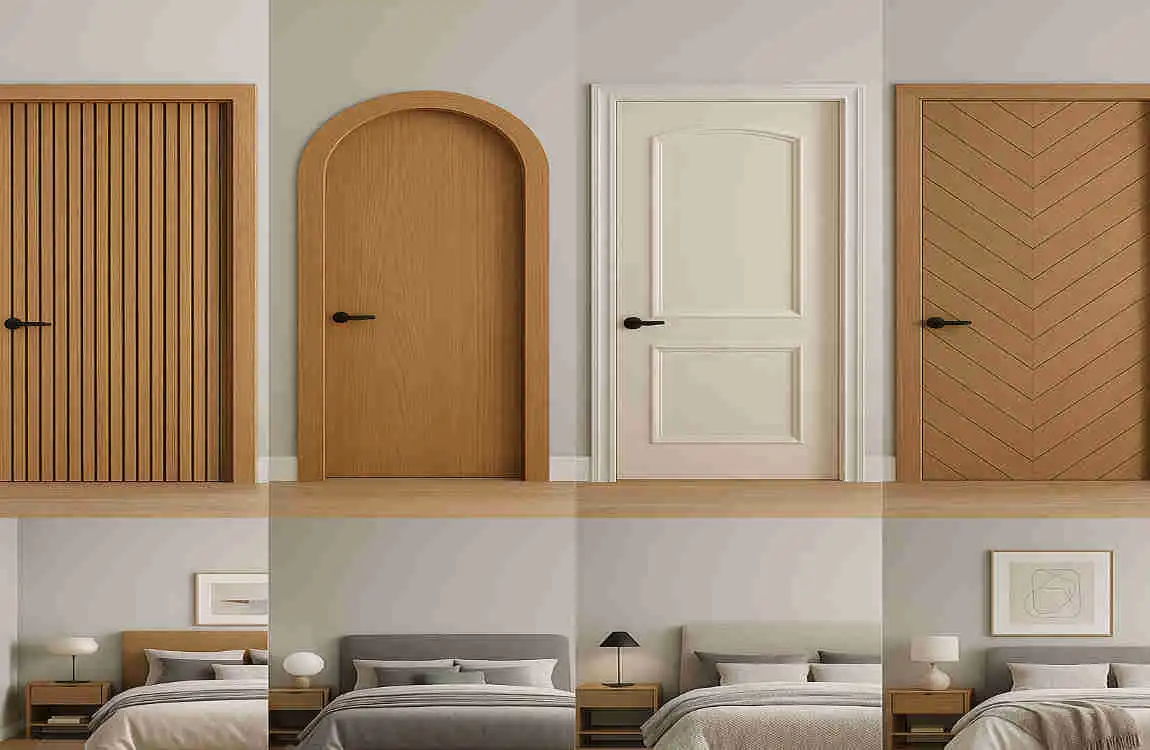
Did you know that 80% of homeowners believe that bedroom aesthetics directly impact their sleep quality? According to a recent Houzz survey, upgrading your bedroom isn’t just about comfort—it’s about creating a sanctuary where design and functionality blend seamlessly. And one of the easiest ways to elevate your bedroom’s style is by focusing on its doors.
Bedroom doors, once considered purely functional, have transformed into statement pieces. With so many trending bedroom door designs available in 2025, there’s something for every style, preference, and budget. From sleek modern looks to rustic charm, the right bedroom door can tie a room’s design together, improve its functionality, and even boost your home’s value.
Why Bedroom Door Design Matters
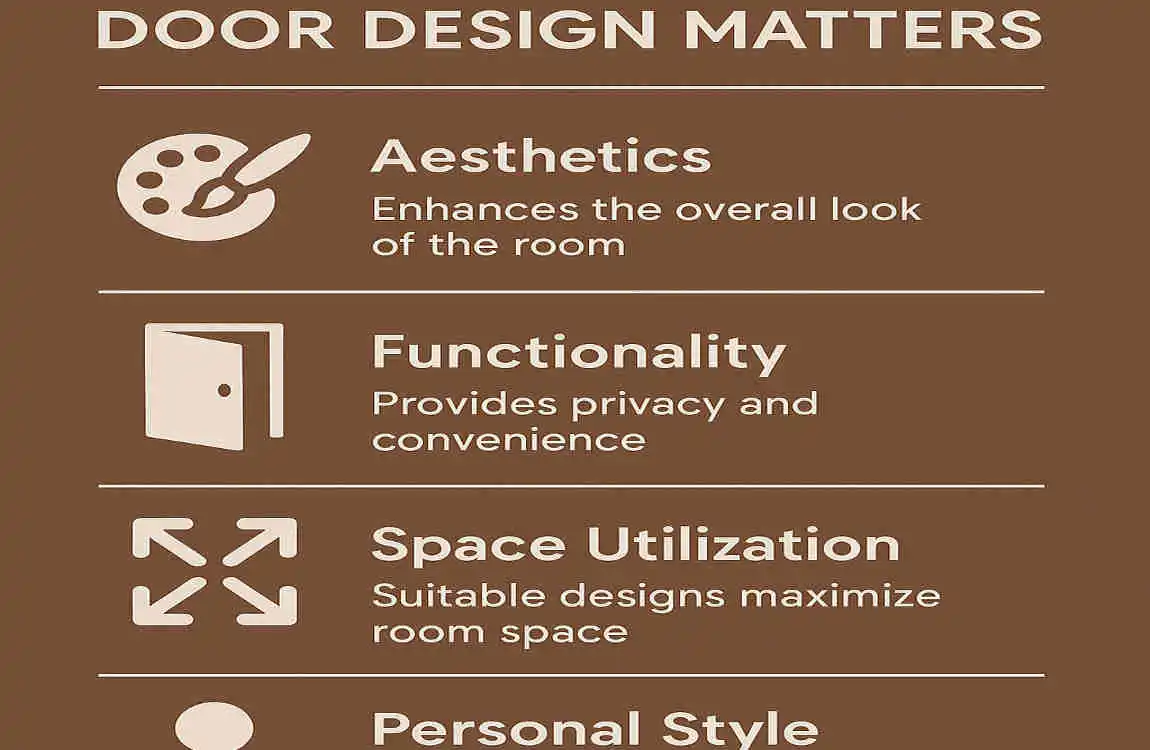
Your bedroom door is no longer just a simple barrier for privacy—it plays a significant role in the overall design of your space. Modern homeowners are turning their attention to doors as focal points, choosing designs that reflect their personality while meeting practical needs.
The Evolution of Bedroom Doors
In the past, doors were primarily utilitarian, meant to separate rooms and provide privacy. But over the years, they’ve evolved into key design elements. Today’s doors can:
- Enhance the flow of a room.
- Maximize storage or space efficiency.
- Improve acoustics and privacy.
- Reflect your personal style.
Key Benefits of a Thoughtful Bedroom Door Design
Here’s why investing in a trendy bedroom door design is worthwhile:
- Aesthetic Appeal: A stylish door can elevate the look of your entire bedroom, tying the design together.
- Space-Saving Features: Modern options such as sliding or pocket doors are ideal for small rooms.
- Acoustic/Privacy Enhancements: Thicker doors or soundproof materials ensure a quiet retreat.
- Boosting Property Value: Trendy upgrades, such as modern doors, can increase your home’s resale value.
- Sustainability: Eco-friendly materials like bamboo or reclaimed wood align with 2025’s green living trends.
Quick Comparison: Door Types and Benefits
Here’s a snapshot of popular door types and their pros/cons:
Door TypeBenefitsDrawbacks
Sliding Doors Space-saving, modern aesthetic. Requires wall space for tracks.
Wooden Doors : Durable, warm look , Heavier, pricier than MDF
Frosted Glass Doors : Light diffusion, contemporary , May lack complete privacy
Pocket Doors : Hidden design, saves space , Complex installation
Top Trending Bedroom Door Designs for Modern Homes
Let’s explore the hottest bedroom door ideas for 2025. Whether you prefer sleek minimalism or bold statements, there’s a design trend to suit your taste.
Minimalist Flush Doors
Clean lines and simplicity are the hallmarks of minimalist flush doors. These sleek, handle-less panels often come in matte finishes, creating a seamless look perfect for contemporary interiors.
- Why it’s trending: Their understated elegance matches minimalist and modern aesthetics.
- Pro Tip: Opt for neutral tones like white, grey, or black to blend with any decor.
- Drawback: May lack texture or visual interest for some homeowners.
Sliding Barn Doors
Sliding barn doors are a perfect blend of rustic charm and modern functionality. Mounted on metal tracks, they’re ideal for spaces where swinging doors might take up too much room.
- Why it’s trending: These doors are space-efficient and add a cozy, farmhouse vibe.
- Materials: Commonly made from reclaimed wood or metal.
- Drawback: Tracks may require regular maintenance for smooth sliding.
Frosted Glass Panel Doors
Looking for a way to combine privacy with natural light? Frosted glass panel doors are your answer.
- Why it’s trending: These doors diffuse light beautifully while maintaining privacy, making them a favorite for industrial or Scandinavian-inspired homes.
- Pro Tip: Pair with black metal frames for a chic, industrial look.
- Drawback: Glass requires regular cleaning to maintain its aesthetics.
Wooden Framed Doors with Geometric Patterns
Wooden doors with geometric cutouts are making waves in 2025. These designs often feature natural woods like oak or walnut, combined with intricate patterns.
- Why it’s trending: They bring warmth and a unique artistic touch to bedrooms.
- Pro Tip: Match the wood tone to your furniture for a cohesive look.
- Drawback: Custom patterns can be expensive.
Pocket Doors
Pocket doors are the ultimate space-saving solution for tight bedrooms. These sliding panels disappear into the wall, freeing up valuable floor space.
- Why it’s trending: Sleek, modern, and perfect for small homes or apartments.
- Installation Tip: Ensure your wall cavity is deep enough to accommodate the door.
- Drawback: Installation can be tricky and costly.
Arched Top Doors
Bring a touch of elegance with arched-top doors, featuring soft curves that are perfect for bohemian or Mediterranean-style bedrooms.
- Why it’s trending: These doors add architectural interest and charm.
- Pro Tip: Use light, neutral colors to enhance the curve’s elegance.
- Drawback: Limited availability in ready-made options.
Smart Doors with Biometrics
Welcome to the future with smart bedroom doors that integrate biometric locks and smart home compatibility.
- Why it’s trending: They offer enhanced security and convenience.
- Pro Tip: Choose a design that blends tech with aesthetics, like a wooden door with a fingerprint scanner.
- Drawback: Higher upfront cost.
Bi-Fold Doors
If you need versatile access to your bedroom, bi-fold doors are a great option. These folding panels open wide, making them perfect for larger spaces.
- Why it’s trending: They’re stylish and functional, offering maximum access without swinging into the room.
- Pro Tip: Consider mirrored panels for added functionality.
- Drawback: Hinges may need periodic tightening.
Comparison Table: Popular Bedroom Door Designs
Design Type Style Fit Cost Range Space Savings
Minimalist Flush Doors Modern/Minimalist $200-600 Medium
Sliding Barn Doors Rustic/Industrial $300-800 High
Frosted Glass Panel Doors Scandinavian $400-1000 Medium
Pocket Doors Modern/Compact $500-1500 High
Arched Top Doors Boho/Mediterranean $600-1200 Medium
Material Spotlight: Choosing the Best for Your Bedroom Door Design
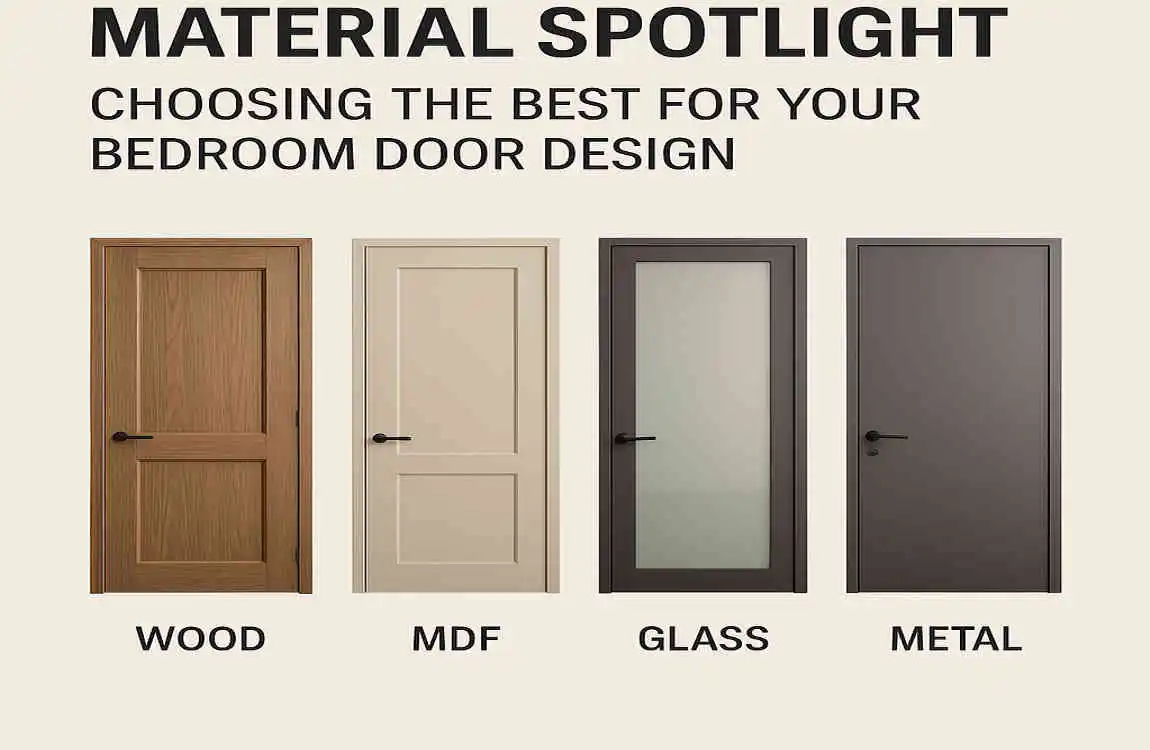
The material of your bedroom door significantly impacts its aesthetics, durability, and functionality. Let’s explore some popular options.
Popular Materials for Bedroom Doors
- Solid Wood: Timeless and durable, solid wood doors add warmth and character.
- Pros: Long-lasting, natural look.
- Cons: Heavier and more expensive.
- MDF/Engineered Wood: A budget-friendly alternative to solid wood.
- Pros: Affordable, smooth finish.
- Cons: Less durable over time.
- Glass/Acrylic: Perfect for modern, light-filled designs.
- Pros: Sleek and contemporary.
- Cons: Requires frequent cleaning.
- Metal Accents: Adds an industrial edge to your decor.
- Pros: Durable, unique.
- Cons: Can feel cold in cozy settings.
- Eco-Friendly Options (Bamboo/Composites): A sustainable choice for green living enthusiasts.
- Pros: Environmentally friendly.
- Cons: May have limited design options.
Budget Breakdown: DIY or Professional Installation?
When upgrading your bedroom door, it’s important to balance cost with your desired outcome. Here’s a quick breakdown:
Budget Range: What You Get
Low (<$500): Paint existing doors and basic DIY upgrades.
Mid ($500-1500) Pre-made modern door kits, sliding tracks.
High ($> 1500): Custom designs, Premium materials.
Real Home Transformations: Before and After
Nothing inspires like real-life examples! Here are a few ideas to get you started:
- Modern Minimalist Makeover: Swapping a traditional wooden door for a sleek flush design.
- Farmhouse Chic: Adding a sliding barn door to a cozy bedroom.
- Light and Airy Upgrade: Installing a frosted glass door to brighten a dark space.
Check out Pinterest or Instagram for before-and-after inspiration!
Maintenance Tips to Keep Your Bedroom Door Design Fresh
- Wooden Doors: Dust regularly and use a polish to maintain the finish.
- Glass Doors: Clean with a vinegar-water solution to prevent streaks.
- Sliding Tracks: Lubricate annually for smooth operation.
- Seasonal Checks: Inspect for warping or damage due to temperature changes.
