

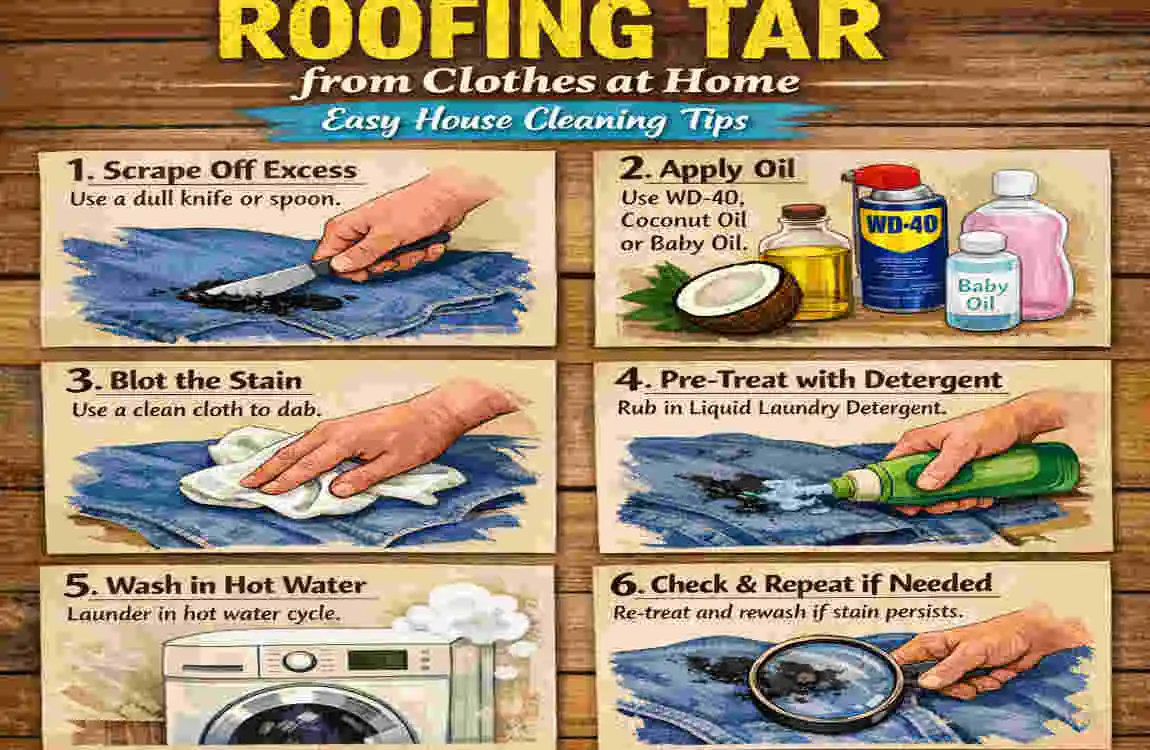
Removing roofing tar from clothes at home can be challenging, but several simple and effective household methods can help. Common remedies include using cooking oils, such as mayonnaise, linseed oil, or peanut butter, to loosen the tar, followed by washing with warm water and mild soap. For fresh or minor stains, products like WD-40 can help dissolve the tar without damaging fabrics. Always start with gentle approaches to avoid harming the clothing, and repeat the process if necessary for stubborn stains. These easy tips make home cleaning tar from clothes manageable with items typically found at home.
What to do when tar gets on your clothes?
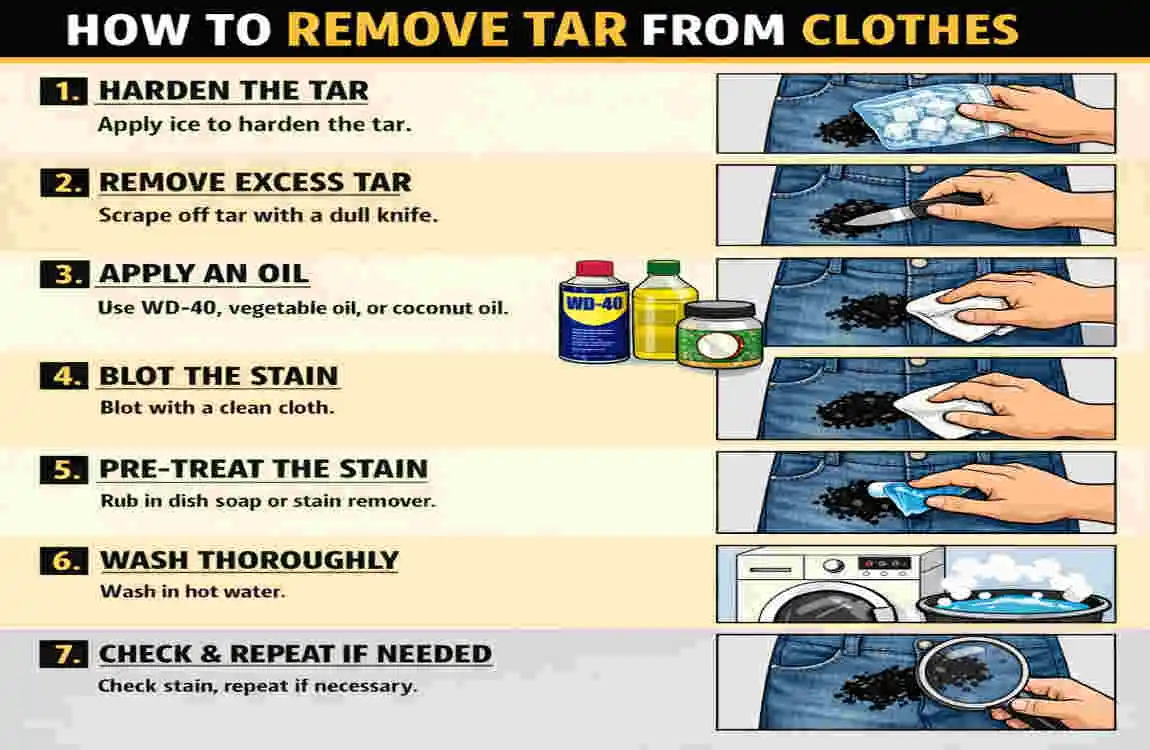
When tar lands on your clothes, act quickly. Time is essential to prevent the stain from setting.
First, resist the urge to rub it. Rubbing can push the tar deeper into the fabric fibers, making removal more difficult.
Instead, take a blunt tool like a spoon or a dull knife and gently scrape off any excess tar. Be careful not to damage the fabric in this process.
Next, locate an appropriate solvent. Standard options include rubbing alcohol or mineral spirits. Test it on an inconspicuous area of the garment first; you want to ensure it won’t cause further discoloration.
Dab the solvent onto a cloth and gently blot at the stained area. Continue this until you see progress in lifting away that stubborn tar residue. Patience is key here—let each application soak for several minutes before attempting to remove more tar!
Step-by-step guide for removing tar from clothing
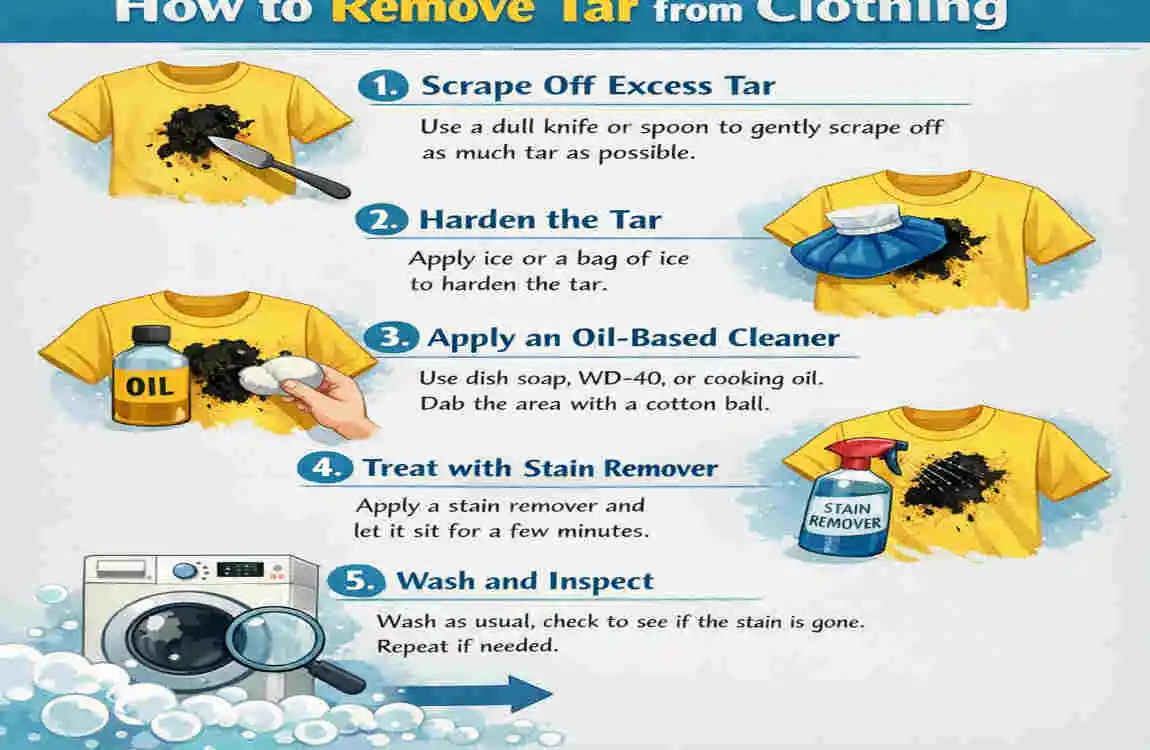
Start by scraping off any excess roofing tar from your clothing. Use a dull knife or a spoon to gently lift the tar away without damaging the fabric.
Next, apply a solvent like rubbing alcohol or hand sanitizer directly onto the stain. Let it sit for about 10 minutes to break down the tar.
After that, blot the area with a clean cloth or paper towel. Whenever possible, avoid rubbing, as this can deepen the stain.
Rinse with cold water thoroughly to remove both the solvent and any remaining tar residue.
Now it’s time for laundry detergent. Apply it directly on the stained area and let it sit for another 5-10 minutes before washing in cold water.
Check if the stain is gone before drying; heat can set stains permanently. If necessary, repeat these steps until you’re satisfied with the results.
Alternative methods for removing tar stains
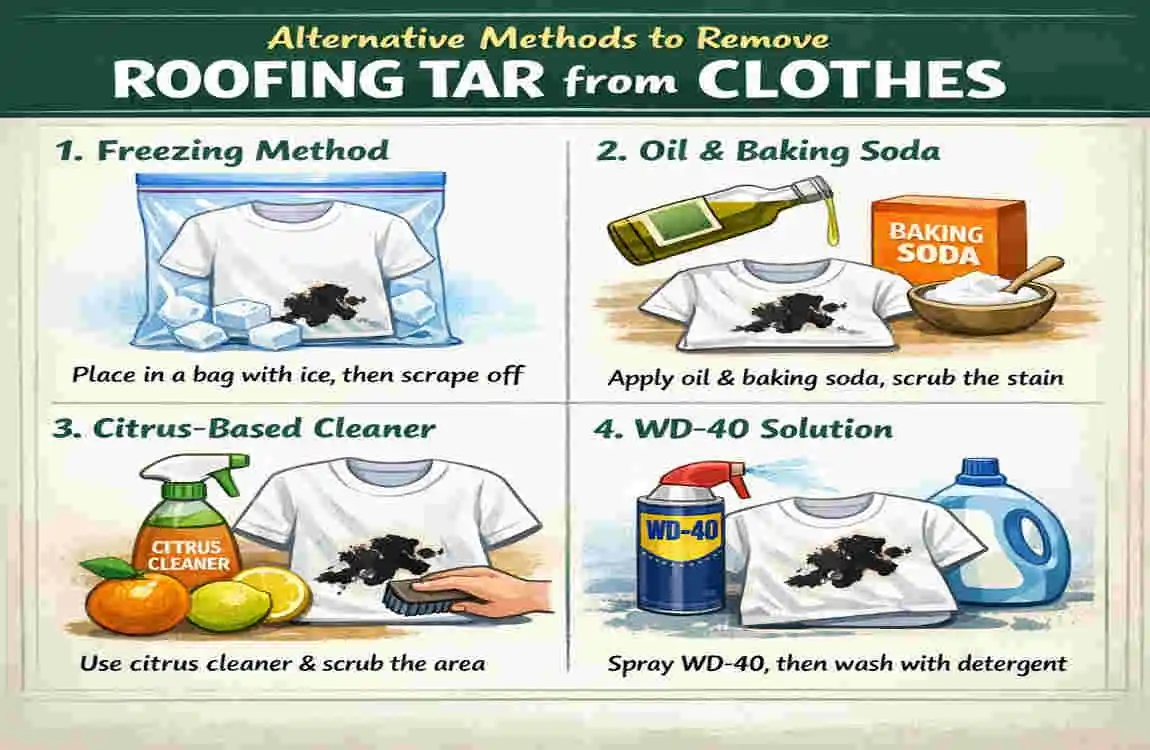
If traditional methods aren’t doing the trick, there are alternative approaches to consider. Rubbing alcohol can be surprisingly effective. Dab a little on a home clean cloth and gently blot the stained area. It breaks down the tar without damaging most fabrics.
Another option is using dish soap mixed with warm water. Apply it directly to the stain and let it sit for a few minutes before rinsing. This combination helps lift tar from fibers.
Baby oil or mineral oil can also aid in removing stubborn stains. Use a cotton ball to apply it directly onto the tar, allowing time for absorption before dabbing at it with a soft cloth.
For those who prefer natural solutions, mixing vinegar with baking soda creates an effervescent reaction that may help dislodge tar particles when applied carefully to the affected areas.
Precautions to take while handling roofing tar stains
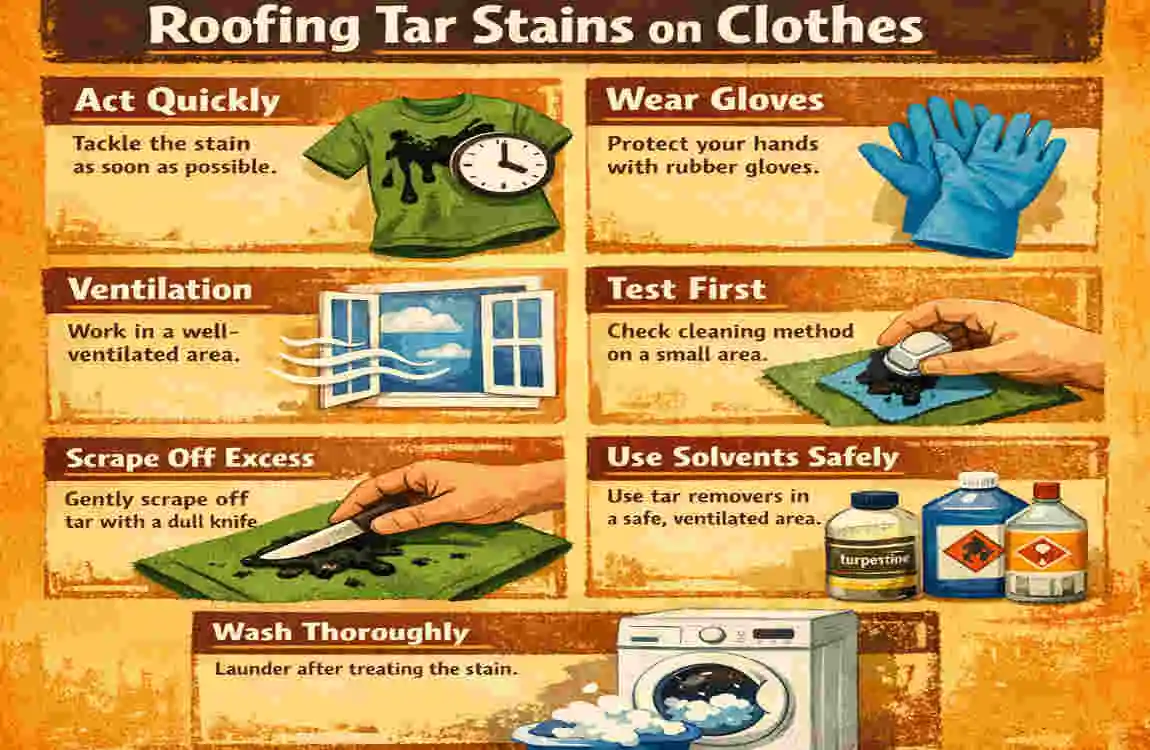
Handling roofing tar can be messy, so it’s essential to take precautions. First, always wear gloves. Tar is sticky and can easily transfer to your skin.
Choose your workspace wisely. Avoid clean surfaces where you don’t want stains. A well-ventilated area is also critical, as the fumes can be strong and irritating.
Act quickly if you spill any tar. The longer it sits, the harder it becomes to remove from fabrics or surfaces.
Keep cleaning supplies nearby when working with roofing tar. You never know when an accident might occur, and being prepared makes cleanup easier.
Store any leftover roofing tar in a secure container away from children and pets to prevent accidental exposure or messes later on. Taking these simple steps will save you time and frustration in the long run.
Tips for preventing future accidents with roofing tar
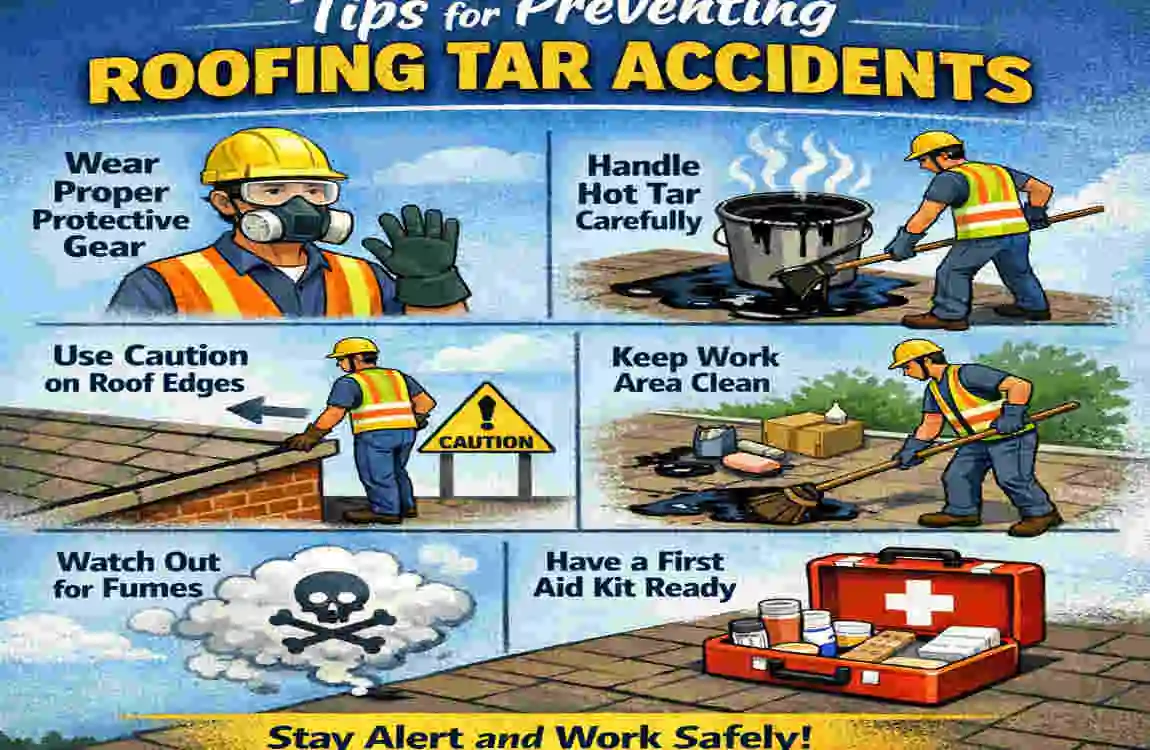
To prevent future accidents with roofing tar, consider wearing protective clothing. Long sleeves and pants can shield your skin from unwanted stains.
Always work in a well-ventilated area when handling tar products. This not only keeps you safe but also minimizes the risk of spills and splatters.
Use drop cloths or old sheets to cover surfaces where you’re working. They can catch any drips before they make contact with your clothes.
Investing in quality tools specifically designed for applying tar can reduce messiness as well. Tools like brushes or scrapers help apply materials precisely, limiting accidental contact with your attire.
Always keep cleaning supplies nearby while you work. Quick access to solvents or wipes allows for immediate action if any spills occur, preventing them from setting into fabric fibers.
FAQ: How to Get Roofing Tar Off Clothes
Can roofing tar be removed from clothes?
Yes, sometimes, especially if you act quickly. Fresh tar is easier to remove than dried tar, but heavy stains may still leave a mark.
What should I do first?
Let the tar harden first if it is still sticky. You can place ice in a bag and hold it on the spot to make the tar firm, then gently scrape off as much as possible with a dull knife or spoon.
How do you treat the stain?
After scraping off the excess tar, apply:
- Dish soap
- Laundry stain remover
- Or a small amount of oil-based remover like cooking oil to loosen the tar
Then blot gently and wash the area with warm water if the fabric allows.
Should I wash the clothing right away?
Yes, wash it after pre-treating, but check the stain first before drying. Heat from the dryer can set the tar stain and make it much harder to remove.
What if the tar stain does not come out?
Repeat the treatment before drying. If the clothing is delicate or expensive, take it to a professional cleaner.
What is the biggest mistake to avoid?
Do not rub the fresh tar deeper into the fabric, and do not put the item in the dryer until the stain is fully gone.
