

How long does luxury vinyl flooring in a house really last? If you’re considering luxury vinyl plank (LVP) for your home, you’re likely curious about its durability and whether it’s worth the investment. The truth is, luxury vinyl flooring has gained immense popularity in recent years for its durability, affordability, and luxurious appearance, making it a top choice for homeowners.
On average, luxury vinyl flooring lasts 15 to 25 years in a residential setting, depending on factors like wear and tear, maintenance, and the quality of the material. Some manufacturers even offer warranties for up to 30 years, which speaks volumes about their potential lifespan.
What Is Luxury Vinyl Flooring (LVP) and Why Choose It?

Luxury vinyl flooring, also known as LVP (Luxury Vinyl Plank) or LVT (Luxury Vinyl Tile), is a modern flooring option that mimics the look of natural materials like hardwood or stone. Unlike traditional vinyl sheet flooring, LVP offers a multi-layer construction that provides enhanced durability, water resistance, and an upscale appearance.
How Is LVP Made?
LVP consists of several layers, each playing a unique role in its performance:
- Wear Layer: The top layer protects against scratches, stains, and general wear. Thickness typically ranges from 6 mil to 30+ mil, with thicker wear layers lasting longer.
- Decorative Layer: This layer gives the flooring its realistic wood or stone look, using high-resolution images.
- Core Layer: Depending on the product, the core can be flexible (WPC) or rigid (SPC). Rigid cores offer superior stability and durability.
- Underlayment: Some LVP comes with a built-in underlayment for noise reduction and added cushioning.
Why Homeowners Love Luxury Vinyl Flooring
Homeowners choose LVP for its unique combination of practicality and aesthetics. Here’s why:
- Waterproof Design: Ideal for kitchens, bathrooms, and basements.
- Scratch Resistance: Perfect for homes with pets or children.
- Affordable Luxury: Mimics high-end hardwood or stone at a fraction of the cost.
- Low Maintenance: Easy to clean with regular sweeping and occasional mopping.
Understanding the lifespan of luxury vinyl flooring starts with appreciating its construction and benefits. With proper care, LVP can outlast many other flooring options in its price range.
Average Lifespan of Luxury Vinyl Flooring in a House
When it comes to the lifespan of luxury vinyl flooring, manufacturers and real-world experiences often align. Here’s what you can expect:
Manufacturer Claims
Most luxury vinyl flooring brands offer warranties ranging from 10 to 30 years, depending on the product’s quality and the thickness of its wear layer. For instance:
- 12-20 mil wear layers typically come with 10-15 year warranties.
- 15-25 year warranties often back 20-30 mil wear layers.
- Commercial-grade wear layers (30+ mil) may last 25+ years, even in high-traffic areas.
Real-World Lifespan
In real homes, luxury vinyl flooring usually lasts 15 to 25 years. This range varies based on usage, maintenance, and environmental factors. For example:
- Low-traffic areas (like bedrooms): 20-25 years.
- Medium-traffic areas (like kitchens): 15-20 years.
- High-traffic areas (like entryways): 10-15 years.
Lifespan by Wear Layer Thickness
The wear layer significantly impacts how long luxury vinyl flooring lasts. Here’s a quick comparison:
Wear Layer Thickness, Expected Lifespan in House, Best For
12-20 mil 10-15 years Low-traffic (bedrooms)
20-30 mil 15-25 years Medium-traffic (kitchens)
30+ mil (commercial) 25+ years High-traffic (living rooms)
Factors like traffic, moisture exposure, and maintenance habits will influence how long your flooring reaches its full lifespan.
Factors That Determine How Long Luxury Vinyl Flooring Lasts in a House
The longevity of luxury vinyl flooring isn’t just about the material itself—it’s also impacted by how it’s used and cared for. Let’s break down the key factors:
Foot Traffic and Usage
- Homes with high foot traffic, pets, or kids may see their flooring wear out faster. In these cases, LVP may last 10-15 years.
- In low-traffic areas, such as guest rooms or offices, LVP can easily last 20-25 years.
- Pro Tip: Use rugs or mats in high-traffic areas like entryways to reduce wear.
Moisture and Water Exposure
Luxury vinyl flooring is waterproof, making it ideal for moisture-prone areas like kitchens and bathrooms. However:
- If installed improperly, water can seep into seams, shortening the lifespan to 10-15 years.
- In areas with high humidity, such as basements, using dehumidifiers can help prevent damage and extend the life of the flooring.
Quality and Thickness
The quality of the LVP you choose plays a significant role in its durability:
- Premium brands like Coretec, Shaw, or Lifeproof often feature thicker wear layers and rigid cores, lasting longer.
- Budget options with thinner wear layers may only last 5-10 years.
Installation and Subfloor Preparation
Proper installation is crucial. Common issues that shorten lifespan include:
- Uneven subfloors are causing planks to shift or buckle.
- Poorly sealed edges allow water to seep in.
- Pro Tip: Hire a professional installer to maximise warranty coverage and ensure longevity.
Maintenance Habits
Caring for your luxury vinyl flooring is simple but essential:
- Daily Sweeping: Removes dirt and debris that can scratch the surface.
- Mopping: Use a pH-neutral cleaner for deeper cleaning.
- Avoid Steam Mops: High heat can damage the wear layer.
Real-Life Examples: Luxury Vinyl Flooring Lifespan in Actual Homes
Hearing about real-world experiences can give you a better sense of how long luxury vinyl flooring lasts. Here are a few examples:
Family Home in a Humid Climate
A homeowner in Florida installed LVP in their kitchen and living room 15 years ago. Despite the humid climate and heavy foot traffic, the flooring remains in excellent condition due to regular cleaning and a dehumidifier.
Rental Property
In a rental home with pets and heavy tenant use, LVP lasted 10 years before needing replacement. Pet scratches and furniture dragging contributed to the wear.
What Homeowners Say
- A user on Houzz shared, “My LVP in the kitchen is 18 years old and still looks fantastic!”
- Another Reddit user noted, “Our Lifeproof flooring in the living room has held up for 12 years with two large dogs.”
How to Extend the Lifespan of Your Luxury Vinyl Flooring
Want to make your luxury vinyl flooring last as long as possible? Follow these steps:
- Choose the Right Product: Opt for a 20+ mil wear layer for durability.
- Acclimate Before Installation: Allow planks to adjust to room temperature and humidity for 48 hours before installation.
- Use Protective Measures: Add felt pads to furniture legs and trim pet nails to prevent scratches.
- Clean Properly: Stick to pH-neutral cleaners and avoid abrasive tools.
- Protect from UV Rays: Use curtains or UV-protective window films to prevent fading.
Signs Your Luxury Vinyl Flooring Is Nearing the End of Its Life
Even with the best care, flooring won’t last forever. Watch for these signs that it’s time to replace your LVP:
- Peeling Edges: Indicates wear layer failure.
- Deep Scratches or Gouges: Expose the decorative layer beneath.
- Fading Colours: Caused by prolonged UV exposure.
- Buckling or Warping: Often due to water damage.
If more than 20% of your flooring is damaged, it’s likely time for a replacement.
Luxury Vinyl Flooring vs. Other Flooring: Lifespan Comparison
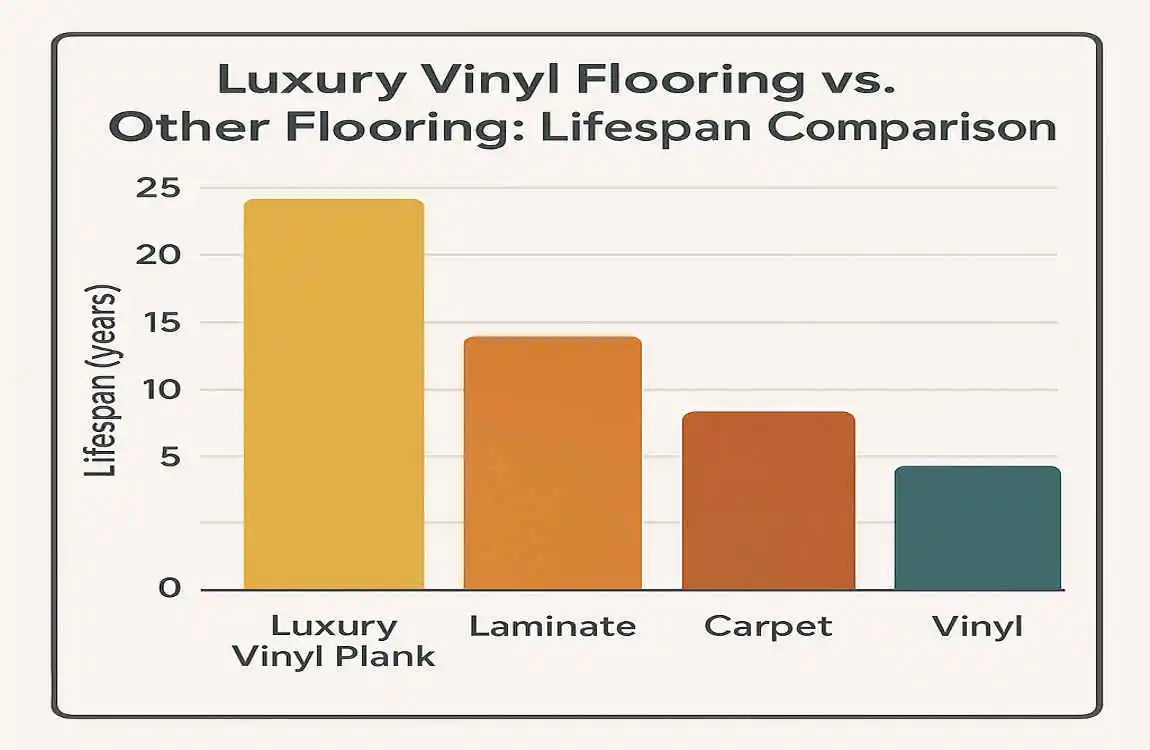
How does LVP stack up against other popular flooring types? Here’s a comparison:
Flooring Type Average Lifespan in House Cost per sq ft Maintenance
Luxury Vinyl 15-25 years $3-7 Low
Hardwood 25-100 years $8-15 High
Laminate 10-20 years $2-5 Medium
Tile 50+ years $5-10 High
Luxury vinyl flooring offers the best balance of affordability, durability, and ease of maintenance among flooring options.
Maintenance Tips to Maximise Luxury Vinyl Flooring Lifespan
To keep your flooring looking new for decades, follow these maintenance tips:
- Sweep Daily: Prevent dirt buildup that can cause scratches.
- Mop Weekly: Use a damp mop with a pH-neutral cleaner.
- Avoid Steam Cleaners: High heat can damage the wear layer.
- Check for Damage Seasonally: Address issues like peeling edges promptly.
