


Wondering how long a roof lasts on a house before needing a replacement? Your roof is one of the most essential parts of your home—it protects everything beneath it. However, like any part of your home, a roof has a lifespan, and knowing what to expect can help you plan and save money in the long run.
On average, most roofs in the U.S. last 20 to 50 years, depending on the material, climate, and maintenance. Some materials, like asphalt shingles, may need replacement after 15-30 years, while others, like slate or clay tiles, could last well over a century.
Average Roof Lifespan Overview
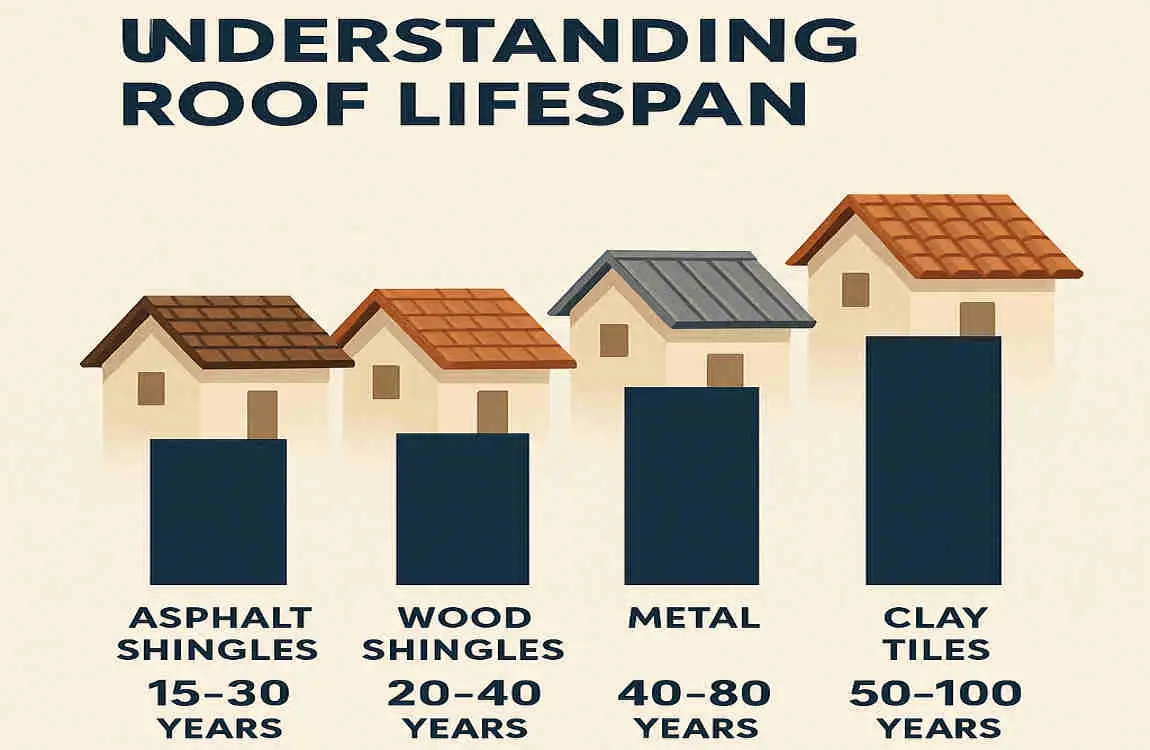
The lifespan of your roof depends on the material used. Some materials, like asphalt shingles, are more affordable but have a shorter life expectancy, while others, like slate or metal, last much longer but cost more upfront.
Most residential roofs last between 20 and 50 years, but some Premium materials can last over 100 years. Below is a quick comparison of the average lifespan of common roofing materials:
Material Average Lifespan Key Notes
Asphalt Shingles 15-30 years Affordable, common, vulnerable to weathering
Metal Roofing 40-80 years Durable and weather-resistant, higher upfront cost
Clay/Concrete Tiles 50-100+ years Heavy, fire-resistant, ideal for hot climates
Slate 60-150 years Premium, extremely durable, expensive to install
Wood Shakes 20-50 years Aesthetic, requires regular maintenance
As you can see, roofing materials vary significantly in longevity. Let’s take a closer look at each material to help you decide what might be best for your home.
Roof Lifespan by Material
Your roof’s lifespan heavily depends on its material. Below, we’ll explore the most popular roofing materials, their pros and cons, and how long you can expect them to last.
Asphalt Shingles
Lifespan: 15-30 Years
Asphalt shingles are the most popular roofing material in the U.S. due to their affordability and ease of installation. They come in two main types:
- Three-tab shingles: Typically last 15-20 years.
- Architectural shingles: More durable, lasting 25-30 years.
Pros:
- Low cost (around $3-5 per square foot).
- Easy to install and replace.
Cons:
- Prone to UV damage and heat degradation.
- Vulnerable to strong winds and hail.
Metal Roofing
Lifespan: 40-80 Years
Metal roofs, including steel, aluminum, and copper, are known for their durability and weather resistance.
Pros:
- Long-lasting and low maintenance.
- Energy-efficient and recyclable.
Cons:
- Higher upfront cost (around $7-15 per square foot).
- It cannot be quiet during heavy rain or hail.
Clay and Concrete Tiles
Lifespan: 50-100+ Years
Clay and concrete tiles are popular in warmer climates due to their heat resistance and longevity.
Pros:
- Fire-resistant and durable.
- Aesthetic appeal for Mediterranean or Spanish-style homes.
Cons:
- Heavy, requiring reinforced roof structures.
- Expensive to install (around $10-20 per square foot).
Slate Roofing
Lifespan: 60-150 Years
Slate is a Premium roofing material known for its incredible durability and natural beauty.
Pros:
- Unmatched longevity.
- Resistant to fire, mold, and pests.
Cons:
- Extremely expensive (around $15-30 per square foot).
- Requires skilled installation and a reinforced roof structure.
Other Materials
- Wood Shakes: Last 20-50 years with regular maintenance. Aesthetic but vulnerable to rot and pests.
- EPDM (Rubber Roofing): Lasts 15-25 years. Affordable but best for flat or low-slope roofs.
Factors Affecting Roof Longevity
Beyond the material, several factors can influence how long your roof lasts. These include climate, proper maintenance, and even the quality of installation.
Impact of Climate and Location
Where you live plays a significant role in your roof’s lifespan.
- Hot and Humid Climates: Excessive heat and humidity can accelerate the degradation of asphalt shingles, reducing their lifespan by up to 20%.
- Cold and Snowy Regions: Ice dams and heavy snow can damage roofs, especially shingles, reducing their life to as little as 15-25 years.
- Windy or Coastal Areas: Metal and slate roofs perform best in areas prone to strong winds or salty air, often lasting 40-80 years.
Climate Type: Asphalt Adjustment, Metal Adjustment
Hot/Dry -5-10 years No change
Cold/Wet -10 years +10 years
Maintenance Best Practices
Regular maintenance can extend the life of any roof by up to 20 years. Here are some tips:
- Inspect Your Roof Annually: Look for damaged shingles, leaks, or debris buildup.
- Clean Gutters: Clogged gutters can lead to water pooling and damage.
- Trim Overhanging Branches: Prevent branches from damaging your roof during storms.
- Check for Ventilation Issues: Poor ventilation can lead to moisture buildup and mold.
Signs Your Roof is Nearing the End of Its Life
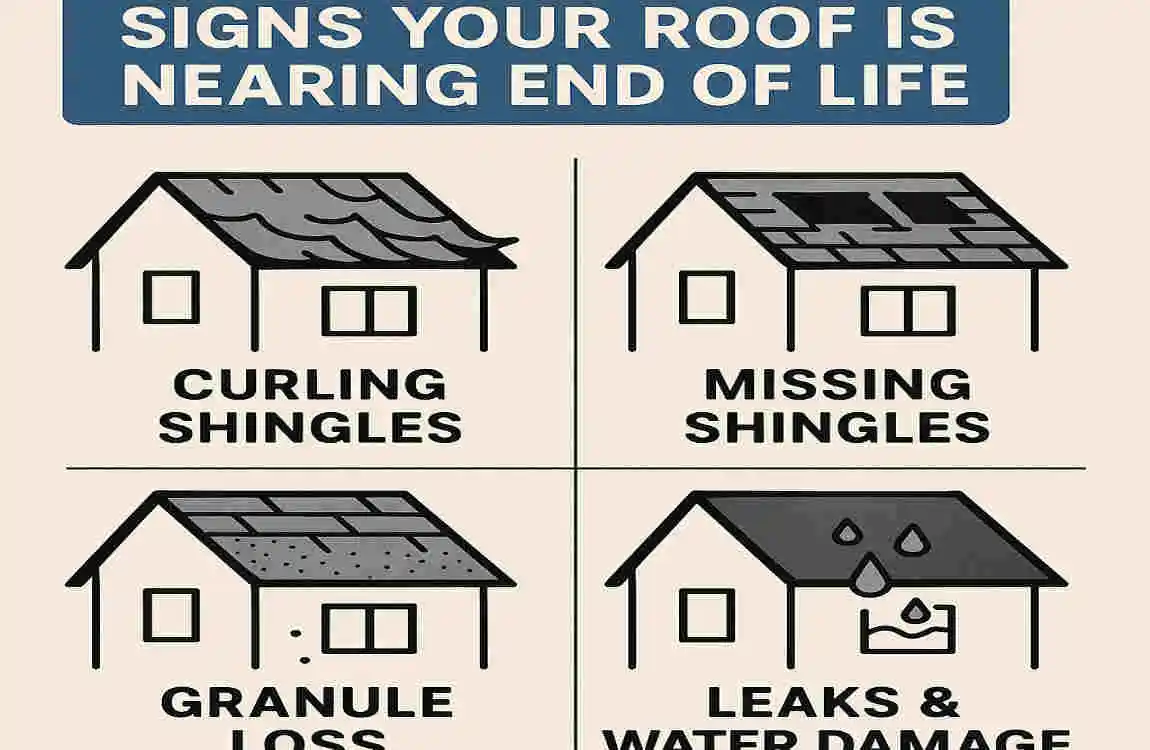
It’s essential to recognize the warning signs of a failing roof to avoid costly damage. Common signs include:
- Missing Shingles: Bald spots or missing granules.
- Curling or Buckling Shingles: Indicates age or weather damage.
- Water Stains Indoors: Leaks often show up as stains on ceilings or walls.
- Daylight Through Roof Boards: Visible light in your attic is a clear sign your roof needs attention.
Cost of Replacement and Long-Term Savings
The cost of replacing a roof depends on the material:
- Asphalt Shingles: $5,000-$12,000
- Metal Roofing: $12,000-$25,000
- Slate Roofing: $25,000+
While Premium materials cost more upfront, their longevity saves money in the long run. For example, a slate roof might cost three times as much as an asphalt roof, but it could last five times as long.
