


Imagine standing in your living room, gazing at your windows. The sunlight pours in, but something feels off. Maybe the room looks a little bland, or you sense it’s missing that designer touch. Now, picture the same space after you hang long, flowing curtains that gracefully touch the floor. Instantly, the room transforms—there’s newfound elegance, coziness, and style. What changed? Just the curtain length.
This simple switch sparks a common question for homeowners everywhere: Should curtains touch the floor? It’s an age-old debate that divides families, decorators, and design enthusiasts alike. Some swear by floor-length drama, while others argue for practicality and easy maintenance.
The History and Evolution of Curtain Lengths in Home Decor

From Victorian Grandeur to Minimalist Chic
Curtains have a surprisingly rich history. In the Victorian era, wealthy homeowners used heavy, floor-to-ceiling drapes to signal luxury and status. These “puddle curtains” weren’t just about blocking light—they were statements of opulence, often layered with tassels and trims.
Fast forward to the mid-20th century, and tastes shifted. Clean lines and functionality took over. Shorter hems—ending at the window sill or just below—became popular, especially in practical spaces like kitchens and bathrooms.
Today, the pendulum swings back. Thanks to celebrity homes featured on Instagram and the influence of global design trends, floor-grazing curtains are back in vogue. According to a recent Houzz survey, a whopping 70% of interior designers recommend floor-length curtains to create visual drama and add perceived height to rooms.
Why does this matter now? The rise of open-plan living, loft apartments, and high ceilings means curtain length impacts not just style, but how big or small your space feels. With style icons and influencers showcasing floor-length looks, it’s no wonder homeowners are asking, “Should curtains touch the floor?”
Pros of Curtains Touching the Floor: Why Designers Say Yes
When you’re chasing that designer-worthy look, floor-length curtains offer undeniable advantages. Let’s break down the top reasons experts almost always say yes.
Visual Height Illusion
One of the biggest secrets in interior design is the illusion of height. Curtains that touch the floor draw the eye upward, making low ceilings appear taller. For homes and apartments with standard 8-foot ceilings, this trick can make a huge difference. Imagine a Lahore apartment with modest proportions—floor-length sheers instantly add airiness and grandeur.
Elegant Drama: The Puddle Effect
Nothing says luxury quite like a “puddle” curtain. This is when the fabric pools slightly (or dramatically) on the floor, creating a soft, romantic effect. There are three main puddle styles:
- Light Puddle: Just an inch or two of fabric rests on the floor for a tailored yet plush look.
- Perfect Puddle: About 4-6 inches of extra fabric for a true statement, often seen in formal living rooms or master bedrooms.
- Break Puddle: A gentle fold where the curtain “breaks” on the floor, ideal for a modern, relaxed vibe.
Each puddle style brings its own flavor—choose what fits your personality and room function.
Better Light Control and Privacy
Floor-length curtains aren’t just for show. They block drafts and insulate rooms—a real plus during chilly winter nights or hot summers in Punjab. By covering the entire window and extending to the floor, you prevent light leaks and enjoy better privacy. For energy-conscious homeowners, this means lower cooling and heating bills!
Versatility Across Rooms
Whether it’s the serenity of a bedroom or the grandeur of a living room, floor-length curtains adapt beautifully. Sheer panels can create a soft, dreamy look in a nursery, while heavy velvets add drama to dining rooms. The style suits both classic and contemporary spaces.
Real Example:
Consider a standard 8-foot ceiling room. Before, short curtains ended at the sill, making the space feel boxed in. After, floor-touching sheers elongate the walls, turning a cramped area into a show-stopping sanctuary.
Cons of Floor-Length Curtains: When They Fall Short
Of course, floor-length isn’t always the answer. Let’s look at the drawbacks that might tip the scales in your favor.
Practical Pitfalls
Long curtains collect more than compliments—they gather dust, pet hair, and crumbs. If you have rambunctious kids or pets, those elegant puddles can quickly turn into tripping hazards or chew toys. In busy entryways, they’re also more likely to get stepped on or tangled.
Cleaning Nightmares
Shorter curtains are easy to remove and wash. But floor-grazing panels can be a headache. They’re harder to vacuum and more prone to stains, especially in humid climates like Punjab, where mildew and dampness can damage fabric.
Space Constraints
If your room is small or has low ceilings, extra-long curtains overwhelm the space. Instead of adding height, they can make a room feel cluttered or crowded. In minimalist interiors, heavy drapes may clash with the clean, open vibe.
Style Clashes
Floor-length curtains don’t always suit every aesthetic. In casual or ultra-modern spaces, shorter hems or sleek blinds might look more intentional and crisp.
Expert Rules: Should Curtains Touch the Floor in Your Home?
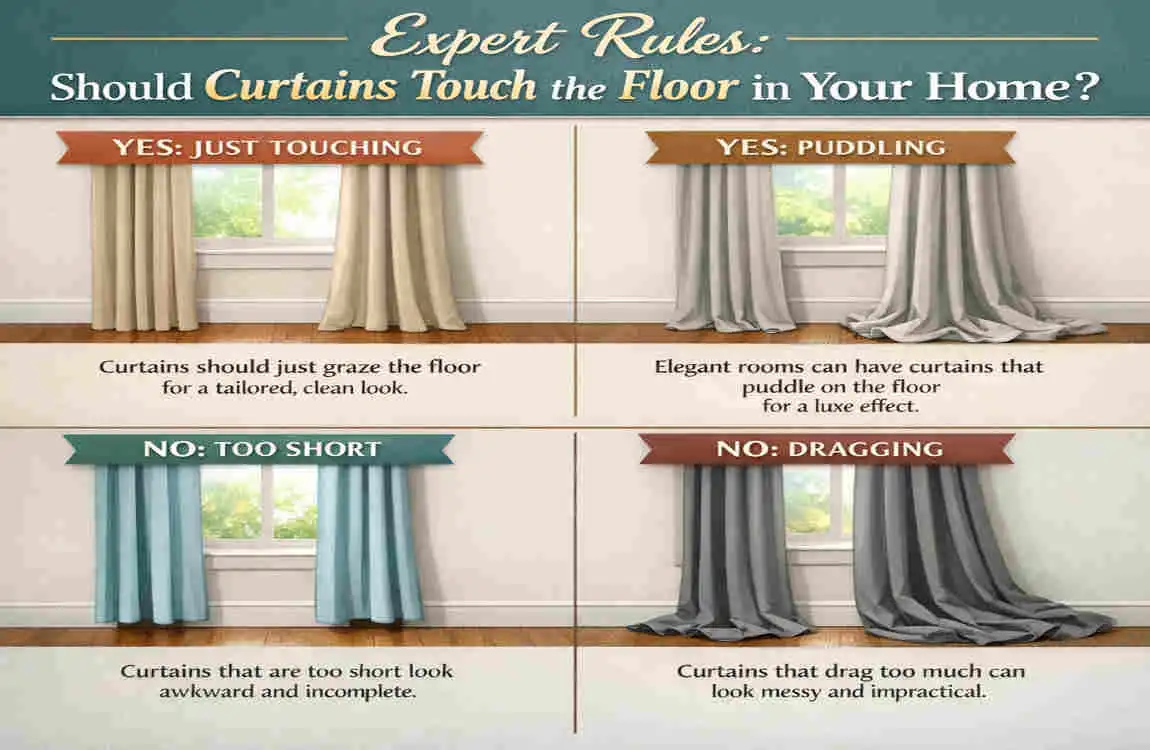
So, how do you decide if your curtains should touch the floor? Here are expert-backed rules to guide you—no matter your home’s style or size.
Ceiling Height Matters Most
The higher you hang your curtains, the taller your room will look. Professionals recommend mounting your curtain rod 4-6 inches above the window frame. The curtain length should then be:
Curtain length = Floor-to-ceiling height + 1-4 inches (for puddle)
If you want a tailored look, let the curtains kiss the floor. For a dramatic effect, add extra inches for a puddle.
Room Function Dictates Length
Not every room needs the same treatment.
- Formal Spaces (Living, Dining, Master Bedroom): Go for curtains that touch or gently puddle on the floor.
- Kitchens and Bathrooms: Here, hygiene trumps drama. Opt for curtains that hover a half inch above the floor to avoid splashes and keep things tidy.
Fabric and Pattern Play
The curtain material changes everything:
- Flowy Sheers: Let them touch the floor for a soft, breezy effect.
- Heavy Velvets or Brocades: A slight break or just-grazing length works best to prevent drag and fabric wear.
Proportions for Pakistani Homes
Local architecture matters! In colonial-era bungalows with high ceilings, floor-length or puddled curtains look stunning. In newer apartments with standard heights, go for a tailored “kiss the floor” look.
Quick Checklist: Is Floor-Length Right For You?
Ask yourself:
- Do you have kids or pets?
- Is the room formal or casual?
- How high are your ceilings?
- Do you prioritize easy cleaning?
- What’s your style—classic or modern?
If you answered “formal,” “classic,” or “love drama,” floor-length is likely your winner!
Styling Secrets: How to Make Floor-Touching Curtains Look Pro
Ready to get that designer finish? Here’s how to achieve flawless, floor-touching curtains—no matter your budget.
Perfect Hanging Height
Measure from the curtain rod to the floor. Don’t forget to factor in the rod’s height above the frame. Always measure twice, cut or hem once!
Layering for Dimension
Layering adds depth and function. Combine sheer curtains for daylight with heavier blackout panels for privacy. The outermost layer should always reach the floor for a polished look.
Hardware Hacks
Choose rods that extend at least 1.5 times the window’s width. This lets curtains stack neatly at the sides, making windows look wider and rooms more open.
Color and Texture Matches
- Neutral floors: Try bold or patterned curtains for contrast.
- Dark floors: Light, breezy fabrics create balance and prevent the room from feeling heavy.
Budget DIY Upgrades
- Use iron-on hem tape or a no-sew kit to adjust ready-made curtain panels.
- Shop for thrifted or vintage finds in local Lahore markets, then tailor the length yourself for a custom look.
Gallery: Room-Specific Examples
Room Type Curtain Style Length Advice Pro Styling Tip
Living Room Sheer + Blackout Floor-length or puddle Layer for elegance; wide rods for drama
Bedroom Heavy Velvet Just grazing or puddle Dark colors for coziness
Dining Room Patterned Jacquard Floor-length Bold prints for a statement
Kids’ Room Easy-clean Cotton Above floor (1/2 inch) Avoid puddles for safety
Alternatives to Floor-Touching Curtains That Still Slay

Floor-length isn’t for everyone, and that’s okay! Here are trendy alternatives to consider:
Sill-Length Curtains
End right at the windowsill. Perfect for cafes, kitchens, or anywhere you want a breezy, casual look.
Apron-Length Curtains
Stop about 4-6 inches below the window sill. This adds a bit of formality without the commitment of a full-length.
Break Style
A gentle fold or “break” halfway to the floor—a modern compromise for contemporary spaces.
Roman Shades and Valances
Fabric shades or top valances offer privacy and style with less fabric to manage. Great for rentals or small rooms.
When to Choose Alternatives:
If you have low ceilings, pets, or are renting, these options give you style flexibility without the fuss.
Common Mistakes and How to Fix Them
Even the pros make mistakes! Here are common curtain blunders and how to avoid them:
- Curtains too short? This visually “cuts off” the room. Fix by adding a coordinating extension or using curtain rings for extra length.
- Uneven hems? Always use a level or measure from multiple spots before hemming.
- Wrong fabric weight? Hang and test the drape before committing—heavy fabrics can drag and distort.
FAQ: Answering “Should Curtains Touch the Floor?”
Q: Should curtains touch the floor in a bedroom?
A: Yes, for a cozy, complete look.
Q: Do floor-length curtains make a room look bigger?
A: Absolutely! They draw the eye up, creating the illusion of height.
Q: What’s the ideal curtain length for 8-foot ceilings?
A: Curtains should hang just to the floor or puddle slightly—about 96 inches, depending on rod placement.
