

Imagine this: You wake up to a persistent drip, drip, drip from your kitchen sink. You ignore it, but over time, the problem gets worse. Before you know it, that small leak has turned into a massive headache, requiring major repairs—or worse, a complete replacement of your home’s plumbing system.
This scenario highlights the importance of understanding the difference between plumbing and replumbing house costs. While plumbing fixes involve repairing specific issues like leaks or clogs, replumbing consists of replacing the entire plumbing system in your home.
Key Differences Between Plumbing and Replumbing
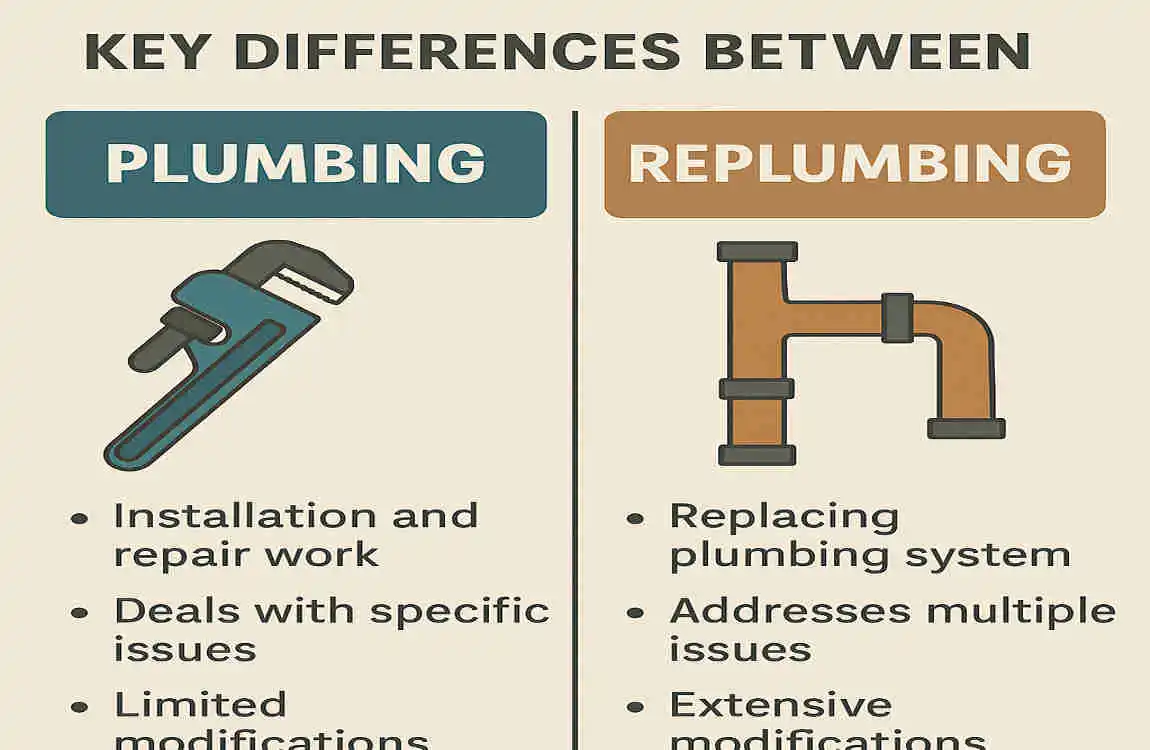
At its core, the difference between plumbing and replumbing lies in the scope of work.
What is Plumbing?
Plumbing typically refers to specific repairs or maintenance performed on your home’s existing pipe system. These are often reactive fixes, such as:
- Fixing a leaky faucet.
- Unclogging a drain.
- Repairing or replacing a broken water heater.
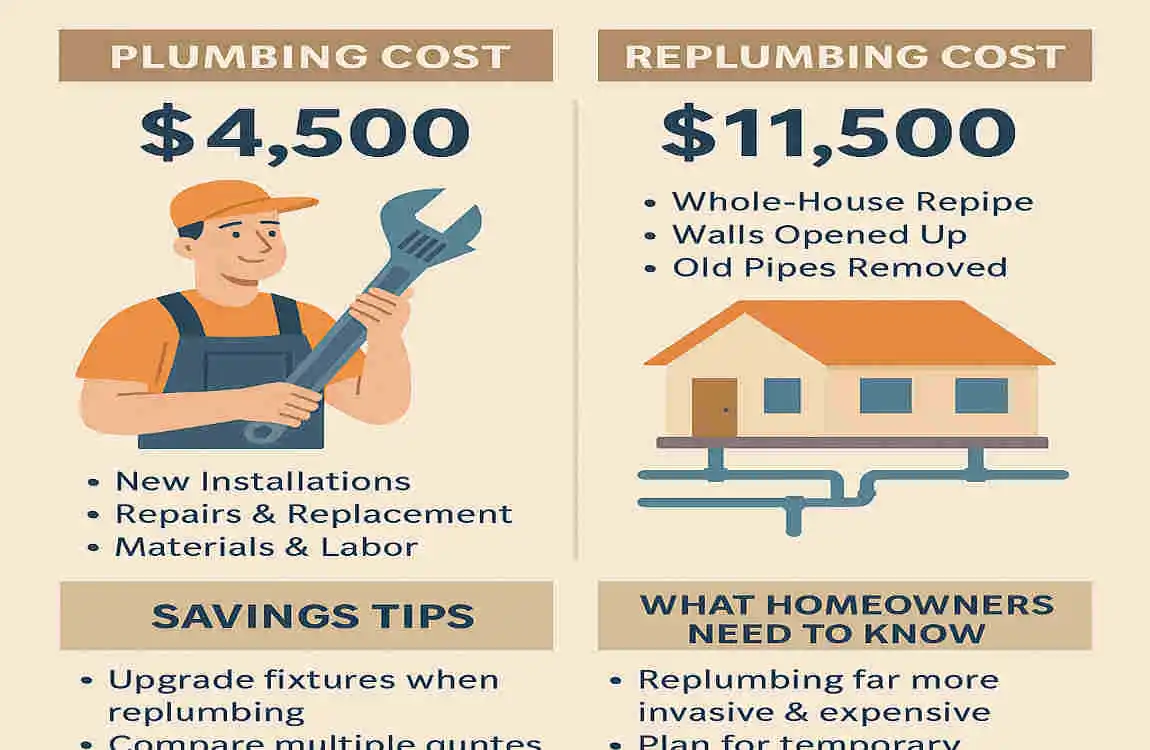
Costs for plumbing repairs range from $150 to $400 for common issues, though larger repairs can go up to $2,000. The goal of plumbing is to address immediate problems without replacing the entire system.
What is Replumbing?
Replumbing, on the other hand, involves replacing the entire plumbing system in your home. This is a more proactive approach, often taken when your home’s pipes are old, corroded, or failing. Common signs that you need replumbing include:
- Persistent low water pressure.
- Discolored or rusty water.
- Frequent pipe leaks or bursts.
Replumbing is a much larger project, with costs ranging from $5,000 to $20,000 depending on the size of your home, the materials used, and labor costs.
Key Takeaway: Plumbing is about maintaining and repairing specific issues, while replumbing is a complete system overhaul. The costs reflect these differences, with replumbing being significantly more expensive.
Cost Breakdown
To better understand the financial implications, let’s break down the costs for both plumbing and replumbing.
New Plumbing Costs
If you’re building a new home or adding a bathroom, you’ll need to install a new plumbing system. Here’s a rough cost estimate:
- Rough-in plumbing for a 2,000 sq. ft. home: $8,000 – $12,000 (includes pipes and fittings).
- Fixtures and appliances (e.g., sinks, toilets, faucets): $3,000 – $5,000.
- Pipe material costs:
- PEX pipes: $1 – $3 per meter (affordable and flexible).
- Copper pipes: $5 – $10 per meter (durable but expensive).
- Labor costs: Typically 40-50% of the total cost. For instance, if the total is $10,000, labor will account for $4,000 – $5,000.
Replumbing Costs by Home Size
The total cost of replumbing a house depends on your home’s size and the materials used. Below is a table summarizing the costs:
Home Size PEX Repiping Copper Repiping Total w/ Labor & Permits
1,000–1,500 sq. ft. $4,000–$7,000 $5,000–$10,000 $5,500–$11,000
1,500–2,000 sq. ft. $5,000–$10,000 $7,000–$12,000 $8,000–$15,000
2,000+ sq. ft. $10,000–$20,000 $12,000–$25,000 $15,000–$30,000
Additional Costs:
- Permits: $200–$500 (varies by location).
- Wall/drywall repair: $1,000–$3,500 (if access is required).
Factors Affecting Costs
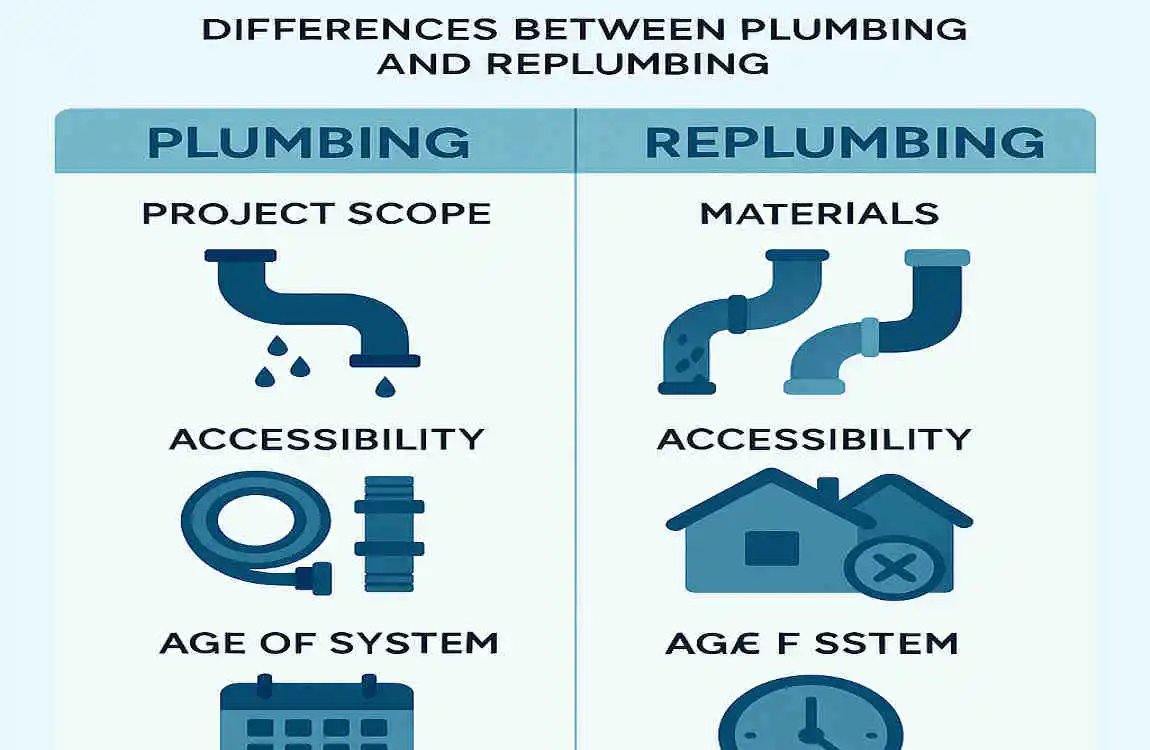
Several factors can impact the plumbing vs replumbing costs for your home:
Pipe Material
- PEX: More affordable, flexible, and resistant to freezing. Saves 30–50% compared to copper.
- Copper: Durable but expensive and prone to corrosion in hard water areas.
Home Layout and Age
Older homes with complex layouts may require more extensive work, increasing costs.
Labor Rates
Plumbers typically charge $75–$150 per hour. Rates vary by region, with urban areas often costing more.
Additional Expenses
- Drywall repairs: $1,000 or more if walls are opened.
- Manifold upgrades: $500–$1,500 for improved water flow.
- Inflation: In 2026, plumbing costs are up 5–10% compared to 2025.
Savings Tips
Replacing or repairing your plumbing doesn’t have to break the bank. Here are some practical tips to save money:
- Choose PEX pipes: Save 40% or more compared to copper.
- Get multiple quotes: Compare at least three plumbers to get the best deal.
- Bundle services: Combine repairs or upgrades to save on labor costs.
- Plan for off-season work: Many plumbers offer discounts during slower months.
- DIY prep: Clear the work area to reduce labor time.
- Look for rebates: Energy-efficient fixtures may qualify for government incentives.
When to Choose Plumbing or Replumbing
Should I go for a repair or a complete replacement? Here’s a quick guide:
- Choose plumbing repairs if:
- The issue is isolated (e.g., a single leak).
- Your pipes are less than 20 years old.
- Water pressure and quality are unaffected.
- Choose replumbing if:
- Your home has galvanized pipes or frequent leaks.
- You notice discolored or rusty water.
- Your plumbing system is 20+ years old.
