


Have you ever wondered, “Can you rewire a house room by room without moving out?” The answer is a resounding yes! Rewiring your home in stages is not only possible but also practical, especially for older homes with outdated electrical systems. This approach minimizes disruption, reduces costs, and allows you to stay in your home while the work is being done.
Rewiring is a critical upgrade for any home. It ensures your electrical system can handle modern appliances, prevents potential fire hazards, and keeps your home compliant with current safety codes. If your home was built before the 1970s or hasn’t had an electrical upgrade in decades, it’s likely time to consider rewiring.
Why Rewire Room by Room?
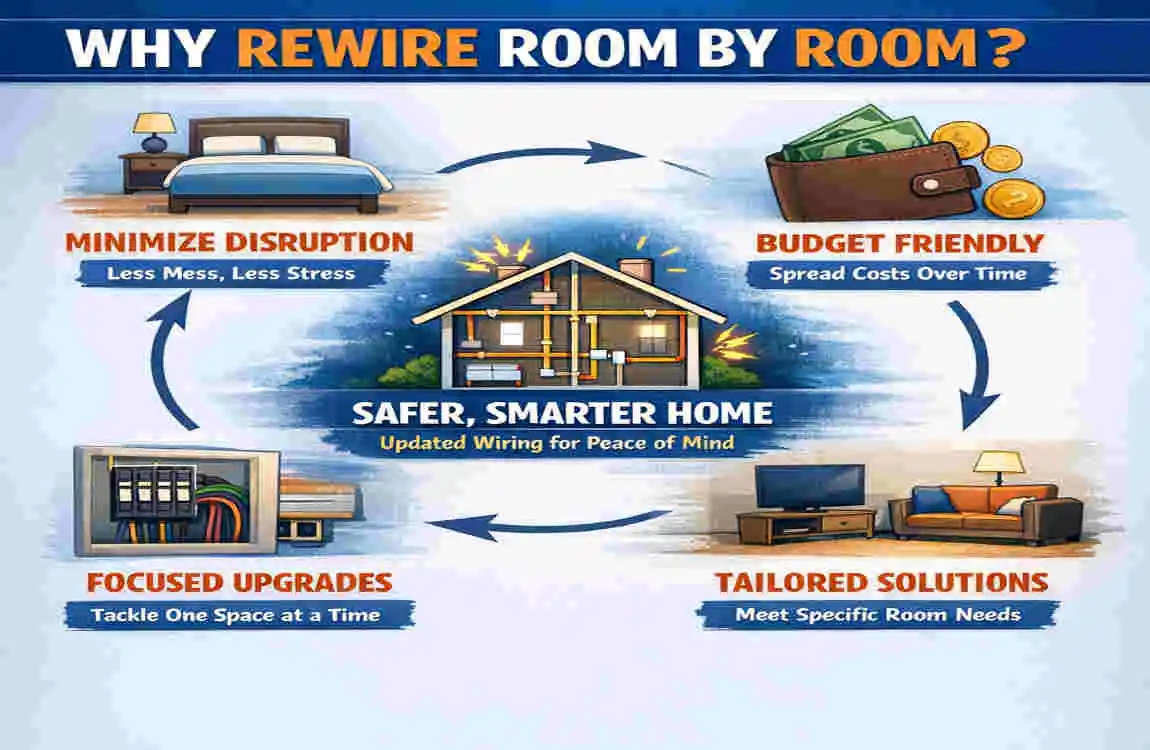
Benefits of Staged Rewiring
Rewiring a house room by room offers several advantages:
- Less Disruption: You can continue living in the unaffected areas of your home while work is being done. This is especially helpful for families who can’t afford to move out during a full rewire.
- Budget-Friendly: Instead of paying for a complete rewire all at once, you can spread the cost over time. On average, rewiring a single room costs between $1,500 and $4,000, depending on the room and its electrical needs.
- Prioritize High-Use Spaces: Start with essential areas like the kitchen or bathroom, where modern electrical systems are most needed.
When Is Room-by-Room Rewiring Ideal?
This approach is particularly suitable for:
- Older Homes: Homes built before the 1970s often have outdated wiring that can’t support modern electrical loads.
- Partial Upgrades: If only certain areas of your home need rewiring, a staged approach makes sense.
However, keep in mind that a full rewire may be necessary if your home has severe electrical issues, such as faulty wiring throughout the entire property.
Comparison: Full Rewire vs. Room-by-Room Rewire
AspectFull RewireRoom-by-Room Rewire
Cost $8,000–$20,000 $2,000–$10,000 total
Downtime 3–10 days , 1–2 days per room
Disruption High Low
Planning Your Rewire
Proper planning is the foundation of a successful rewiring project. Here’s how to get started:
Assess Your Home
Begin by hiring a licensed electrician to inspect your home. They’ll evaluate your electrical panel’s capacity, the age of your wiring, and your home’s electrical load requirements. This step is crucial for identifying potential issues and creating a realistic plan.
Design Circuits
Work with your electrician to map out the circuits for each room. Consider the number of sockets, light fixtures, and switches you’ll need. For example:
- Use 15-amp circuits for lighting.
- Use 20-amp circuits for appliances like refrigerators and dishwashers.
Obtain Permits and Schedule Work
In most cases, you won’t need planning permission for rewiring, but you’ll need to notify your local building control office. Create a project timeline, allocating 1–2 days per room.
Tools and Materials Checklist
Here’s a list of essential tools and materials for rewiring:
- Fish tape
- Voltage tester
- NM cable (12/2, 14/2)
- Wire cutters and strippers
- Electrical tape
Prioritize Rooms
Start with high-priority areas like the kitchen and bathroom, then move on to bedrooms and living spaces.
Essential Safety Rules
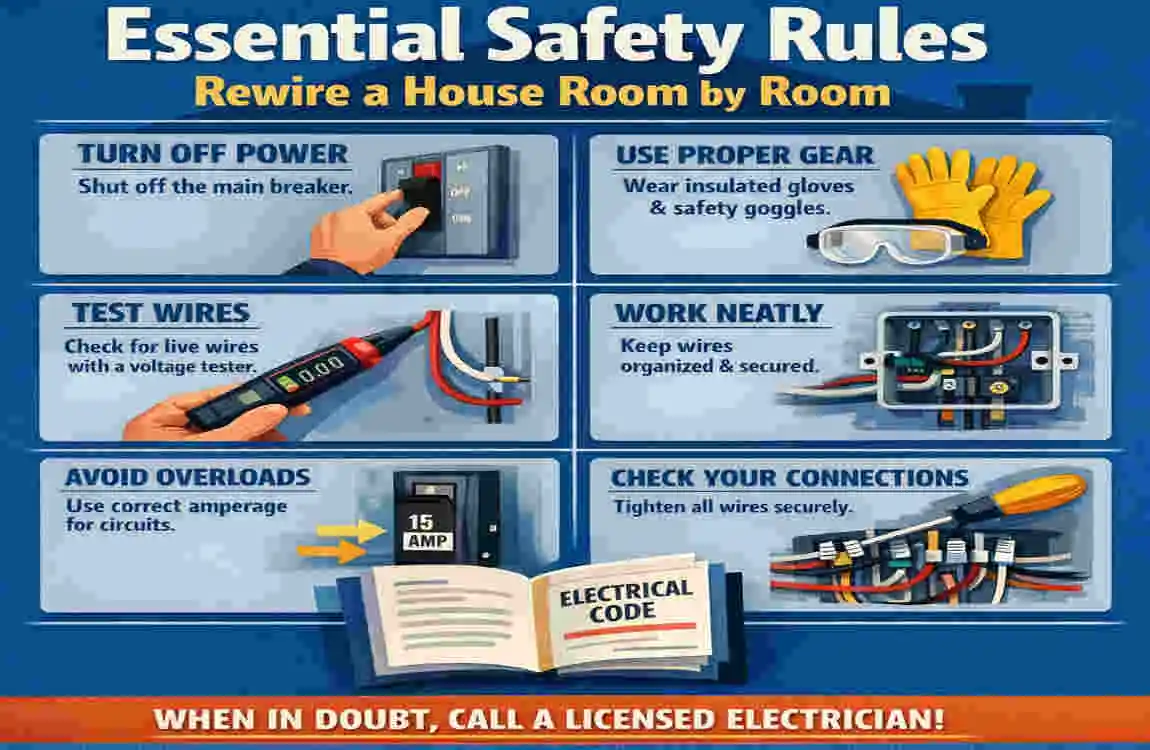
Safety should always be your top priority when rewiring your home. Here are some key guidelines to follow:
DIY Limits
While it’s tempting to save money by doing the work yourself, most electrical tasks should be left to professionals. Faulty wiring can lead to shocks, fires, and other hazards.
Pre-Steps for Safety
- Shut Off Power: Turn off the breakers for the room you’re working on and test the circuits with a voltage tester to ensure they’re not live.
- Ground All Circuits: Proper grounding is essential for preventing electrical shocks.
Follow Electrical Codes
Adhere to the National Electrical Code (NEC) standards, which include:
- Using separate neutral and ground wires.
- Installing Arc Fault Circuit Interrupters (AFCIs) in bedrooms.
Room-by-Room Rewiring Guide
Kitchen Rewiring
The kitchen is a high-priority area due to its heavy appliance usage. Here’s how to rewire it:
- Isolate the Circuit: Turn off the power and remove old wiring.
- Install Dedicated Circuits: Use 20-amp circuits for appliances like the refrigerator and dishwasher.
- Add Outlets: install 4–6 outlets, including GFCI outlets near the sink.
- Test and Label: Test the circuits and label the breakers for easy identification.
Bathroom Rewiring
Bathrooms require special attention due to their moisture levels. Follow these steps:
- Access Wiring: Use the ceiling or attic to access wiring.
- Install GFCI Circuits: Use 20-amp circuits for lights, heaters, and exhaust fans.
- Add Outlets: install 2–4 GFCI-protected outlets, avoiding placement near tubs or showers.
Bedroom Rewiring
Bedrooms are simpler to rewire but still require careful planning:
- Access Wiring: Lift floorboards or use loft access to run cables.
- Install AFCI Breakers: essential for safety.
- Add Outlets: install 4–6 outlets and consider adding USB outlets for modern devices.
Living Room Rewiring
Living rooms often have high electrical demands due to entertainment systems. Here’s what to do:
- Plan Circuits: Use multiple 15-amp circuits for lighting and TVs.
- Add Features: install dimmers and smart switches for convenience.
- Handle High Loads: Ensure circuits can handle the load from entertainment systems.
Costs and Hiring Professionals
Estimated Costs
RoomCost (Materials + Labor)
Kitchen $2,500–$5,000
Bathroom $1,500–$3,000
Bedroom $1,000–$2,500
Hiring Tips
- Always hire certified electricians.
- Get at least three quotes to compare prices.
- Remember, rewiring can increase your home’s value by 5–10%.
Pros, Cons, and Tips

Pros
- Affordable and manageable in stages.
- Minimal disruption to your daily life.
Cons
- Takes longer to complete.
- Requires careful planning to meet code compliance.
Tips
- Declutter the room before work begins.
- Label all circuits and breakers for future reference.
FAQs
Can you rewire a house room by room?
Yes, it’s a safe and practical approach when done by professionals.
Should you DIY or hire a pro?
Always hire a licensed electrician for safety and compliance.
How long does it take to rewire a room?
Typically, 1–2 days per room.
