

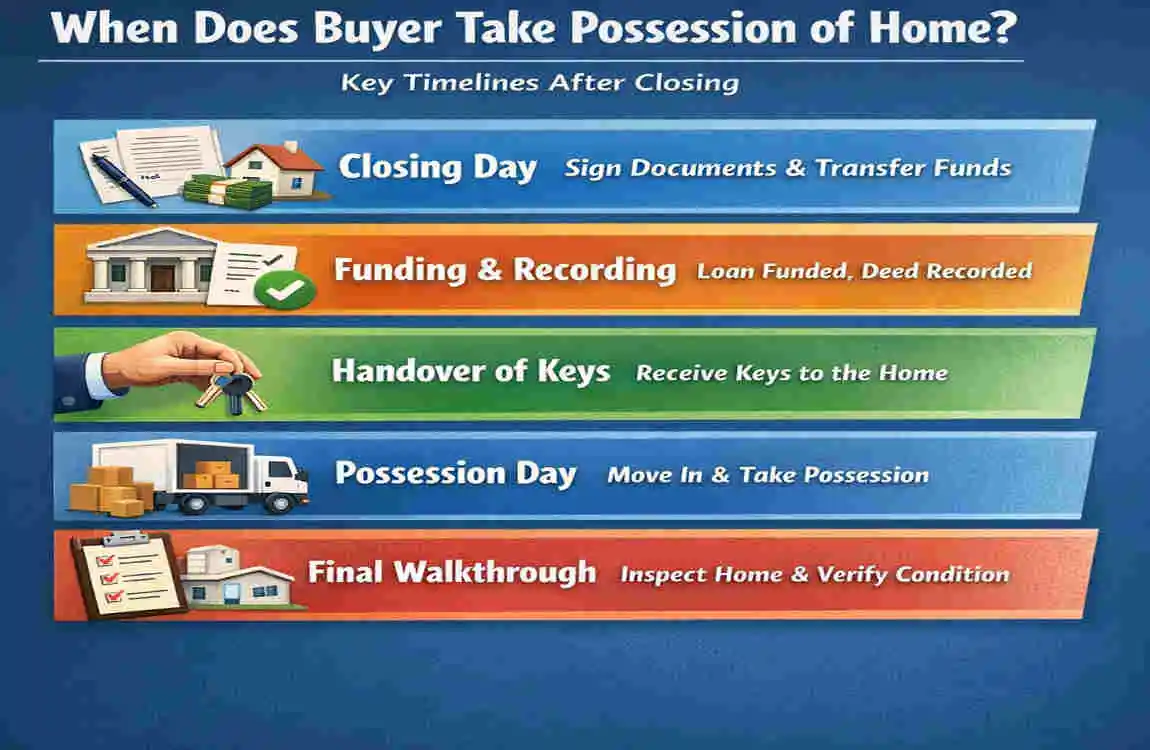
You’ve just spent the last few hours signing your name on what feels like a mountain of paperwork. Your hand is cramping, your coffee is cold, but your heart is racing with excitement. You’ve officially closed on your new house! Naturally, the first thought popping into your head is, “Okay, hand over the keys!”
Typically, buyers take possession of the home 1 to 3 days after closing, but this timeline isn’t set in stone. It can range from receiving the keys immediately at the closing table to waiting weeks while the seller moves out under a special agreement.
What Is Possession of Home in Real Estate?

Before we dive into calendars and schedules, we need to clarify what we actually mean by “possession.” It sounds like a simple concept, but in legal terms, it is distinct from “ownership.”
When Does Buyer Take Possession of Home? The Basics
Possession is the legal right to occupy and use the property physically. It means you have the keys, you can move your furniture in, and you can officially change your mailing address.
However, Closing (often called “settlement” or “completion”) is the moment where the Title is transferred. The Title is the legal document that says you own the house.
Here is the tricky part: You can own the house (Title) without having the right to enter it yet (Possession). Conversely, in rare cases, you might be allowed to enter the house before you officially own it.
Understanding this distinction is vital because the possession timeline is dictated by the terms you agreed to in your Purchase and Sale Agreement. It doesn’t just happen automatically; it is a negotiated date.
Title vs. Possession: Key Differences
To make this crystal clear, let’s look at the difference between holding the title and holding the keys.
- Title (Ownership): This happens when the deed is recorded with the county or local municipality. At this exact moment, you are the legal owner. You are responsible for property taxes and, usually, insurance.
- Possession (Occupancy): This is when you get the keys. This is when you can physically enter the home without the seller’s permission.
Why aren’t they always the same day? Often, the closing process involves many moving parts—banks wiring money, deeds being recorded at the courthouse, and sellers needing time to vacate. Because of these logistics, there is frequently a “gap” between signing the papers and getting the keys.
Here is a quick comparison of how possession creates different scenarios:
Possession Type Timeline Who has the Keys? Who Owns the House?
Immediate Possession At Closing Table Buyer Buyer
Standard Possession 1-3 Days Post-Closing Agent/Escrow Buyer (Pending Recording)
Seller Rent-Back 30-60 Days Post-Closing Seller Buyer
Early Possession Days Before Closing Buyer Seller
Standard Timeline: When Does Buyer Take Possession After Closing?
So, you are looking at your calendar and trying to book a moving truck. What should you expect? Let’s walk through the standard timeline of how this usually plays out in a typical real estate transaction.
Typical Home Possession Timeline After Closing
While every deal is unique, the flow generally follows a specific pattern. Here is what the journey looks like from the moment your offer is accepted to the moment you are eating pizza on the floor of your new living room.
- Offer and Acceptance: You and the seller agree on a price and a possession date. This is written into the contract. Do not overlook this date!
- The Closing Day: You meet with the escrow officer, attorney, or title company. You sign the loan documents and the deed.
- Funding: Your lender reviews the signed documents and “funds” the loan (sends the money to the title company).
- Recording: The title company takes the deed to the county recorder’s office to officially record the transfer of ownership.
- Possession Handover: Once the deed is on record, the keys are released to you.
Most Common Scenarios
Let’s break down the three most common answers to “When does buyer take possession of home?”
Immediate Possession (The “Table Funding” Scenario)
In some states and specific situations, you get the keys the second you finish signing the papers. This is known as “possession at closing.”
- When it happens: This is common in cash deals where no lender review is needed, or in states where “table funding” is the law. It also happens frequently when the home is already vacant.
- The Vibe: High fives all around. You leave the office and drive straight to your new house.
The 1-to-3 Day Gap (The Standard)
This is the most common scenario for buyers using a mortgage. Even though you signed on Friday, the county recorder’s office might be closed, or the bank might not wire the funds until Monday.
- When it happens: Typically when closing occurs late in the day or on a Friday. The contract usually states possession will occur “Upon Recording of the Deed.”
- The Vibe: A little anticlimactic. You sign the papers, but you have to wait for a phone call from your agent saying, “We are on record!” before you can get the keys.
Seller Rent-Back (Long-Term Delay)
Sometimes, the seller needs the money from the sale of this house to buy their next house. They can’t move out until they sell to you.
- When it happens: In competitive markets where the buyer wants to sweeten the deal for the seller.
- The Vibe: You are technically a landlord now. You own the home, but the seller is living there as a tenant for a set period (usually 30 to 60 days).
Visualizing the Timeline Imagine a timeline.
- Day 0 (Closing Day): Sign papers. Money moves to escrow.
- Day 1: Escrow verifies funds. Deed is sent to the county.
- Day 2: County clerk stamps the deed. Possession Granted.
Factors That Affect When Buyer Takes Possession of Home

You might be wondering, “Why can’t I just get the keys immediately? I paid for the house!” It is a valid frustration. However, several gears are turning behind the scenes that influence the buyer’s possession timeline after closing.
What Influences the Buyer Possession After Closing Timeline?
Several variables can speed up or slow down the moment you get to turn that key in the lock.
- The Type of Financing: If you are paying all cash, things move lightning fast. There is no bank underwriter waiting to double-check your signature. If you have a government-backed loan (such as an FHA or VA loan) or a complex mortgage, the lender may require a final review of the signed documents before releasing the wire transfer. No money, no keys.
- The State You Live In: Real estate laws are local. In some states (like California), possession often happens after the deed is recorded, which can take a day or two. In other areas (like parts of the Midwest), it is customary to pass the keys across the table at closing, even if funding hasn’t fully cleared yet.
- The Condition of the Property: Did the seller agree to fix the roof before closing? If you do your final walkthrough and realize the repairs haven’t been done, you might refuse to close until they are. This delays possession.
- The Seller’s Situation: This is the human element. If the seller is building a new home and construction is delayed, they might beg for a few extra days. If you are nice (and if the contract allows), this changes your move-in date.
Common Delays and How to Avoid Them
Even with a perfect plan, things can go wrong. Here are the most common bottlenecks that delay possession and how to avoid them.
The “Friday Afternoon” Closing
- The Problem: You schedule your closing for 4:00 PM on a Friday. You sign everything. The bank tries to wire the money, but the Federal Reserve wire window has closed for the weekend.
- The Result: You don’t get the keys until Monday (or Tuesday if Monday is a holiday).
- The Fix: Always schedule your closing for the morning, ideally mid-week (Tuesday or Wednesday). This gives the bank time to fix errors and wire funds the same day.
The Final Walkthrough Surprise
- The Problem: You go to the house an hour before closing and find the seller has taken the beautiful chandelier that was supposed to stay, or there is a giant hole in the wall behind where the couch used to be.
- The Result: You delay closing to negotiate a credit for the damage.
- The Fix: Do your walkthrough 24 hours in advance, not on the way to the closing table. This gives you time to sort out issues without pushing back the possession date.
Wire Fraud Paranoia (Justified!)
- The Problem: You are terrified of wire fraud (as you should be), so you are extra cautious, which slows down the transfer of your down payment.
- The Result: Escrow doesn’t have your money in time.
- The Fix: Get your wire instructions securely and handle the transfer a day or two before closing, so the money is sitting there waiting for you.
Seller Rent-Back Agreements: Extended Possession Timelines
Sometimes, the answer to “when does buyer take possession of home” is “next month.” This usually occurs through a mechanism known as a Seller Rent-Back Agreement (also called a lease-back or post-closing possession agreement).
Understanding Rent-Back: When Sellers Stay After Closing
In a hot real estate market, a seller might receive multiple offers. To make your offer stand out, you might agree to let the seller stay in the home for 30 to 60 days after closing so they have time to move into their new place without stress.
During this time, you are the owner but effectively the landlord, and the seller is your tenant.
How does the money work? Usually, the seller pays you a daily rate (per diem) for every day they stay past closing. This amount is often calculated based on your new mortgage payment (principal, interest, taxes, and insurance) so you don’t lose money by letting them stay.
The Pros and Cons of Rent-Backs
Before you agree to this, you need to weigh the benefits and the risks.
Pros for Buyer Cons for Buyer
Winning the Deal: In a bidding war, flexibility on possession can be more valuable to a seller than a higher price. Landlord Liability: If someone gets hurt on the property, it’s your insurance on the line.
Offsetting Costs: The rent the seller pays can cover your first mortgage payment. Damage Risk: Moving out causes scuffs and scratches. If they happen after closing, it’s harder to get the seller to pay for them.
Simpler Closing: The seller doesn’t have to panic-move, which often makes the transaction smoother. Eviction Nightmares: If the seller refuses to leave after the 60 days, you might have to evict them (a total nightmare) legally.
Legal Must-Knows for Rent-Back
If you agree to a rent-back, do not do it on a handshake. You need a formal “Post-Closing Possession Addendum” attached to your contract.
This document must cover:
- The Move-Out Date: A hard deadline.
- Daily Rate: How much are they paying?
- Security Deposit: Yes, you should hold a deposit in escrow (usually a few thousand dollars) to cover any potential damage during the move-out.
- Utilities: Who pays the electric bill during this time? (Usually the seller/tenant).
Case Study: Imagine the “Andersons.” They found their dream home, but the seller, Mr. Smith, was building a retirement condo that wouldn’t be ready for 45 days. The Andersons offered a 60-day rent-back. Mr. Smith accepted their offer over a higher cash offer simply because he needed the time. The Andersons got the house, and Mr. Smith paid their mortgage for two months. Win-win.
The Closing Day Walkthrough and Possession Handover Process
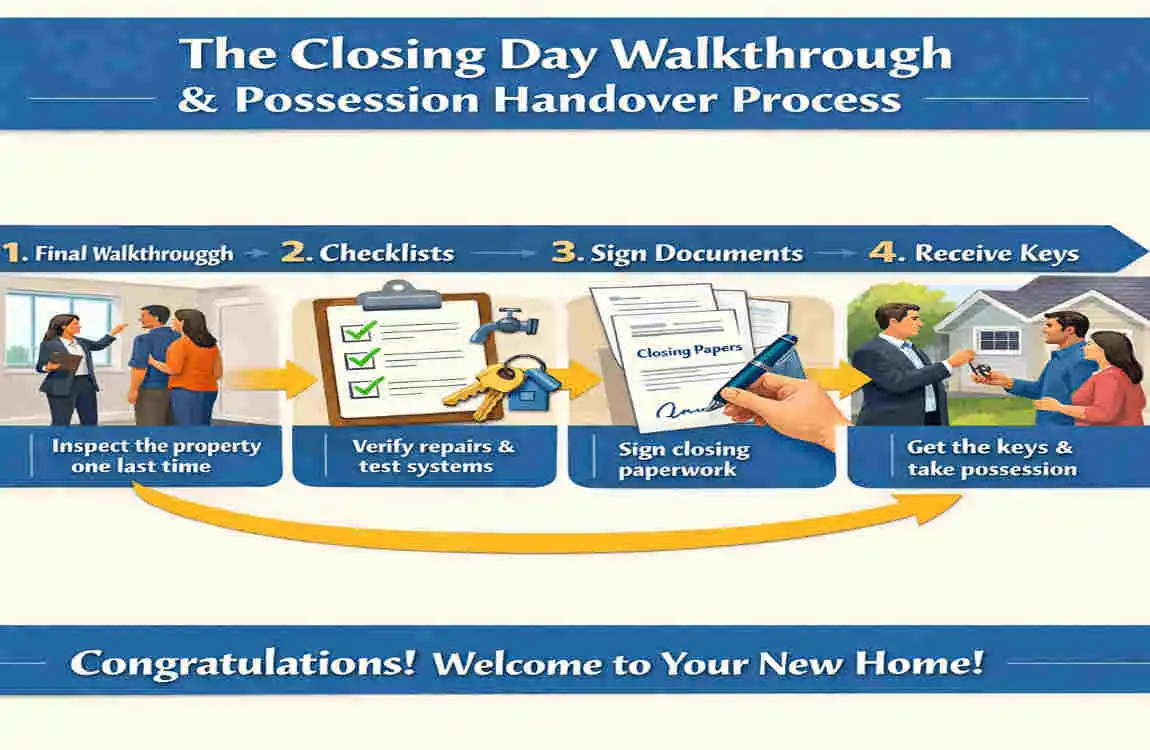
The timeline is set. The day is here. But how do you actually go from shaking hands to unlocking the door? This process is more ritualistic than you might think, and missing a step can cause major headaches.
Step-by-Step: From Closing to Taking Possession of Your New Home
Here is the practical checklist for the final days leading up to possession.
The Final Walkthrough (12-24 Hours Before Closing) This is arguably the most critical step before you take possession. You need to ensure the house is in the same condition as when you made the offer.
- Check that all agreed-upon repairs have been completed.
- Turn on every faucet, flush every toilet, and flip every light switch.
- Ensure the seller has removed all their trash.
Signing the Documents (Closing Day) You will sign a stack of papers about an inch thick. Bring your ID and a cashier’s check (if you haven’t wired funds). Once signed, the waiting game begins.
Funding and Recording The title company sends the documents to the county. Once the county clerk records the deed, the title company notifies the real estate agents.
The Key Exchange This is the moment of truth. Usually, the seller’s agent gives the keys to your agent, who then meets you at the house to hand them over.
- Note: This often includes garage door openers, mailbox keys, and alarm codes.
Immediate Post-Possession Tasks The second you have those keys:
- Change the Locks: You have no idea who else has a copy of the old keys (neighbors, dog walkers, old contractors).
- Transfer Utilities: Ensure the water, gas, and electric are in your name starting that day so nothing gets shut off.
Red Flags During Walkthrough
What happens if you show up for the walkthrough and the house is a mess?
- The “Broom Clean” Standard: Most contracts require the home to be “broom clean.” This means swept and free of debris, not necessarily scrubbed by a professional maid.
- Missing Items: If the refrigerator was included in the contract but is gone, do not close until this is resolved. Your agent can negotiate a credit or force the seller to return it. Once you close and take possession, it is very difficult to get these things fixed.
Regional and Legal Variations in Home Possession Timelines
Real estate is not the same everywhere. Depending on where you are buying, the answer to “when does buyer take possession of home“ can vary wildly.
Does “When Does Buyer Take Possession” Vary by Location?
In the United States:
- West Coast (e.g., California): It is an “Escrow State.” Possession usually happens after the deed is recorded, often the day after signing.
- East Coast (e.g., New York): It is often an “Attorney State.” Closing and possession are often held at the same table. You hand over the check; they hand over the keys.
International Variations:
- United Kingdom: On “Completion Day,” funds are transferred, and keys must be released by a certain time (usually 1:00 PM or 2:00 PM). It is very structured.
- Australia: Possession typically happens immediately at settlement. If the seller isn’t out, there are heavy penalties.
Legal Nuances: Some states have specific laws regarding “tenancy.” If you let a seller stay for more than 30 days, they might legally become a tenant with significant rights, making them hard to evict. Always consult with a local real estate attorney to understand the specific risks in your jurisdiction.
FAQs: Common Questions on Buyer Possession After Closing
You likely still have a few specific questions buzzing around your head. Let’s tackle the most frequently asked questions about home possession.
When Does Buyer Take Possession of Home? FAQs
Q: Can I move my stuff in before closing?A: This is called “Early Possession,” and most attorneys advise against it. If the loan falls through at the last minute, you have already moved in, which creates a legal mess for the seller to get you out. Plus, if you discover a defect while living there before closing, you might try to renegotiate, which could kill the deal.
Q: What if the seller is not out by the possession time?A: This is a breach of contract. You should refuse to close if you know they are still there. If you have already closed, they are technically trespassing (or holding over). Your agent should immediately contact the seller’s agent. In extreme cases, you may need to involve law enforcement or start eviction proceedings, but usually a stern legal letter resolves the issue.
Q: Does the seller have to clean the house before possession?A: Check your contract. Usually, the requirement is “broom clean.” This means empty of personal property and swept. It does not mean deep-cleaned or sanitized. If you want a deep clean, plan to hire cleaners the day you take possession, before you move your furniture in.
Q: Who pays for utilities on the day of closing?A: Typically, the seller pays for utilities up to the day of closing, and the buyer takes over the day of possession. If there is a gap, it should be prorated. Make sure you call the utility companies a week in advance to switch the billing name to your name, effective on your possession date.
